Hello, this is Jeonramhoejang.
We are back for the second installment of our three-part series on the Audi A6, the final puzzle piece of the German premium sedan triad. In Part 1, we explored August Horch’s relentless engineering perfectionism, the rally-dominating madness of the Quattro, and the evolutionary lineage from C1 to C8.
Having established a robust frame, chassis, and the rock-solid heartbeat of Quattro, it is time to step inside the cabin. In Part 2, we will dissect the digital cockpit that transforms the driver's seat into a high-tech smart device, the technical secrets of the MMI system that powers it, the visionary figures who sculpted this masterpiece, and the massive capital and partnership ecosystems driving its future.
1. The Evolution of the Digital Cockpit : How the Driver's Seat Became a Smart Device
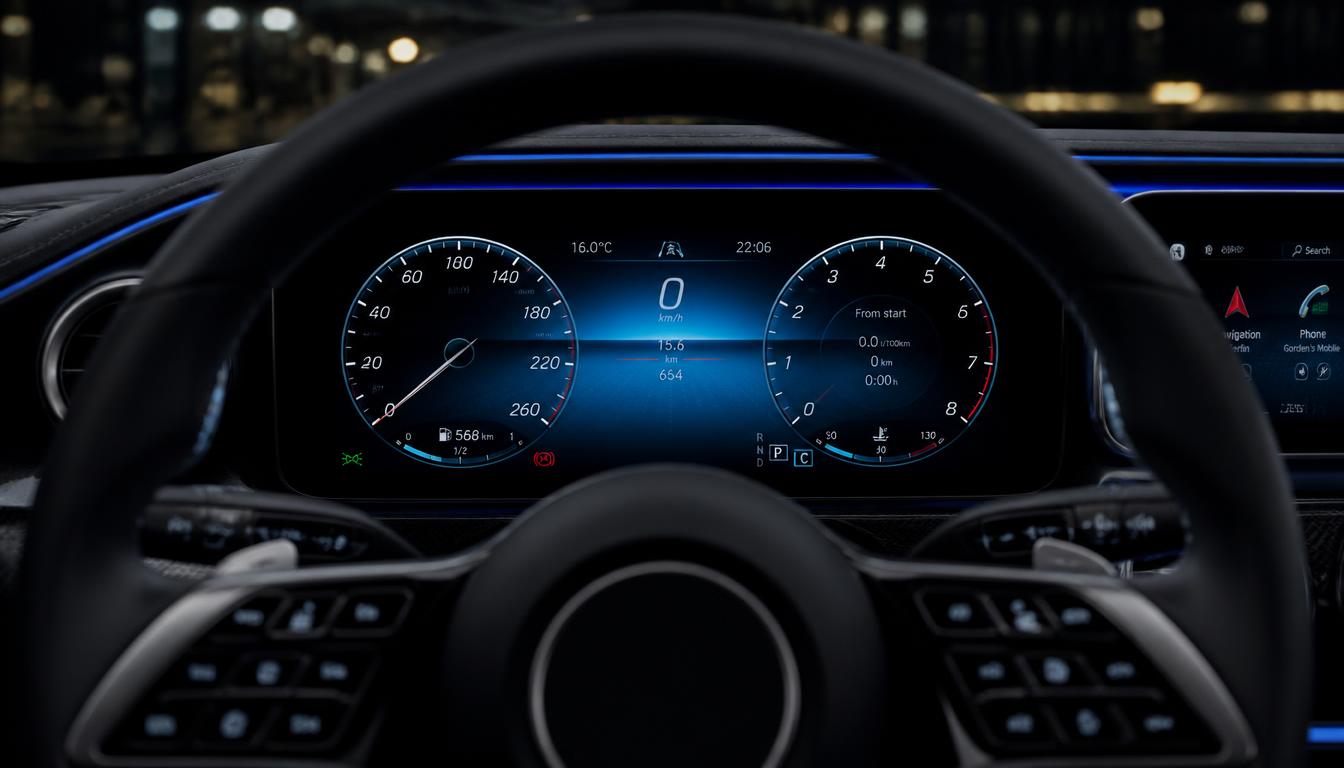
① The Genesis and Roots of the Digital Cockpit
Traditional automotive interiors were once ruled by analog needles, physical dials, and mechanical clutter. However, the advent of smartphones and tablets in the 2010s completely restructured human daily life. Drivers began craving high-resolution graphics, real-time connectivity, and infinite information expansion right inside the cabin. Audi was the first to recognize this paradigm shift, embarking on an innovative mission to "end the era of mechanical needles and turn the entire driver’s seat into a flexible digital canvas." By shattering the traditional constraints of physical gauges, interior designers were empowered to freely craft spaces centered entirely on the passenger.
② Definition and Core Characteristics of the Digital Cockpit
A digital cockpit goes far beyond merely replacing speedometers and RPM gauges with LCD screens:
- Integrated Information Visualization : A Human-Machine Interface (HMI) that intuitively organizes and visualizes essential telematics (speed, fuel levels), 3D navigation maps, multimedia, and ADAS (Advanced Driver Assistance Systems) statuses in line with the driver's natural eye-movement axis.
- Maximum Customization : Offers flexibility allowing drivers to freely alter instrument layouts according to preference and driving purpose (e.g., classic round gauge modes versus full-screen navigation maps).
- (Sneak Peek) To counteract the potential 'tactile loss' brought by touchscreens and full digitization, Audi integrated "Haptic Feedback" technology, delivering the physical sensation of pressing a real mechanical button beneath your fingertips. The deep-dive into this thrilling tactile sensation follows shortly.
③ Evolutionary Timeline of Digital Cockpits by Generation
- 2014 (The Dawn Era) : Debuting at the Geneva Motor Show and CES, it commercialized globally for the first time via the 3rd-generation Audi TT. Powered by NVIDIA’s high-performance Tegra processor, it delivered 3D graphics and full-screen navigation on a 12.3-inch high-resolution display, shocking the industry.
- 2015 – 2018 (The Expansion Era) : The Audi Virtual Cockpit rapidly expanded across core lineups like the Q7 and A4, cementing itself as the industry standard for high-tech interiors.
- 2018 – Present (The C8 and SDV Era) : Evolved into the MMI touch response system coupled with upper and lower dual touchscreens, evolving into the core brain of Software-Defined Vehicles (SDVs) complete with wireless OTA updates and AI-driven voice controls (such as ChatGPT integrations).
④ Audi's Vision for the Future Coupled with Autonomous Driving : The Leap to a "Mobile Lounge"
Audi’s ultimate destination for the digital cockpit isn't merely a "driving assistance screen." Looking ahead to high-level autonomous driving (Levels 4–5), Audi envisions the future through its Sphere concept vehicle series (GrandSphere, ActiveSphere, etc.):
- The moment autonomous mode activates, the steering wheel and pedals retract seamlessly into the dashboard as driving becomes obsolete.
- Here, the digital cockpit and infotainment screens shed their driver's-seat confines to transform into the virtual windows and entertainment hubs of a "moving private lounge (Living Space)." Engineering technology returning absolute freedom and leisure time to humans—this is Audi’s ultimate developmental trajectory for the digital cockpit.
2. The Coexistence of Minimalism and High-Tech : Audi’s Bold Eradication of Physical Buttons vs. the German Big Three

In the German premium sedan market, Mercedes-Benz, BMW, and Audi approach interiors and technology with philosophies as distinct as their badges:
- Mercedes-Benz’s "Digital Palace" : Maximizes flowing curves and ambient lighting, flaunting the grandeur of a "moving luxury lounge" via the MBUX Superscreen extending across to the passenger side.
- BMW’s "Driver-Centric Analog-Digital Compromise" : While enlarging displays in newer models, BMW retains the iDrive controller and core physical buttons around the center console, walking a conservative yet practical line to preserve intuitive tactile control while driving.
- Audi’s "Bauhaus Minimalism" : In stark contrast, Audi boldly stripped away the analog dials and complex button clusters cluttering dashboards. Emphasizing geometric horizontal lines and disciplined surfaces, it achieves a high-tech minimalism resembling a sophisticated modern art installation rather than a cold piece of electronics.
🟢 Audi’s High-Tech Weapons to Eradicate Physical Buttons (Engineering Reality)
Audi didn't simply remove buttons and turn everything into flat glass. A sophisticated hardware system and advanced components from top-tier partners were mobilized so drivers could control functions via touch while keeping their eyes on the road:
- Dual Touchscreen Architecture : The upper screen handles navigation and entertainment, while the lower screen dedicates itself to climate control and vehicle settings, preventing cognitive overload.
- Haptic Actuators and Vibration Motors : When pressing flat glass panels, micro-electromagnetic vibrations instantly transmit the tactile sensation of a mechanical switch "clicking" down onto the fingertips.
- Voice Recognition and Control Units : Integrates natural-language voice processing to minimize complex menu navigation, allowing drivers to control vehicle functions conversationally.
🟢 [Macro Perspective] The Dynamic Against Tech-First EVs (Tesla, BYD, Zeekr, etc.)
Looking at the 2026 automotive market, tech-forward EV brands like Tesla, BYD, and Zeekr have popularized an extreme minimalism that purges even steering wheel buttons in favor of touch or scroll interfaces. While these pure EV brands champion "software-driven disruptive innovation," Audi distinguishes itself by preserving a balanced engineering compromise (haptic physical feedback paired with Bauhaus architectural refinement) even in the electric era—achieving the most elegant equilibrium on the border between analog soul and digital function.
🟢 [Reference] Core Supplier Network Supporting Audi’s Digital Cockpit and Electronic Architecture
| Company Name | Founding Year | Audi Collaboration & Core Business | Market Cap | Stock Exchange |
| NVIDIA | 1993 | High-performance AI processors, Virtual Cockpit & autonomous computing platforms | ~$5.42 Trillion | NASDAQ |
| Qualcomm | 1985 | Snapdragon Cockpit Platform & automotive communication chipsets | ~$176 Billion | NASDAQ |
| Panasonic Holdings | 1918 | In-Vehicle Infotainment (IVI) systems & electronic control units (SkipGen) | ~$63 Billion | Tokyo |
| Denso Corporation | 1949 | HVAC systems, thermal management & integrated electronic control components | ~$30.5 Billion | Tokyo |
| Continental AG | 1871 | Cockpit domain controllers, instrument cluster electronics & integrated control systems | ~€14.4 Billion | Frankfurt |
| Aptiv PLC | 1994 | ADAS architecture & automotive connectivity solutions | ~$9.8 Billion | NYSE |
| LG Display | 1985 | Automotive high-resolution OLED & large digital cockpit display panels | ~$3.3 Billion | KRX, NYSE |
| Visteon Corporation | 2000 | Smart cockpit solutions & digital instrument cluster electronics | ~$2.8 Billion | NASDAQ |
| Alps Alpine | 1948 | Haptic feedback switches & automotive input devices for tactile tech | ~$2.2–$2.6 Billion | Tokyo |
| Samsung Display | 2012 | Next-gen automotive OLED & curved display panel partnership | Unlisted (Samsung Subsidiary) | N/A |
3. Technical Perspective on Audi’s MMI System : Haptic Feedback and Intuitive UX

① Concept and Operating Principle of Haptic Feedback
- Concept : An advanced Human-Machine Interface (HMI) technology designed to transmit mechanical tactile responses (vibrations, clicks) to fingertips when operating smooth capacitive touchscreens, tricking users into believing they are pressing a physical button.
- Operating Principle : The moment the screen is pressed, precision actuators (vibration motors) embedded beneath the display instantly receive micro-electrical signals to generate physical waves. These waves vibrate the glass panel uniformly, allowing drivers to accurately verify inputs via touch without taking their eyes off the road.
② Detailed Specs and Technology of Core Linear Resonant Actuators (LRAs)
- Linear Resonant Actuator (LRA) Technology : The core vibration hardware applied to the Audi MMI touch response system isn't a basic rotary motor; it is an advanced resonant actuator combining spring-resonance structures with electromagnetic induction principles.
- Ultra-Fast Response and Precision Control : Boasts lightning-fast response times within milliseconds of input, recreating dozens of tactile textures ranging from a sharp 'click' snap to a smooth 'rolling' sensation via software algorithms.
③ Partner Spotlight : Japan’s "Alps Alpine"
The master supplier behind this innovative haptic touch system is Japan's Alps Alpine, a global giant in automotive electronics and components:
- Founding Year : November 1, 1948
- Stock Exchange : Tokyo Stock Exchange (TSE) Prime Market
- Market Capitalization : ~$2.2B – $2.6B
- Net Sales : Over ¥1.01 Trillion (Consolidated)
- Company Profile : Boasts unrivaled technological leadership in switches, sensors, and automotive haptic reactors worldwide. Having shipped over 400 million haptic devices across global mobile, gaming, and automotive sectors, it is a legendary automotive component titan driving ergonomic tactile standards.
④ Audi MMI and Digital UX Lineup Positioning and Pricing Breakdown
Audi systematically integrates MMI touch response systems and virtual cockpits across its sedan and SUV hierarchies:
Sedan Lineup
- A4 : Compact premium sedan harmonizing traditional design with a digital cockpit. (Price range: ~$36,000 – ~$47,000)
- A5 (Sportback/Coupe/Cabriolet) : Elegant rooflines housing MMI touch displays and intuitive digital interfaces. (Price range: ~$43,000 – ~$58,000)
- A6 (Business Sedan) : The star of this post; the ultimate benchmark of high-tech interiors combining upper/lower dual touchscreens, haptic feedback, and a full digital virtual cockpit. (Price range: ~$50,000 – ~$65,000)
- A7 (4-Door Fastback Luxury) : Inherits the A6's high-tech layout while pairing wider, sportier graphic interfaces with upscale materials. (Price range: ~$65,000 – ~$87,000)
- A8 (Flagship Executive Sedan) : The peak of Audi digital UX, implementing a dual MMI touch response system linked seamlessly with rear-seat entertainment displays. (Price range: ~$94,000 – ~$145,000)
SUV Lineup
- Q3 : Compact SUV delivering practical digital displays and virtual cockpits for younger demographics. (Price range: ~$34,000 – ~$42,000)
- Q5 : Premium mid-size SUV combining optimized driving lines with MMI infotainment. (Price range: ~$50,000 – ~$61,000)
- Q7 : Large family SUV offering expansive screen layouts and off-road/on-road integrated UIs showcasing Quattro metrics. (Price range: ~$72,000 – ~$87,000)
- Q8 : Flagship coupe-SUV sporting top-tier dual touchscreens and haptic responses on par with the A8 and A7. (Price range: ~$87,000 – ~$101,000 / High-performance RS Q8 priced separately)
4. The Legendary Figures Who Built Modern Audi

① August Horch – Founder and Pillar of Unyielding Craftsmanship
- Background : Born October 12, 1868, in Burgebrach, Germany, the son of a blacksmith.
- Major Achievements : Studied mechanical engineering at Mittweida Technical College, later working as a manufacturing manager under Karl Benz. Founded Horch & Cie. in 1899. Following board conflicts, he left and founded Audi in 1909, translating his surname ('Horch', meaning "to listen") into Latin. His uncompromising obsession with quality laid the foundation for German automotive standards.
② Ferdinand Piëch – The Mastermind Who Elevated Audi to Global Premium Elite
- Background : Born April 17, 1937, in Vienna, Austria, grandson of automotive legend Ferdinand Porsche.
- Major Achievements : Joined Audi as Head of Technical Development in 1972 after legendary racing car stints at Porsche. He spearheaded consecutive triumphs including the Quattro permanent 4WD system, the legendary I5 turbo engine, the Aluminum Space Frame (ASF), and TDI diesel technology. Later rising to Volkswagen Group Chairman, he transformed Audi into an equal peer of Mercedes-Benz and BMW.
③ Jörg Bensinger – The Engineering Wizard Behind the Quattro Legend
- Background : A classic chassis and driving-test engineer born in Germany in 1936.
- Major Achievements : While testing Volkswagen's military Iltis vehicle in deep snow, he recognized the unmatched traction of 4WD systems. He pitched the bold idea of applying this to high-performance passenger cars to Ferdinand Piëch, laying the foundational spark for the historical Audi Quattro.
④ Unsung Heroes of Audi's Legacy
- Richard Bruhn (1886) : The savior who resurrected Auto Union (Audi's predecessor) post-WWII by establishing headquarters and manufacturing infrastructure in Ingolstadt, Bavaria.
- Walter Treser (1940) : Core engineering pioneer who co-led early Quattro development and successfully anchored Quattro into motorsport arenas.
- Walter Röhrl (1947) : The legendary rally driver dubbed "the world's most perfect driver," who piloted the Audi Quattro to dominate the WRC and imprint a dynamic high-performance image onto the brand.
5. The Core Brain of the Volkswagen Empire : Governance, Group Status, and Cold Investment Analysis

Behind dazzling tech lies massive capital and strategic group-level decisions. From an investor's perspective, understanding Audi requires examining its standing within the Volkswagen Group:
① Group Governance and the Position of Brand Group "Progressive"
Volkswagen organizes brands into three core groups: Brand Group Core (Volume), Brand Group Sport Luxury (Porsche), and Brand Group Progressive (Premium/High-Tech, anchored by Audi alongside Bentley, Lamborghini, and Ducati). Audi serves as the flagship leader of this high-margin, high-tech progressive cluster.
② The Secret of Delisting : "Why Can't You Buy Audi Stock on Public Exchanges?"
Investors cannot buy independent "Audi" stock tickers today. Through a squeeze-out process, Volkswagen Group bought out minority shareholders to absorb Audi entirely as a 100% wholly-owned subsidiary, accelerating decision-making speed for electrification and SDV shifts. Investors can only gain indirect exposure via parent company Volkswagen AG (Frankfurt: VOW / VOW3).
③ [Investor Lens] Cold Analysis : Is Audi (VW Group) Worth Investing In?
- 🟢 Investment Pros :
- Robust High-Margin Portfolio : Supercar powerhouses Lamborghini and Bentley sit under Audi, granting exceptional pricing power and earnings defense among high-net-worth buyers during downturns.
- Technological Moat via Porsche Alliance : Co-developing next-gen EV platforms (PPE) with Porsche splits astronomical R&D costs while sharing world-class hardware.
- 🔴 Investment Cons :
- Complex Governance & Conglomerate Discount : Heavily influenced by the Porsche-Piëch holding company, the State of Lower Saxony, and powerful labor unions, leading to sluggish shareholder returns and traditional European industrial discounts.
- Software (SDV) Transition Friction : Software subsidiary CARIAD faced severe development delays and cost overruns, presenting a short-term drag on stock valuation during the shift to electric architectures.
6. Alliances Toward the Future : From Porsche to Big Tech, Audi’s Partnership Ecosystem

1. Core Partnership Networks by Sector
- Chassis & Body : Electric vehicle platform alliance with Porsche (PPE platform), achieving structural rigidity and lightweight engineering.
- Engine & Powertrain : Győr plant in Hungary driving electric motor and inverter production under modular group processes (MEB/PPE).
- Audio & Electronics : High-end acoustic partnerships with Bang & Olufsen and Sonos, backed by hardware giants Qualcomm, LG Display, Samsung Display, and haptic switch master Alps Alpine.
- Software & Computing : Collaboration with VW's software arm CARIAD to develop E³ electronic architecture and software stacks.
2. Strategic Alliances for Electrification and Autonomous Driving
- 800V High-Voltage EV Ecosystem with Porsche : Jointly building the PPE platform to slash charging times and outpace Tesla's Supercharger network.
- AI & Autonomous Computing Alliance with NVIDIA : Implanting high-performance AI computing platforms for real-time road analysis and advanced ADAS.
- Localization Alliance with SAIC in China : Deepening ties in Shanghai to codevelop hyper-connectivity, AI smart cockpits, and local autonomous driving tech.
- "Software-Defined Factory" with Siemens : Deploying Siemens' Xcelerator platform and virtual PLCs to build virtual manufacturing lines without physical hardware changes.
[Closing]
Beyond cold aluminum bodies and the beating heart of Quattro, the Audi A6 has evolved into a "smart device" interacting directly with drivers through sophisticated MMI haptic systems and digital cockpits. Within the tapestry of visionary masters and massive capital ecosystems lies the answer to why Audi remains the most "rational and intellectual choice" among the German Big Three.
As I began paying attention to Audi, I realized it operates as the centerpiece of the Volkswagen Group, leveraging deep synergies with Porsche. Looking toward an autonomous future, Audi is poised to anchor a critical pillar of tomorrow's mobility paradigm. I eagerly anticipate the day I can ride in a sleek Audi, experiencing the seamless ensemble of autonomous convenience and uncompromised engineering.
In Part 3, we will synthesize the final philosophical value these three German luxury giants generate in the market and examine the enduring meaning of the Audi A6 in our daily lives, bringing our grand grand finale to a close.
[Deep Dive]
Want to stay ahead of the curve in the rapidly evolving mobility ecosystem? Explore our in-depth analysis on how Tesla’s FSD and traditional automotive innovations are redefining the future of transportation.
Mercedes-Benz E-Class [Part 1]: Das Beste oder Nichts: Deconstructing the Engineering Legacy of the Mercedes-Benz E-Class
Hello, this is Jeonramhoejang. After completing our deep dive into the BMW 5 Series, I am ready to embark on a new epic—the story of the most iconic and illustrious name in mobility: the Mercedes-Benz E-Class.This series isn’t just about spec sheets or
cryptoteslaglobal.com
BMW 5 [Part 1] Why Mercedes Feared It : The 50-Year Legacy of the BMW 5 Series and Its Hidden Giants
BMW 5 [Part 1] Why Mercedes Feared It : The 50-Year Legacy of the BMW 5 Series and Its Hidden Giants
Hello, automotive enthusiasts and smart investors!Today, we are diving deep into the ultimate benchmark of executive sports sedans—the BMW 5 Series.This isn't just another generic review listing horsepower and torque. We are launching a comprehensive 3-p
cryptoteslaglobal.com
[Global Insight] The Prelude to Autonomous Driving: The Clash for Technological Hegemony – Tesla FSD vs. The NVIDIA Coalition
Autonomous vehicles are no longer the stuff of futuristic science fiction; they are our current reality. The global automotive market is currently divided into two massive camps, locked in a fierce battle to claim the "Holy Grail" of full autonomous drivin
cryptoteslaglobal.com