Following our deep dives into the dynamic performance of the BMW 5 Series and the digital luxury of the Mercedes-Benz E-Class, we are finally completing the final puzzle piece of the German "Big Three": the Audi A6.
Audi’s DNA is fundamentally different from that of Benz or BMW. They were not born from an aristocratic luxury bloodline or a racing sports car pedigree. They are a collective of stubborn engineers who pursued only one thing: "Technology." Let’s dive into their turbulent history to discover why Audi clings so fiercely to its legendary slogan, "Vorsprung durch Technik" (Progress through Technology).
1. A New Name Under the Sun : The Birth of "Audi" and August Horch’s Stubborn Perfectionism

The history of Audi began with one man’s obsessive, unrelenting "engineering perfectionism": the engineer August Horch.
- The Apprenticeship and First Company (1899) : Starting out as a young blacksmith and earning a degree in mechanical engineering, Horch spent three years working as a factory manager under Karl Benz, the founder of Mercedes-Benz. Eager to forge his own path, he founded A. Horch & Cie. in Cologne on November 14, 1899, later moving headquarters to Reichenbach (1902) and Zwickau (1904) to build luxury automobiles.
- What Was Horch's "Engineering Perfectionism"? August Horch was an uncompromising perfectionist. To him, car manufacturing was not a mere business for profit, but a sacred synthesis of science and art.
- Refusal to Cut Costs : When management demanded lower production costs and broader mass-market appeal, Horch refused to compromise, insisting that "only the finest materials and flawless processes define true value."
- Extreme Testing via Racing : Obsessed with proving durability, he poured resources into motorsports and rally racing. He tested and modified vehicles over and over until they reached absolute perfection. This prioritization of engineering integrity over commercial trends became the core DNA flowing through Audi's veins.
- Management Conflict and Ouster (1909) : This uncompromising perfectionism ultimately sparked a crisis. Horch's heavy-handed investments and development expenses strained company finances, leading to severe friction with the board of directors. In 1909, the founder and chief engineer was unceremoniously ousted from August Horch Motorwagenwerke AG.
- The Epiphany with His Young Son and the Birth of "Audi" (1909–1910) : Unbowed, Horch immediately established a new car company in Zwickau. However, a major legal hurdle arose: because his last name, "Horch," was already legally registered as a trademark by his former company, he was barred from using it.
While wracking his brain for a new company name in his study, he overheard his business partner’s young son doing Latin homework in the next room, muttering to himself.
The German word for "to listen or hear" is Horch. Translated into the imperative Latin form, Horch becomes "Audi."
"Dad, if you translate 'Horch' into Latin, it’s 'Audi'!" The child's innocent remark struck Horch like a lightning bolt. Thus, in 1910, Audi Automobilwerke GmbH was officially born. Later, amid the Great Depression in 1932, four brands—Audi, DKW, Horch, and Wanderer—merged to form Auto Union, sporting the iconic Four Rings emblem.
2. Not Just Polite Gentlemen : A War of "Engineering Geeks"
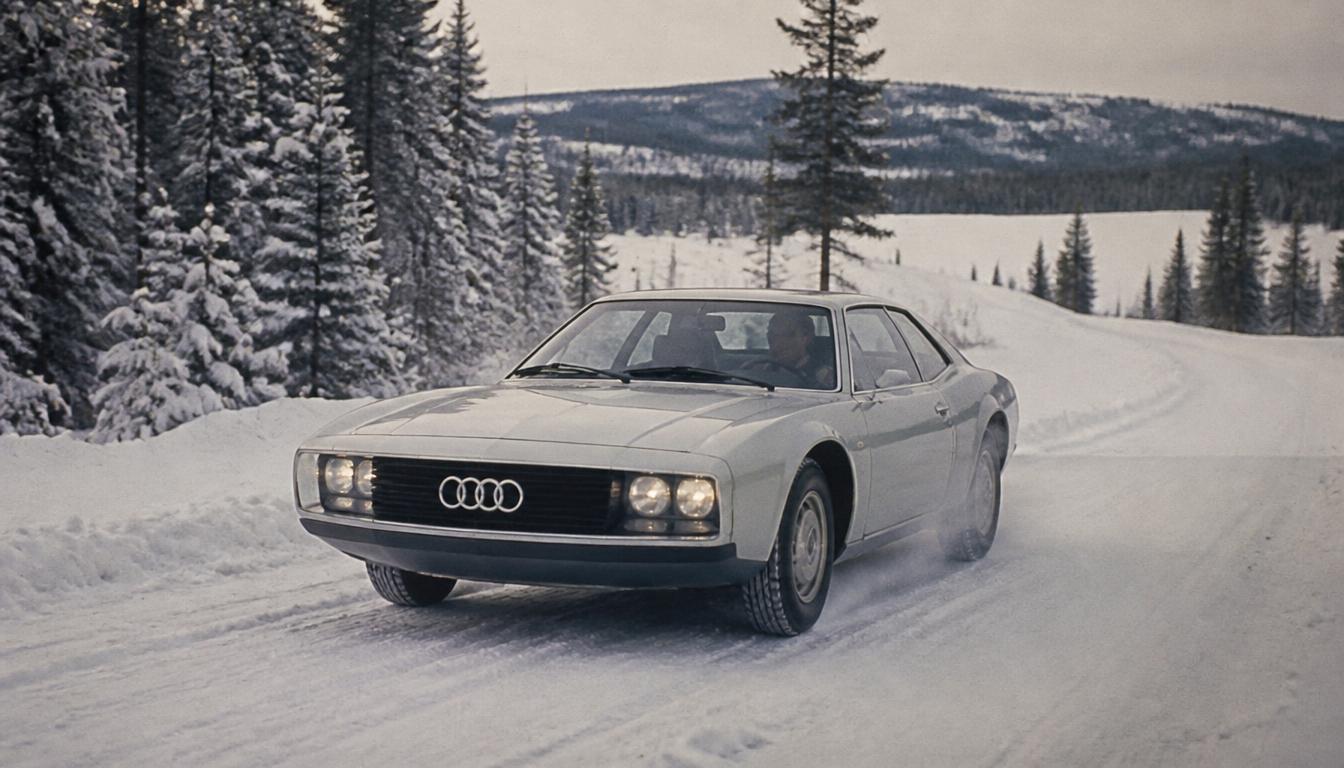
[1] The Crazy Challenge in the Snow : The Birth of Quattro
In the late 1970s, conventional automotive wisdom dictated that passenger cars should be rear-wheel drive (RWD) or lightweight front-wheel drive (FWD). Four-wheel drive (4WD) was widely considered suitable only for heavy trucks, military jeeps, or off-road vehicles facing extreme weather—deemed too heavy, complex, and plagued by power loss.
Audi’s engineers laughed at this conventional wisdom. The spark ignited during a severe Scandinavian winter test in 1976.
- The Shock of the Volkswagen Iltis Military Vehicle : Jörg Bensinger, an Audi test engineer, was evaluating Volkswagen's compact military 4WD vehicle, the Iltis, on snow-covered icy roads. While racing prototype sedans struggled and spun their wheels helplessly in feet of snow, the rugged military 4WD vehicle sliced through effortlessly.
- "What if we put this system into a high-performance sedan?" Bensinger pitched this wild idea to Ferdinand Piëch, Audi’s Head of Development (later Chairman of the Volkswagen Group). Piëch immediately embraced the audacious concept, kicking off a top-secret project.
- The greatest hurdle was weight and packaging. You couldn't simply cram a heavy truck 4WD system into a passenger car transmission. Audi engineers solved this with a masterstroke of engineering: the "Hollow Secondary Shaft," clearing a pathway right through the middle of the transmission to distribute power front and rear.
The Geek Victory That Shocked the Rally World
When the Audi Quattro debuted at the 1980 Geneva Motor Show, industry experts scoffed, calling it "too complex and bound to break down."
Yet Audi entered the car straight into the World Rally Championship (WRC). In a rallying landscape dominated by 2WD race cars, the Audi Quattro tore through snow, mud, and asphalt with overwhelming grip. Alongside legendary drivers like Michèle Mouton, Hannu Mikkola, and Walter Röhrl, Audi completely rewrote motorsport history. Shattering the myth that "4WD is heavy and slow," Audi cemented AWD as an indispensable staple of high-performance sedans and sports cars. That was the legend of the Quattro.
[2] Mechanical Precision : A Deep Dive into Quattro Technology
Unlike digital-heavy all-wheel-drive systems, Audi’s Quattro is rooted in mechanical intuition.
- The Magic of the Torsen Differential : Used in early Quattros and longitudinal engine platforms (MLB platform) like the A6, mechanical Torsen (Torque-Sensing) differentials react instantly. Before computers even process sensor signals, physical gear teeth detect changes in road resistance and tire grip, shifting torque to the optimal axle in 0.01 seconds.
- Torque Vectoring & Wheel Selective Torque Control : When carving into corners, it applies micro-braking to the inside wheel while sending more torque to the outside wheel, allowing the car to trace the driver's exact line out of the turn.
- Quattro Ultra : An on-demand system built for maximum efficiency. During normal cruising, it operates in front-wheel drive to save fuel, but instantly engages the rear clutch mechanically and electronically the moment slip is detected or dynamic driving is required.
While Mercedes' 4MATIC and BMW's xDrive rely heavily on electronic control, Audi’s Quattro wields "the overwhelming trust delivered by physical mechanical hardware" as its ultimate weapon.
[3] Distinct Audi Exclusivities Set Apart from Benz and BMW
- Virtual Cockpit : The Pioneer of Digital Interfaces Long before digital instrument clusters became standard industry practice, Audi pioneered the trend. Debuting in 2014 on the 3rd-gen TT and A4, the Audi Virtual Cockpit replaced traditional dials with a massive 12.3-inch high-resolution display directly in front of the driver. Shrinking the speedometer and RPM gauges to project full-screen navigation maps across the cluster was mind-blowing for drivers at the time—a masterclass in driver-centric UX.
- The "Lines and Surfaces" Design Language Rooted in Bauhaus Architecture If Mercedes boasts flowing curves (Sensual Purity) and BMW emphasizes sharp character lines and muscular bodies, Audi’s design philosophy inherits the bloodline of Germany’s legendary Bauhaus design school. Uncluttered surfaces, razor-sharp character lines, and horizontally emphasized front grilles give Audi cars a timeless, modern elegance that never goes out of style.
- Aluminum Space Frame (ASF) and Body Weight Reduction Audi possessed an obsessive drive to shed vehicle weight. Through its proprietary Aluminum Space Frame (ASF) technology, high-strength aluminum and composite materials were integrated heavily into the vehicle's skeleton. Lighter weight improves not only fuel efficiency but also handling agility, braking distance, and ride quality by reducing the burden on suspensions.
- "Magicians of Light" : The Pinnacle of Lighting Engineering The industry joke that "Audi is actually a lighting company" is high praise. Audi elevated headlamps from simple night-vision tools into vehicle-defining art and active safety systems.
- Matrix LED Headlamps & Laser Light : Cameras detect oncoming and leading traffic in real-time, shutting off individual LEDs to prevent blinding others while keeping the rest of the road brightly illuminated.
- Dynamic Turn Signals & OLED Taillights : Audi popularized flowing turn signals and introduced digital OLED taillights allowing custom graphics based on driver preference or driving mode.
While Benz pursued authority and comfort, and BMW chased driving pleasure and sportiness, Audi chose to be engineering geeks who relished technical audacity. They proved the skeptics wrong, democratized aluminum frames, elevated lighting into art, and introduced the digital cockpit. Their philosophy was simple: “Don't just build a cooler car; pack it with more flawless technology.”
3. The Lineage of the A6 (C1 to C8) : A Grand Chronicle of Advanced Sedans
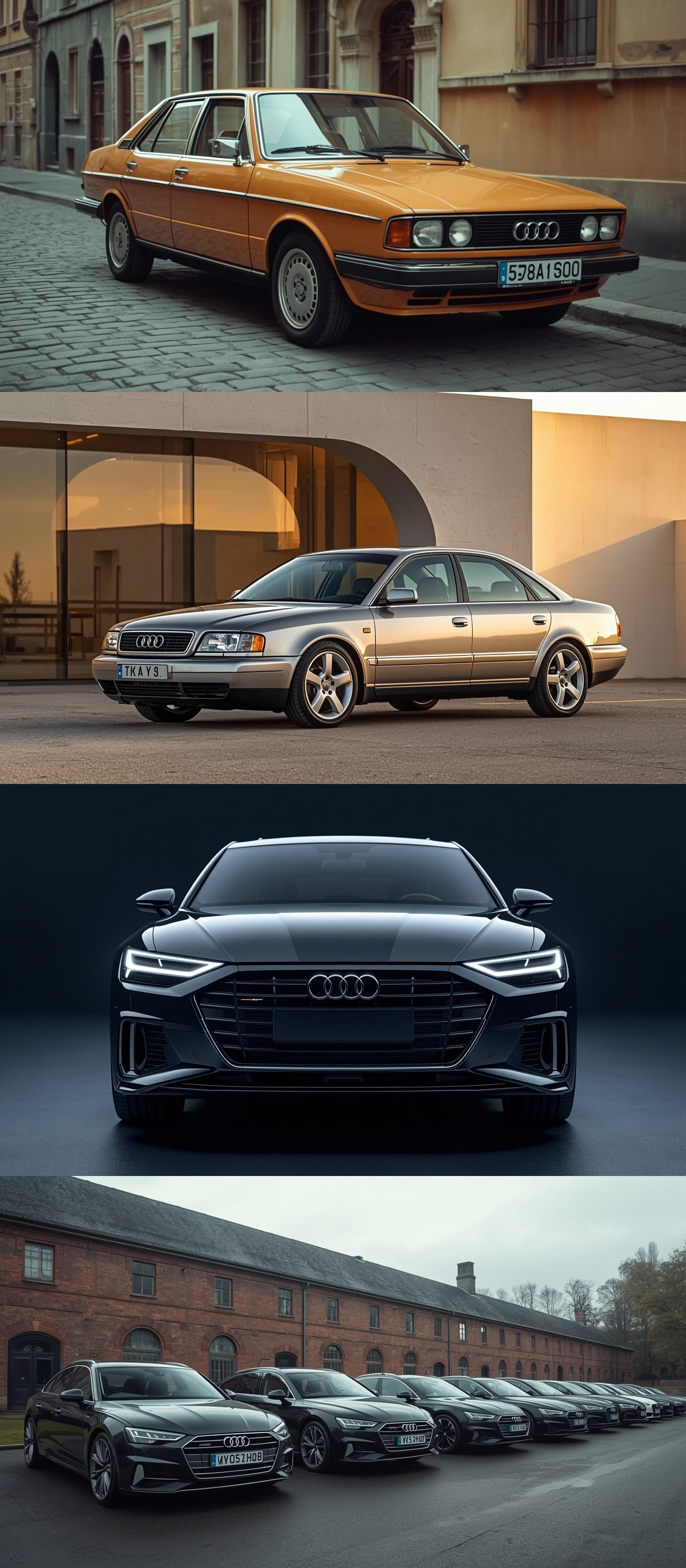
Although the "A6" nameplate didn't officially debut until 1994, its roots stretch back to the Audi 100 launched in 1968.
- C1 Generation (1968–1976) : The Resuscitation Signal Developed in secret by engineers after Volkswagen's acquisition, the "100" originally signified its 100-horsepower engine. With a clean, classic sedan silhouette, it single-handedly pulled the dying Audi brand into the independent premium tier.
- C2 Generation (1976–1982) : The Inception of the Inline-5 Engine Featuring sharper, more aerodynamic lines, this generation introduced the legendary Inline-5 (I5) gasoline engine. Designed to combine the economy of a 4-cylinder with the smoothness of a 6-cylinder, the I5 became an enduring auditory and mechanical signature of Audi.
- C3 Generation (1982–1991) : Aerodynamic Revolution and Fully Galvanized Steel (Cd 0.30) One of the most shocking innovations in automotive design history. Adopting flush glazing where windows sat perfectly flat against the body, it achieved a phenomenal drag coefficient of Cd 0.30, becoming the pioneer of streamlined sedans. It also applied fully galvanized steel bodies to combat rust.
- C4 Generation (1990–1997) : The Birth of "A6", V6 Engines, and TDI Diesels Retaining the Audi 100 heritage initially, a 1994 facelift officially introduced the A6 nomenclature. V6 engines and high-performance TDI direct-injection diesel engines took center stage, alongside refined Quattro systems.
- C5 Generation (1997–2004) : A Masterpiece of Streamlined Design A legendary masterpiece whose rounded, arched roofline still looks fresh today. It introduced multi-link aluminum suspension arms, drastically improving ride comfort and handling balance while dominating Euro NCAP safety ratings.
- C6 Generation (2004–2011) : Singleframe Grille, MMI, and the Lighting Revolution Led by legendary designer Walter de Silva, this generation introduced the bold Singleframe Grille and MMI (Multi Media Interface). Iconic LED daytime running lamps cemented Audi's reputation as a lighting pioneer.
- C7 Generation (2011–2018) : Aluminum-Hybrid Body and Matrix LEDs The geometric perfection of straight lines and surfaces reached its peak. Hybrid aluminum-steel construction reduced weight while boosting torsional rigidity, complemented by fully commercialized Matrix LED headlamps.
- C8 Generation (2018–Present) : The Fusion of Digital Cockpit and Mild Hybrid The current model defining the "digital luxury sedan" with a virtually button-free, futuristic interior. Built on the MLB Evo platform, it features dual haptic-feedback touchscreens and a 48V Mild Hybrid (MHEV) system maximizing urban efficiency and smooth regenerative braking.
4. Why the Audi A6? : Real Reasons Cited by Automotive Communities
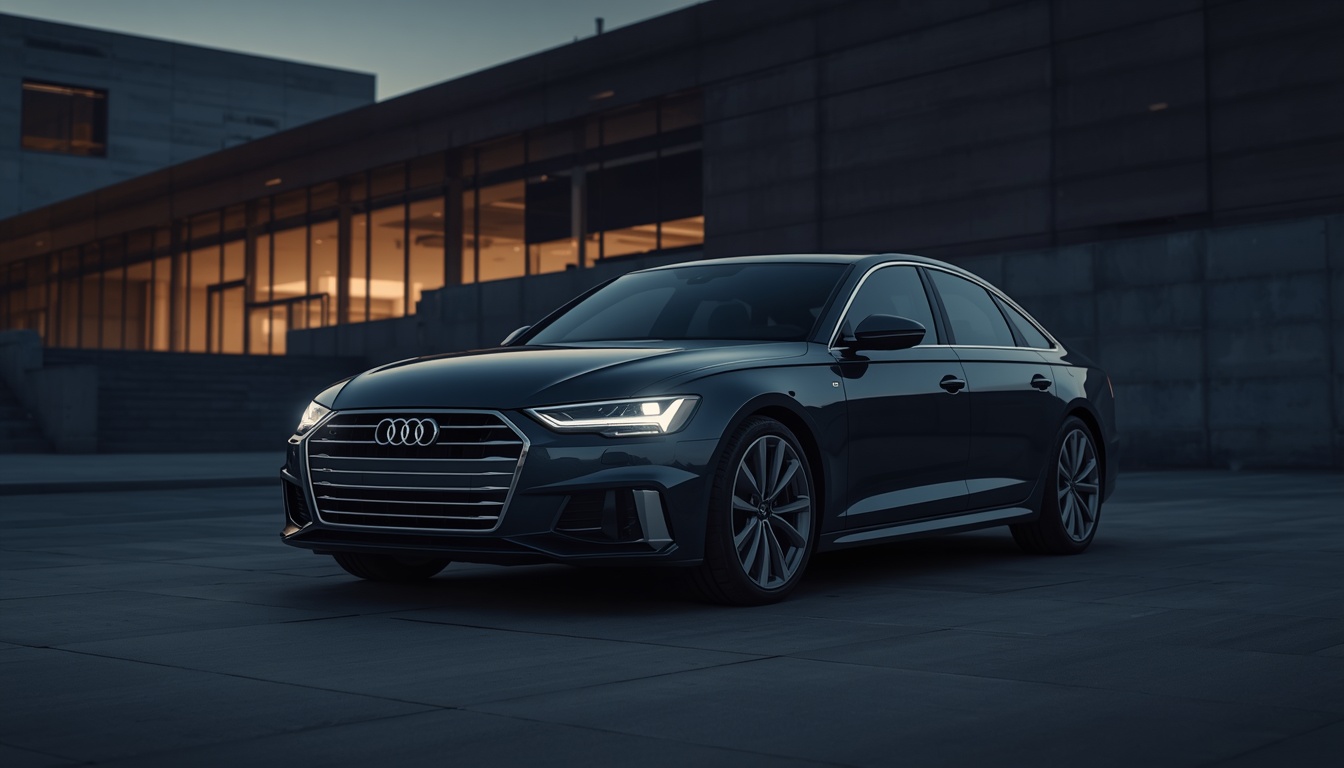
Beyond design and lighting, what do real owners and automotive communities (like Club Audi) praise about the A6?
- Exceptional Price-to-Performance (Aggressive Promotions) : Unlike Benz and BMW which tightly guard price floors, Audi is renowned for attractive seasonal promotions. This makes the A6 a "smart shortcut" to experiencing German premium sensitivity, Quattro stability, and advanced tech at a far more reasonable budget.
- Class-Leading NVH (Noise, Vibration, Harshness) and Serene Quietness : Praised by real owners for exceptional sound insulation. With standard acoustic laminated glass on many trims and smooth suspension bushing tuning, it offers a "library-like sealed silence" that minimizes fatigue on long journeys.
- The Ultimate Psychological Armor in Rain and Snow ("Rain Storm Kings") : When rear-wheel-drive sedans slip in heavy downpours, Quattro locks onto the road surface like it's on rails. For unpredictable weather, Quattro provides supreme psychological reassurance.
- An Intelligent, Cool, and Unpretentious Urban Image : Free from flashy or overbearing stereotypes, the A6 is widely chosen by professionals, corporate workers, and intellectuals as a symbol of sophisticated, understated success.
- The Blessing of the Standard "S-Line Package" : Unlike competitors that lock aggressive styling behind expensive packages, Audi generously applies sporty bumpers and sleek air intakes even to lower or base trims, ensuring strong visual presence right out of the box.
[Closing Part 1]
From August Horch’s deep-seated engineering perfectionism, to the rally-dominating madness of Quattro, the evolutionary chronicle from C1 to C8, and the practical charms praised by real owners—the Audi A6 is far more than a mere vehicle; it is "the most flawless equilibrium forged by engineering precision and rational judgment."
In Part 2, we will peel back the interior skin to explore how this hardware foundation translates into cutting-edge cabin digital experiences and infotainment innovations.
(Note: While my personal driving experience with Audi is limited compared to my 6 years with a BMW 3-Series (F30) and friends' Mercedes E-Classes—mostly limited to test-driving a Q3 with a friend's mother and a friend's A3 Plug-in Hybrid—Audi’s restrained design, clean execution, and understated coolness have always held a strong appeal. Putting aside past diesel-gate controversies, I've often thought about bringing one home as my own personal daily driver someday.)
[Deep Dive]
Want to stay ahead of the curve in the rapidly evolving mobility ecosystem? Explore our in-depth analysis on how Tesla’s FSD and traditional automotive innovations are redefining the future of transportation.
Mercedes-Benz E-Class [Part 1]: Das Beste oder Nichts: Deconstructing the Engineering Legacy of the Mercedes-Benz E-Class
Hello, this is Jeonramhoejang. After completing our deep dive into the BMW 5 Series, I am ready to embark on a new epic—the story of the most iconic and illustrious name in mobility: the Mercedes-Benz E-Class.This series isn’t just about spec sheets or
cryptoteslaglobal.com
BMW 5 [Part 1] Why Mercedes Feared It : The 50-Year Legacy of the BMW 5 Series and Its Hidden Giants
BMW 5 [Part 1] Why Mercedes Feared It : The 50-Year Legacy of the BMW 5 Series and Its Hidden Giants
Hello, automotive enthusiasts and smart investors!Today, we are diving deep into the ultimate benchmark of executive sports sedans—the BMW 5 Series.This isn't just another generic review listing horsepower and torque. We are launching a comprehensive 3-p
cryptoteslaglobal.com
[Global Insight] The Prelude to Autonomous Driving: The Clash for Technological Hegemony – Tesla FSD vs. The NVIDIA Coalition
Autonomous vehicles are no longer the stuff of futuristic science fiction; they are our current reality. The global automotive market is currently divided into two massive camps, locked in a fierce battle to claim the "Holy Grail" of full autonomous drivin
cryptoteslaglobal.com
The Tesla Dry Electrode Dilemma: Should Model Y Juniper Buyers Wait or Take Delivery Now?
The Tesla Dry Electrode Dilemma: Should Model Y Juniper Buyers Wait or Take Delivery Now?
Recent news of Tesla advancing its "Dry Electrode Coating" process has sent shockwaves through the EV community. With rumors of massive range boosts and dramatic price cuts, many Tesla Model Y Juniper reservation holders are caught in a dilemma: Should I c
cryptoteslaglobal.com