A tectonic shift is rattling the stablecoin market. With the launch of the Open Standard USD (OUSD)—backed by a colossal 140-corporation consortium including BlackRock, Visa, and Google—incumbents are facing an existential crisis. Discover how this yield-sharing powerhouse triggered a 17% crash in Circle's stock, its seamless integration with the Canton Network, and why the U.S. Senate's CLARITY Act is suspiciously delayed.
1. The OUSD Shockwave and the CRCL Liquidation
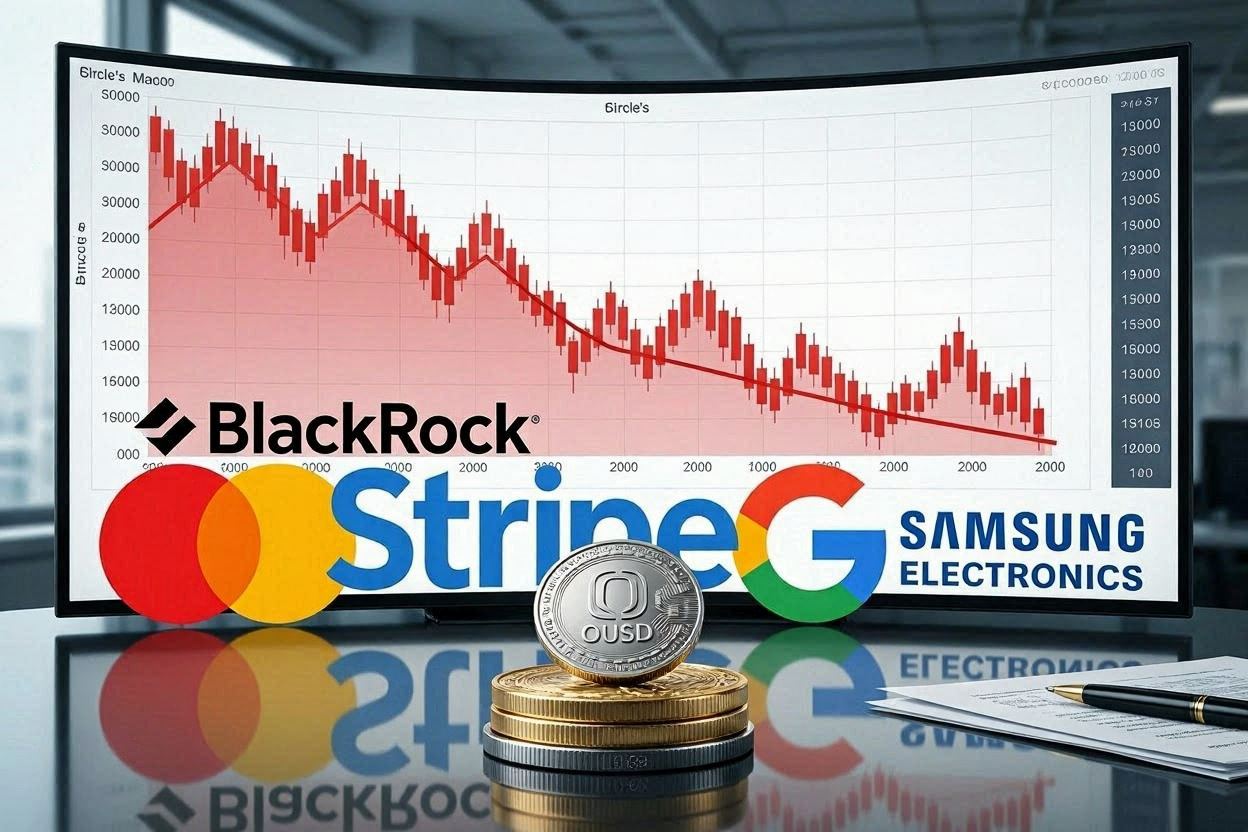
The stablecoin landscape just witnessed its most disruptive event yet: the official launch of the Open Standard USD (OUSD). Backed by an unprecedented alliance of over 140 global giants—ranging from TradFi heavyweights like BlackRock and Coinbase to payment titans like Visa, Mastercard, Stripe, and tech leaders like Google—OUSD has instantly rewritten the rules of digital currency.
The immediate casualty of this announcement was Circle (the issuer of USDC), whose stock (CRCL) plummeted over 17% within 24 hours. The market's panic stems directly from OUSD’s predatory and innovative business model: Yield Sharing.
- Legacy Monopolization (USDT & USDC): Traditional issuers keep 100% of the interest generated from reserve assets (such as U.S. Treasuries). In fact, roughly 99% of Circle’s operating income relies on this interest retention.
- The OUSD Paradigm Shift: OUSD offers completely free issuance and redemption while actively distributing the yield generated from reserves back to the ecosystem partners that integrate and distribute the coin.
For enterprises like Visa or Samsung, the financial incentive to abandon USDC in favor of OUSD is absolute. To ensure maximum technical throughput from day one, OUSD has chosen Solana as its initial launchpad network before scaling to other Layer 1 chains.
2. The Strategic Convergence with the Canton Network

To comprehend the full scope of Wall Street's master plan, one must analyze OUSD alongside the Canton Network—the premier institutional blockchain highway designed for Real-World Asset (RWA) tokenization and private B2B settlements.
- Sovereign TradFi Infrastructure: Both Canton Network and OUSD represent a coordinated departure from purely decentralized, crypto-native spaces.
- The Perfect Synergy: While the Canton Network serves as the highly secure, privacy-centric financial highway, OUSD acts as the yield-bearing, compliant fuel (reserve currency) designed to run seamlessly on top of it.
- Phasing Out Incumbents: While institutions previously tested tokenized asset transactions using cross-chain versions of USDC, the emergence of OUSD allows Wall Street to internalize profits rather than enriching third-party tech firms like Circle.
3. Deciphering the Delay of the CLARITY Act
The most critical political angle of the OUSD narrative is its deeply intricate relationship with the Digital Asset Market Clarity Act (CLARITY Act), which currently faces continuous friction and delays in the U.S. Senate.
- Exploiting the GENIUS Act Loophole: Passed to regulate stablecoins, the GENIUS Act restricted issuers from paying interest directly to retail consumers. Wall Street cleverly circumvented this by designing OUSD to distribute yield exclusively via a B2B framework to enterprise partners, bypassing consumer-centric regulatory barriers.
- The "Too Big To Fail" Grabbing Window: The prolonged delay of the CLARITY Act is likely not an accident. This regulatory vacuum gives the 140-company consortium the golden time needed to aggressively scale OUSD, establishing it as the de facto global standard before rigid laws are written into place.
- Aggressive Institutional Lobbying: Powerhouses like BlackRock and Visa hold massive lobbying leverage. It is highly probable that behind-the-scenes maneuvers are stalling the Senate vote to ensure the final bill favors a "consortium-led, yield-sharing" stablecoin model over singular entities like Tether or Circle.
4. Conclusion : The Realignment of Web3 Power
The arrival of OUSD is a loud declaration that the true ownership of Web3 infrastructure is transitioning from crypto-native founders to traditional institutional cartels. For global investors, monitoring the rapid adoption of OUSD on high-speed chains like Solana, the expansion of the Canton Network ecosystem, and the eventual political resolution of the CLARITY Act in August will be paramount to navigating the next macro cycle of digital finance.
Personally, I don't see the passage of the CLARITY Act as the ultimate make-or-break moment for the crypto market. The SEC Chair has already signaled that they have a comprehensive regulatory framework ready to go, regardless of this bill, and BlackRock is actively pushing for its enactment anyway. Sure, there’s some resistance from a few Senate Republicans, but that’s just background noise. The future of crypto is already locked in—it’s an inevitable destination.
[Deep Dive]
To gain a deeper understanding of the institutional shifts within the crypto market, I highly recommend exploring my previous analyses.
The Ripple Effect of DTCC’s Tokenization Roadmap: The Technical Roles and Macro Valuation of XRP & Hedera (HBAR)
Explore how DTCC's multi-chain tokenization roadmap sets the stage for XRP and Hedera (HBAR) to become the ultimate institutional infrastructure. 1. The Great Shift in Traditional Financial Infrastructure : What DTCC’s Tokenization Truly Means The Deposi
cryptoteslaglobal.com
The Ultimate Crypto Shakeout : Open USD, Global Regulations, and the XRP Black Swan Scenario
The Ultimate Crypto Shakeout : Open USD, Global Regulations, and the XRP Black Swan Scenario
While retail investors celebrate the launch of the massive Open USD (OUSD) consortium and Taiwan's historic crypto legislation, the smart money might be orchestrating the greatest trap in crypto history. Discover why XRP could soon spike to $4, only to fac
cryptoteslaglobal.com
The Great Capital Reallocation: Solana’s Surge, Ondo Integrating XRPL, and the Science of Buying the Crypto Bottom
While retail sentiment is paralyzed by prolonged market boredom, the smart money is finalizing the foundational infrastructure for the next liquidity cycle. From Securitize’s major RWA milestone on Solana to Ondo Finance leveraging the XRP Ledger for U.S
cryptoteslaglobal.com
Why Institutional Investors Are Looking Beyond Bitcoin: The Technological Backbone of Ripple (XRP)
Why Institutional Investors Are Looking Beyond Bitcoin: The Technological Backbone of Ripple (XRP)
The current global payment system is fundamentally broken. Trillions of dollars are trapped in the archaic "Nostro/Vostro" account structure, serving as a massive drag on global capital efficiency. Financial plumbing is being overhauled, and institutional
cryptoteslaglobal.com