While retail sentiment is paralyzed by prolonged market boredom, the smart money is finalizing the foundational infrastructure for the next liquidity cycle. From Securitize’s major RWA milestone on Solana to Ondo Finance leveraging the XRP Ledger for U.S. Treasury tokenization, discover why a September rate cut is mathematically locked in—and why all roads ultimately lead to institutional asset integration.
1. The RWA Paradigm and Solana's (SOL) Mass Market Dominance

Price charts may appear stagnant, but the underlying transactional velocity of monolithic architecture is hitting unprecedented highs. Securitize, recently listed on the NYSE, marked a historic milestone by tokenizing $300 million of equity directly across the Avalanche and Solana networks, proving the operational readiness of high-throughput public ledgers.
Solana is decisively winning the consumer-facing (B2C) and utility fronts. Backed by enhanced on-chain governance that ensures absolute institutional transparency, Solana has been selected as a core launchpad for Open USD (OUSD)—the massive 140-corporation stablecoin consortium backed by giants like Visa, BlackRock, Samsung, and Dunamu. For protocols requiring micro-cent transaction fees and instant finality, Solana has effectively built an unbreakable moat.
2. The B2B Institutional Backbone : Why Corporate Treasury Flows to XRPL
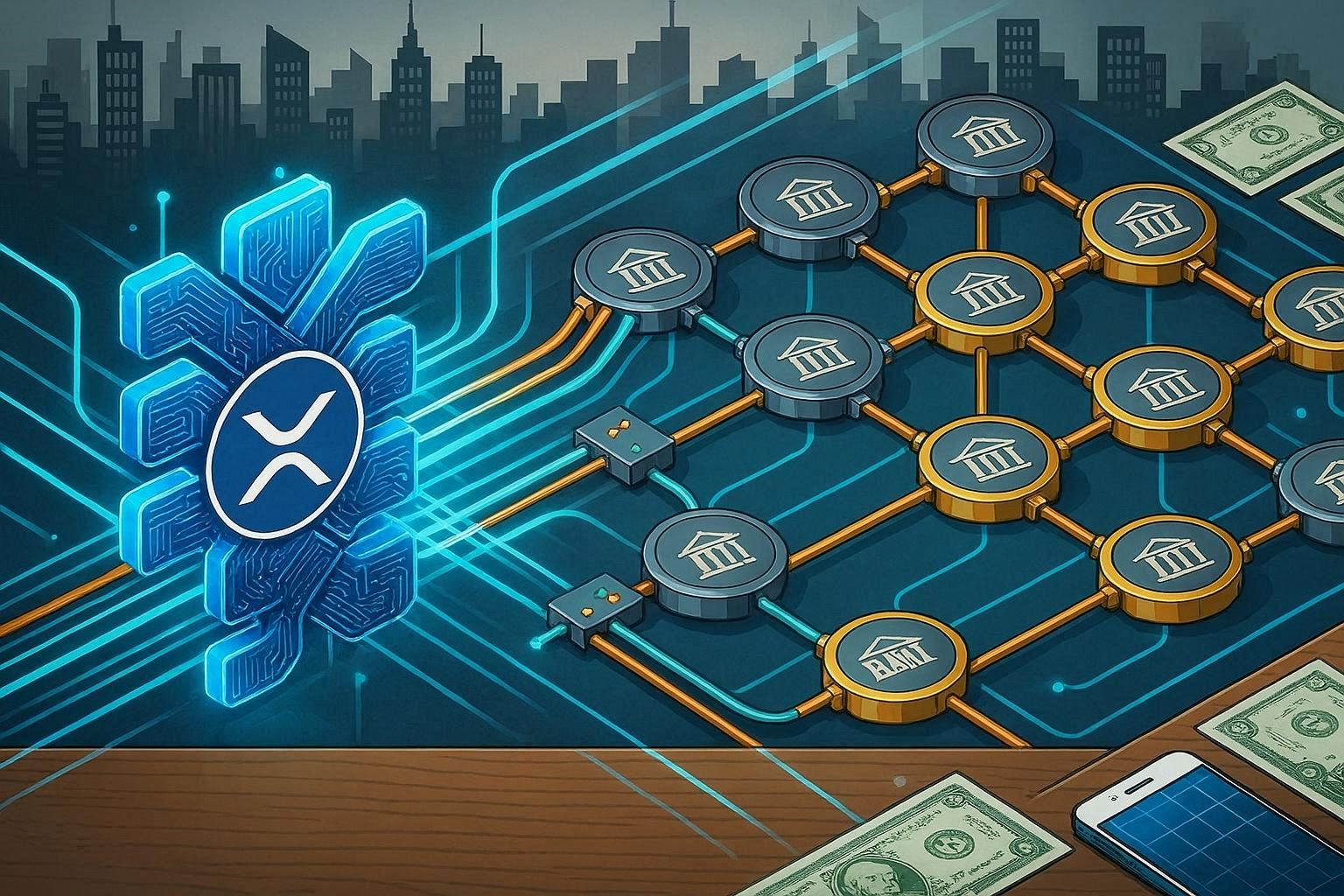
If Solana is leading the charge in retail payments and dynamic DeFi utilities, the definitive end-game for multi-trillion dollar institutional asset tokenization—specifically sovereign debt and corporate treasuries—is converging on the XRP Ledger (XRPL).
Ondo Finance, a dominant force in the RWA sector, has pioneered the tokenization of traditional financial instruments, including BlackRock ETFs. Crucially, to facilitate 24/7, instantaneous settlement and liquidity management for tokenized U.S. Treasuries, Ondo has integrated deeply with the XRP Ledger.
This milestone coincides with XRP spot ETF Assets Under Management (AUM) reclaiming the critical $1 Billion threshold. Furthermore, the imminent implementation of the XLS-65 and XLS-66 amendments will establish native, single-asset staking and advanced institutional credit infrastructure directly on-chain. Complemented by the integration of institutional lending protocols like Doppler and Soil, XRPL is transforming into the primary sovereign-grade layer where central banks and mega-corporations can securely deposit, move, and yield-farm corporate capital.
3. Deconstructing the Liquidity Trap: Volatility vs. Macro Reality
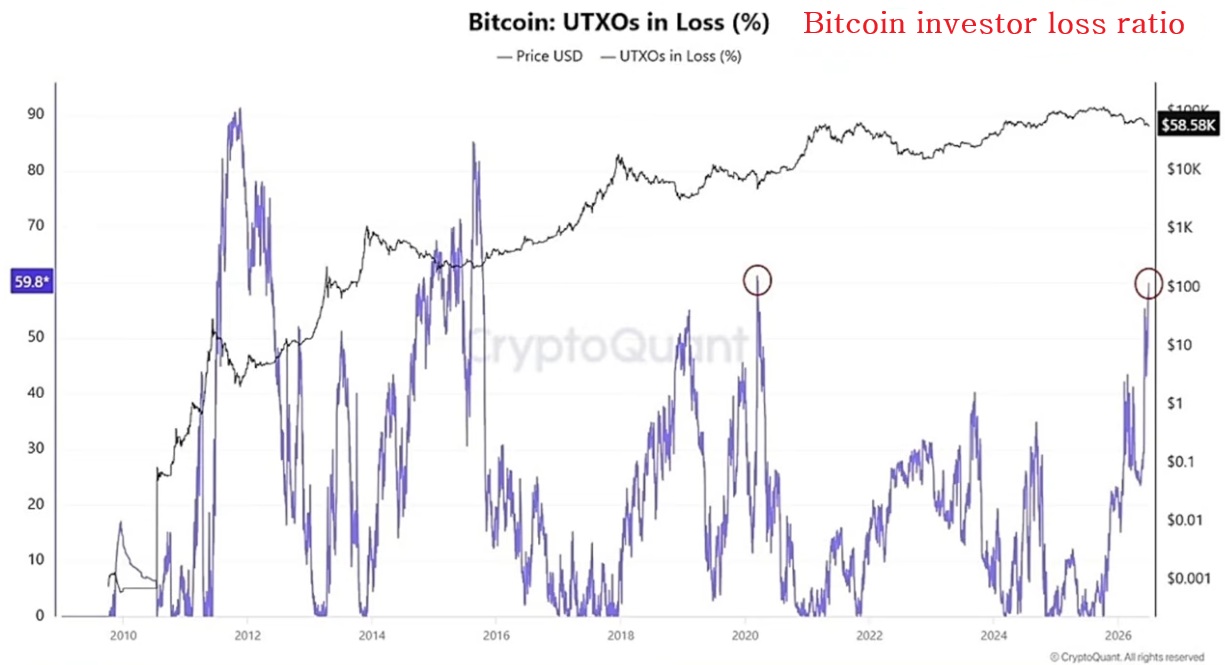
The metric indicating an absolute market bottom is undeniable: 60% of all Bitcoin UTXOs are currently sitting in a net realized loss. Historically, this extreme level of retail capitulation has only been reached twice: the absolute capitulation phase of the 2018 bear market and the catastrophic March 2020 COVID-19 crash. However, market makers are utilizing specific tactical bottlenecks to shake out weak hands before the next leg up:
- MSTR & Political Maneuvering: MicroStrategy’s (MSTR) structural capital realignments and the short-term pressure on its preferred stock structures (STRC) are actively being used by institutional whales to engineer localized liquidations. Politically, partisan gridlock in Washington has caused friction regarding the final passage of the U.S. Clarity Act. Despite this temporary noise, the structural probability of the bill passing by late July or August remains exceptionally high at 60-70%.
- The Golden Macro Trigger: WTI Crude Oil has broken down below key supports, plummeting toward the mid-$60 range. This massive deflationary shock drastically lowers upcoming CPI and PPI metrics, granting the Federal Reserve the exact political and economic cover required to initiate a pivotal rate cut during the September FOMC meeting.
4. Psychological Protocol : The Art of Buying "Melting Ice Cream"
Allocating capital at the absolute bottom of a macro cycle is psychologically jarring. It feels like buying melting ice cream—the moment you purchase the asset, your near-term portfolio valuation appears to bleed.
Yet, financial history demonstrates that generational 10x to 20x asymmetric returns are exclusively born within these exact windows of max pain and retail apathy. Conviction cannot be borrowed from social media feeds; it must be derived from fundamental analysis. When you observe systemic institutional adoption by the world's largest custodians on networks like SOL and XRPL, the macro destination becomes clear. Manage your leverage, utilize strictly disposable capital, and maintain your positions. The baseline is set.
I, too, am cultivating the habit of DCA-ing into my positions during this painful stretch. My conviction in the long-term value and fundamentals of SOL, XRP, and HBAR remains unshakable, regardless of the current market turbulence.
[Deep Dive]
To gain a deeper understanding of the institutional shifts within the crypto market, I highly recommend exploring my previous analyses.
The Ripple Effect of DTCC’s Tokenization Roadmap: The Technical Roles and Macro Valuation of XRP & Hedera (HBAR)
Explore how DTCC's multi-chain tokenization roadmap sets the stage for XRP and Hedera (HBAR) to become the ultimate institutional infrastructure. 1. The Great Shift in Traditional Financial Infrastructure : What DTCC’s Tokenization Truly Means The Deposi
cryptoteslaglobal.com
Clearstream’s Crypto Expansion: Why Institutions are Labeling Major Altcoins as 'Financial Infrastructure'
With Spot Bitcoin ETFs solidified, Wall Street’s focus has shifted to the next critical bottleneck: Digital Asset Custody. Deutsche Börse’s Clearstream has recently expanded its custody service to include XRP, SOL, ADA, and three others. This is a wat
cryptoteslaglobal.com
Why Institutional Investors Are Looking Beyond Bitcoin: The Technological Backbone of Ripple (XRP)
Why Institutional Investors Are Looking Beyond Bitcoin: The Technological Backbone of Ripple (XRP)
The current global payment system is fundamentally broken. Trillions of dollars are trapped in the archaic "Nostro/Vostro" account structure, serving as a massive drag on global capital efficiency. Financial plumbing is being overhauled, and institutional
cryptoteslaglobal.com
The Rise of BlackRock-Led OUSD: Why Circle (CRCL) Crashed and the Secret Delay of the Clarity Act
The Rise of BlackRock-Led OUSD: Why Circle (CRCL) Crashed and the Secret Delay of the Clarity Act
A tectonic shift is rattling the stablecoin market. With the launch of the Open Standard USD (OUSD)—backed by a colossal 140-corporation consortium including BlackRock, Visa, and Google—incumbents are facing an existential crisis. Discover how this yie
cryptoteslaglobal.com