From being pronounced "dead" during the FTX collapse to hitting new all-time highs in 2025, Solana’s resilience is unmatched. Discover the architectural secrets that make it the ultimate "Ethereum Killer," how global giants like Visa are utilizing its network, and the exact step-by-step method to maximize your yields through Liquid Staking.
1. The Genesis of the Time-Sync Blockchain
While Ethereum pioneered smart contracts, it has long suffered from a critical bottleneck: agonizingly slow processing times and exorbitant gas fees during peak usage. Enter Solana (SOL).
Founded by Anatoly Yakovenko—a former software engineer at Qualcomm and Dropbox with a deep background in distributed systems and compression algorithms—Solana's whitepaper debuted in 2017. The core innovation Yakovenko introduced was inspired by telecommunications: Proof of History (PoH).
Instead of waiting for all network nodes to slowly agree on the sequence of transactions, Solana utilizes a cryptographic timestamp system. By sharing a single, synchronized global clock, the network can process tens of thousands of transactions per second (TPS) almost instantly.
2. The Architectural War: Modular vs. Monolithic
To truly understand Solana's value proposition, one must look at how it solves the scalability trilemma compared to its biggest rival, Ethereum.
- Ethereum (The Modular Approach) : Ethereum prioritizes absolute decentralization and security on its Base Layer (L1). To handle high traffic, it relies on "satellite cities" known as Layer 2 scaling solutions (like Arbitrum or Polygon) to process transactions off-chain before settling them on the mainnet.
- Solana (The Monolithic Approach) : Solana rejects fragmentation. It operates entirely as a single, massive 100-lane superhighway. Everything—from NFT minting to complex DeFi swaps—happens on one unified, high-speed layer.
Because of this monolithic architecture, traditional finance (TradFi) giants prefer Solana. Visa, Stripe, and PayPal have aggressively integrated Solana for stablecoin settlements due to its ability to process transactions in milliseconds for less than a fraction of a cent.
3. The Most Dramatic Comeback in Crypto History

Solana’s price narrative is a masterclass in resilience:
- The 2021 Bull Run : SOL reached its first major peak at around $260.
- The 2022 FTX Collapse (The Darkest Hour) : Heavy institutional backing from Sam Bankman-Fried’s FTX turned into a nightmare when the exchange collapsed. SOL plummeted by 97%, crashing to $7. The mainstream media declared the project dead.
- The 2025 Resurrection : Defying all odds, the developer community refused to abandon ship. Driven by robust network upgrades, the meme coin super-cycle (BONK, WIF), and post-election pro-crypto policies, SOL shattered its previous records, hitting a new All-Time High (ATH) near $295–$300.
- Current State (2026) : After a steep climb, the asset is currently undergoing a healthy consolidation phase, building structural support in the $70–$100 range.
4. Maximizing Yields: The Liquid Staking Guide
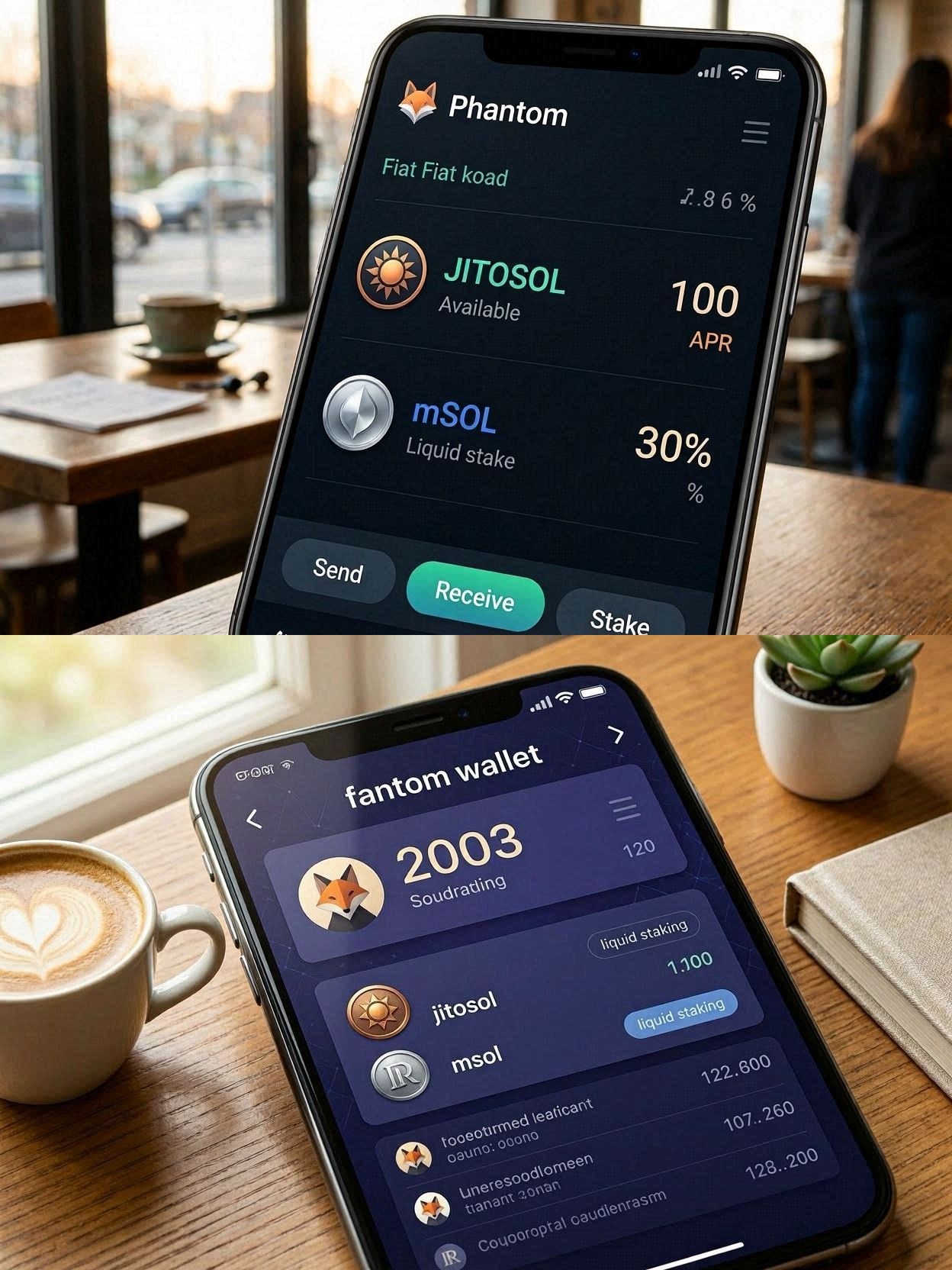
Solana operates on a Proof-of-Stake (PoS) consensus. By delegating your SOL to validators, you help secure the network and earn an Annual Percentage Yield (APY) historically hovering around 5% to 7%. However, locking up your tokens is outdated. Enter Liquid Staking.
When you liquid stake, you receive a "receipt token" (LST) representing your staked SOL, which appreciates in value over time.
How to Execute Liquid Staking :
- Set Up a Wallet : Download a self-custody wallet like Phantom or Backpack and transfer your SOL from an exchange.
- Choose a Platform : Connect your wallet to leading liquid staking protocols like Jito, Marinade Finance, or the aggregator Sanctum.
- Stake and Receive LSTs : Deposit your SOL. In return, you will receive tokens like JitoSOL or mSOL. These tokens automatically accrue the 5-7% staking yield.
- Double-Dip in DeFi (Optional) : You can now take your JitoSOL and deposit it into lending protocols like Kamino or Marginfi to earn additional yield on top of your staking rewards.
5. Future Outlook and Institutional Price Predictions
The future of Solana hinges on the highly anticipated Firedancer validator client upgrade, which theoretically pushes the network's capacity to an astonishing 1 million TPS, effectively overpowering traditional global financial networks like Visa or Mastercard.
Major institutions are increasingly bullish on SOL's role as the "financial operating system of the internet":
- Standard Chartered : Projects a long-term target of $500, driven by massive stablecoin adoption.
- Cosmo Jiang (Pantera Capital) : Predicts a $1,000 target in the next major liquidity cycle, heavily influenced by potential Spot ETF approvals.
- VanEck : Envisions a hyper-bullish scenario reaching $3,000+ if Solana becomes the dominant base layer for Real-World Asset (RWA) tokenization.
Solana is no longer a speculative altcoin ; it is a battle-tested, institutional-grade infrastructure. For any serious investor, SOL remains an essential pillar for portfolio diversification.
(For a deeper dive into adjusting your altcoin portfolio—including XRP, SOL, and HBAR—check out our comprehensive guide on [Optimizing Your Core Altcoin Portfolio].)
Personally, alongside BTC, ETH, XRP, and HBAR, I have made SOL a cornerstone of my main portfolio and keep it actively staked. I am fully convinced that once new liquidity flows into the crypto market and regulatory clarity is secured, we will see that familiar, explosive price action once again. To all the investors grinding through this tedious sideways market—hang in there!
[Deep Dive]
To gain a deeper understanding of the institutional shifts within the crypto market, I highly recommend exploring my previous analyses.
Why Polygon (POL) is Far From Dead: The Ultimate Value Venture in Ethereum's Layer 2
Why Polygon (POL) is Far From Dead: The Ultimate Value Venture in Ethereum's Layer 2
Is Polygon a dormant project, or is it secretly gearing up for a massive breakout? While its price performance has left many retail investors feeling frustrated, a deeper look into its recent POL migration, real-world corporate partnerships, and dominance
cryptoteslaglobal.com
The Grand Segmentation : Why Ripple (XRP) Ceded Western Union and MoneyGram to Solana for High-Moat Institutional RWA
Mainstream critics point to Western Union and MoneyGram migrating to Solana (SOL) and Stellar (XLM) as a failure for Ripple. However, deep-rooted macro analysis reveals a brilliant structural pivot. Discover why Ripple stepped away from retail B2C remittan
cryptoteslaglobal.com
Clearstream’s Crypto Expansion: Why Institutions are Labeling Major Altcoins as 'Financial Infrastructure'
With Spot Bitcoin ETFs solidified, Wall Street’s focus has shifted to the next critical bottleneck: Digital Asset Custody. Deutsche Börse’s Clearstream has recently expanded its custody service to include XRP, SOL, ADA, and three others. This is a wat
cryptoteslaglobal.com
Why Institutional Investors Are Looking Beyond Bitcoin: The Technological Backbone of Ripple (XRP)
Why Institutional Investors Are Looking Beyond Bitcoin: The Technological Backbone of Ripple (XRP)
The current global payment system is fundamentally broken. Trillions of dollars are trapped in the archaic "Nostro/Vostro" account structure, serving as a massive drag on global capital efficiency. Financial plumbing is being overhauled, and institutional
cryptoteslaglobal.com