The Korean automotive landscape is buzzing with debate over Tesla's Full Self-Driving (FSD). While headlines suggest a clash between the Ministry of Land, Infrastructure and Transport (MOLIT) and Tesla, the reality is a transition toward global harmonization. This article cuts through the noise of 'Level 3 labels' and explores the realistic timeline for FSD integration in Korea.
1. DCAS and the Global Harmonization : Why Korea is the New Testbed
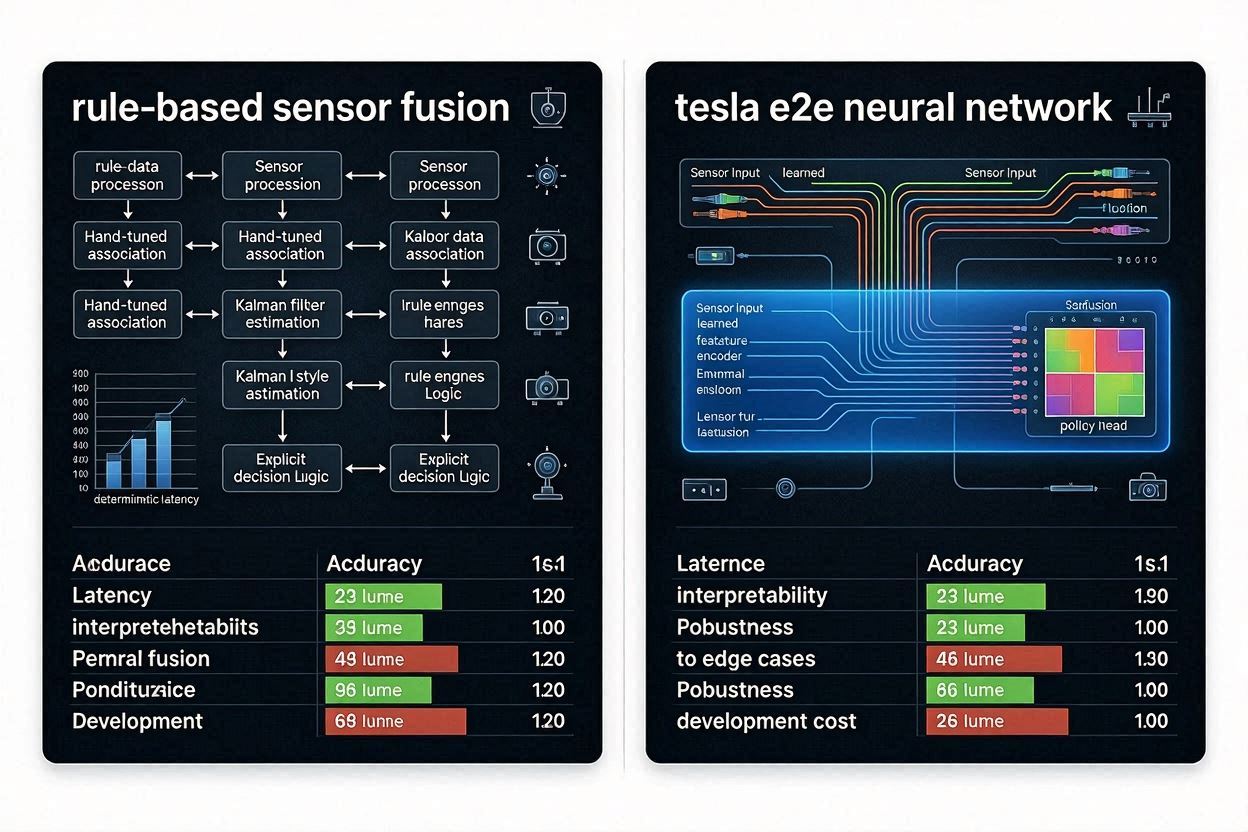
South Korea’s transition to the UNECE R171.02 (DCAS) framework is far more than a local legislative tweak; it represents a global litmus test for E2E (End-to-End) Neural Network integration.
For years, the global automotive community has been locked in a tug-of-war between rigid, logic-based regulations (like the outdated R79) and the fluid, "black-box" nature of modern AI. By embracing DCAS, Korea is effectively rewriting the rules of engagement. This is not just about Korea; it is about establishing a regulatory blueprint that other UNECE member states—from Japan to the European Union—will look to as a precedent. When Korea successfully validates 'System-Initiated Maneuvers' (SIM) for AI drivers, it provides the empirical data and legal cover for Tesla to flip the switch in other, similarly rigid regulatory environments worldwide.
2. The Responsibility Dilemma : Reimagining Legal Liability in the Age of AI
The ongoing debate in Seoul is the most advanced "Liability Transition" discussion currently happening in any developed market. We are watching a fundamental shift: from "Driver-in-the-loop" (Level 2) to "System-as-the-agent" (Level 4).
For a Western reader, this may sound purely academic, but the stakes are massive. The Korean government is not merely being "cautious"; they are pioneering a "Safety-First Liability Framework" that addresses the "Blackbox Problem." How do you hold an AI accountable in a court of law? By demanding a transparent safety-validation process that can coexist with neural network opacity. This is the exact regulatory tension that Tesla will face in every major market. Consequently, Korea has become the primary laboratory for the world’s most crucial legal question: At what point does the machine become the operator?
3. The 2028 Horizon : Why Data, Not Legislation, is the Catalyst
Investors often fixate on the "Legislative Cycle" of the National Assembly. However, the real catalyst is the "Fleet Learning Velocity."
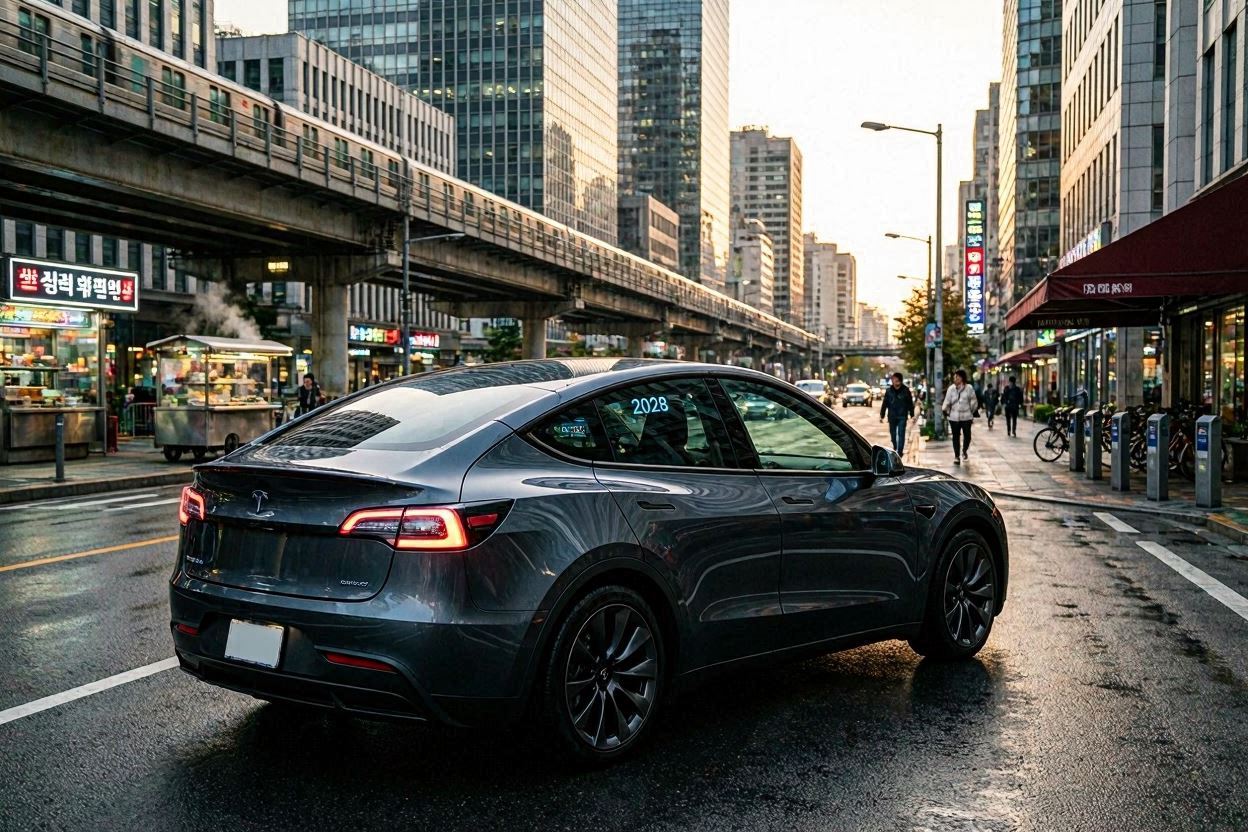
The 2028 timeline is not a political promise—it is a technical prediction. As the existing fleet—including the millions of HW3.0 and HW4.0 vehicles on the road—collects "edge-case" data from Korea's unique, high-density urban infrastructure, the neural network’s predictive accuracy is reaching a saturation point. Korea possesses one of the world's highest densities of cellular connectivity and high-resolution mapping, providing a "perfect environment" for training E2E models. By 2028, the data accumulated in Korea will be mature enough that it will no longer be a question of if the software works, but how fast the legal framework can adapt to the inevitable reality of autonomous transit.
Conclusion : The Seoul Precedent
For global observers and institutional investors, Korea serves as a "Canary in the Coal Mine." The integration process here is the bellwether for how Tesla’s global scaling strategy will play out in other developed, high-density markets.
We are moving past the era of "Tesla vs. The Government" and entering the era of "Regulation by Data." When the law catches up to the neural network's reality in 2028, the value proposition of a fleet that has been learning on these roads for years will be immense. The patience required today is not just for an FSD update—it is for the inevitable structural shift in the global economy, where the vehicle is transformed from a static machine into a dynamic, self-optimizing economic entity.
This article reflects the author's personal analysis and speculative outlook on regulatory and technological trends, not investment advice or a guaranteed forecast. Timelines such as 2028 are illustrative projections based on current data, and actual regulatory and commercial developments may unfold differently. Please conduct independent research before making any investment decisions.
"I’ve often reflected on the true meaning hidden within the word 'automobile.' An automobile should, by definition, be a vehicle that drives automatically. I am entirely convinced that this era is fast approaching."
[Deep Dive]
Want to stay ahead of the curve in the rapidly evolving mobility ecosystem? Explore our in-depth analysis on how Tesla’s FSD and traditional automotive innovations are redefining the future of transportation."
The Ultimate Evolution of the BMW 3 Series: From the Classic E21 to the 8th Gen "Neue Klasse"
The Ultimate Evolution of the BMW 3 Series: From the Classic E21 to the 8th Gen "Neue Klasse"
For decades, the BMW 3 Series has stood as the undisputed benchmark of the D-segment sports sedan. As the automotive world stands on the brink of an electric revolution, we take a nostalgic journey through the generations of this iconic model—exploring h
cryptoteslaglobal.com
"The Ultimate Tesla Model Y Automation: Auto-Launch HUD & Navigation with iPhone Shortcuts
The Ultimate Tesla Model Y Automation: Auto-Launch HUD & Navigation with iPhone Shortcuts
Missing a Heads-Up Display (HUD) and frustrated with Tesla's native navigation? Discover how to use iOS Shortcuts to automatically launch your favorite navigation app and HUD the moment you place your iPhone on the MagSafe charger. 1. The Missing Pieces in
cryptoteslaglobal.com
🔍 [Deep Dive 1] Part 1: Why Mercedes Feared It: The 50-Year Legacy and Hidden Giants (Read More)
BMW 5 [Part 1] Why Mercedes Feared It : The 50-Year Legacy of the BMW 5 Series and Its Hidden Giants
Hello, automotive enthusiasts and smart investors!Today, we are diving deep into the ultimate benchmark of executive sports sedans—the BMW 5 Series.This isn't just another generic review listing horsepower and torque. We are launching a comprehensive 3-p
cryptoteslaglobal.com