The "Stretch-Arm" Syndrome : Is it Finally Time for a Drop?
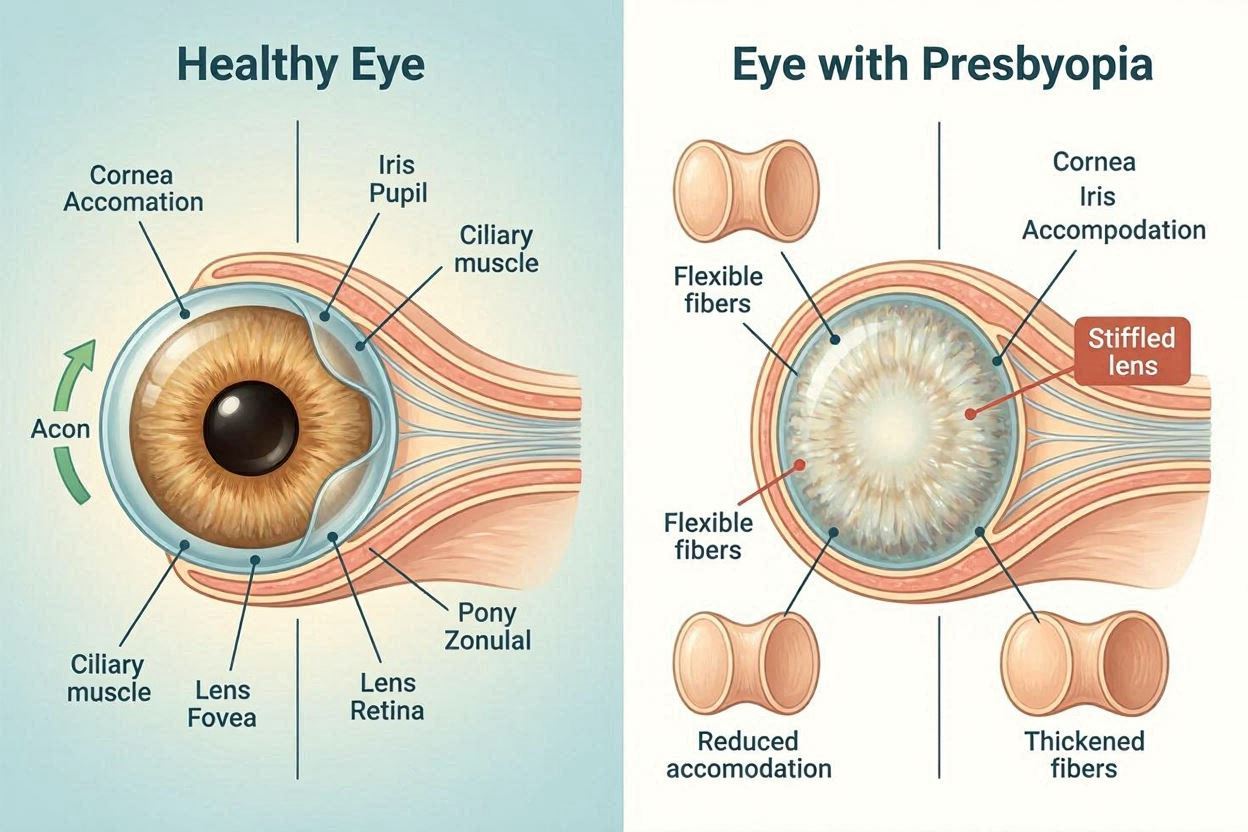
In your mid-40s, you might notice yourself instinctively holding your phone further away or squinting at restaurant menus. This is 'Presbyopia'—a natural part of aging. For decades, the only solutions were reading glasses, contact lenses, or invasive surgery. But recently, FDA-approved eye drops have entered the market, promising a revolutionary alternative.
1. What is Presbyopia?
Presbyopia is the gradual loss of your eyes' ability to focus on nearby objects. It occurs when the natural lens inside your eye becomes less flexible. Think of it as your camera lens losing its ability to auto-focus.
2. The New Frontier: Presbyopia Eye Drops (The Pinhole Effect)
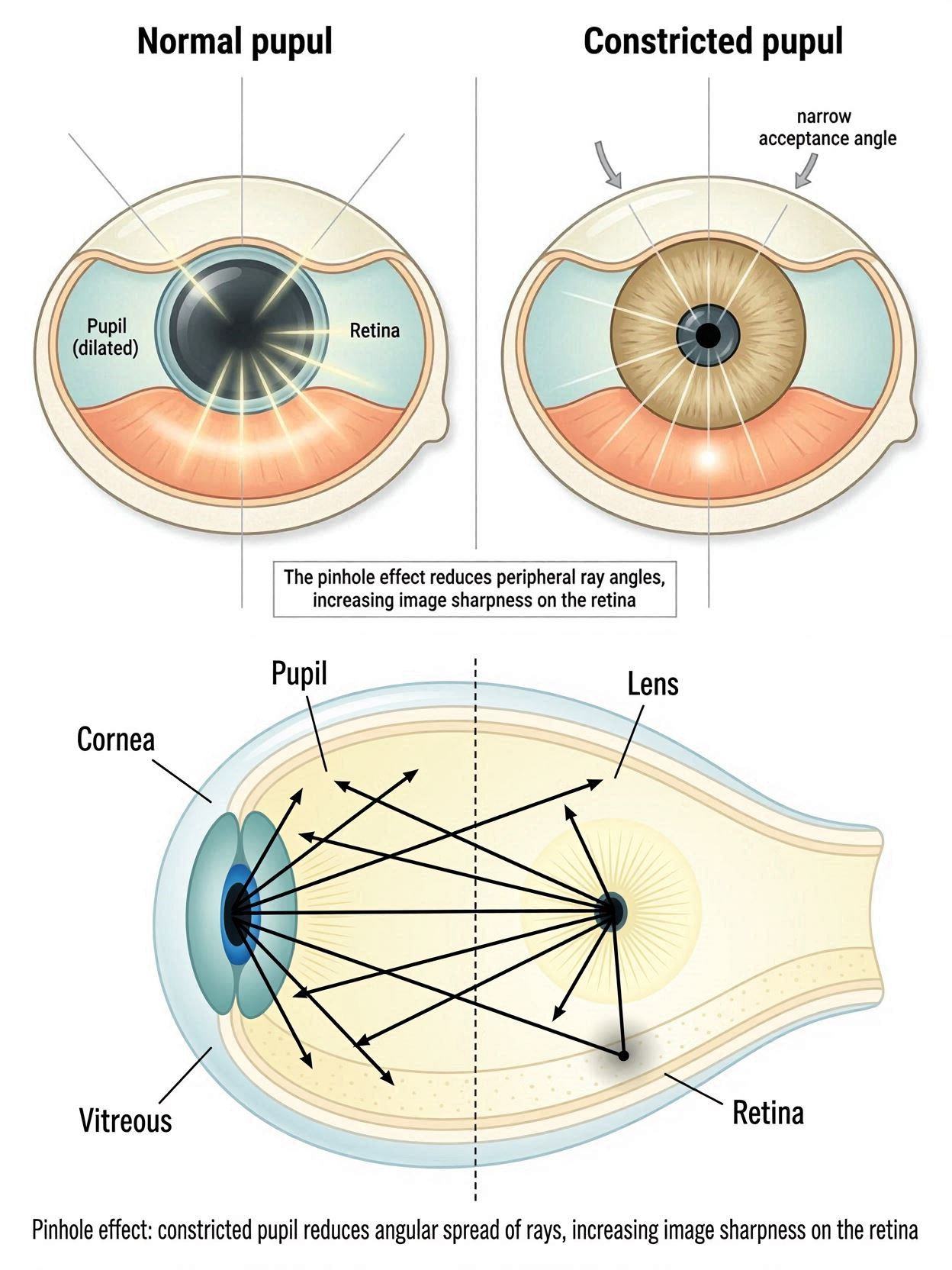
The current game-changer in ophthalmology is the use of eye drops that utilize the 'Pinhole Effect.'
- How it works: These drops (such as Vuity, the first FDA-approved medication) contain pilocarpine, which constricts your pupil. A smaller pupil increases your depth of focus, allowing you to see nearby text more clearly without magnification.
- The Reality: It’s not a cure. It’s a temporary vision aid that typically lasts for 6 to 10 hours.
3. Comparing Your Options: Drops vs. Glasses vs. Surgery
| Options | Presbyopia Drops | Reading Glasses | Refractive Surgery |
| Purpose | Temporary Visual Aid | Optical Correction | Permanent Correction |
| Duration | 6–10 Hours | As needed | Permanent |
| Invasiveness | Non-invasive | None | Surgical |
| Cost | Mid (Monthly cost) | Low (One-time) | High (Initial investment) |
4. Important Considerations & Safety
Because these drops manipulate your pupils, they come with caveats.
- Night Vision: Constricted pupils let in less light, which may impair night driving.
- Side Effects: Some users report mild headaches or temporary eye redness.
- Contraindications: Individuals with certain eye conditions, like narrow-angle glaucoma or specific retinal issues, should strictly avoid these drops. Always consult with an ophthalmologist before starting any new medication.

Conclusion : Is it right for you?
If you are in your 40s and looking for a convenient alternative to carrying reading glasses for work or dining, eye drops might be an excellent fit. However, if you are over 50 or experiencing cataracts, a comprehensive consultation for surgical options might provide a more long-term, cost-effective solution.
Personally, I’ve been struggling quite a bit with presbyopia myself, and I’m seriously considering asking my eye doctor for a prescription during my next regular checkup. While these eye drops aren't a permanent cure, they certainly serve as a fantastic, practical alternative for moments when important work demands clear vision or when I need to focus on reading and writing.
Disclaimer: This post is for informational purposes only and does not constitute medical advice. Please consult your local eye care professional to discuss the best treatment plan for your specific eye health needs.
[Deep Dive & Insights]
"Curious about the next wave of AI breakthroughs, biotech innovations, and advanced science—and how to translate those shifts into a winning investment mindset? Don't just watch the future unfold. Dive into my exclusive archive of in-depth analyses and discover where the smart money is heading next."
The GLP-1 Obesity Drug Revolution: From Generic Price Wars to Crypto-Backed Bio-Megacap Investing
The GLP-1 Obesity Drug Revolution: From Generic Price Wars to Crypto-Backed Bio-Megacap Investing
What if the world’s hottest weight-loss drug isn’t just shedding pounds, but entirely rewriting the rules of social mobility, career success, and long-term asset allocation? Here is how the GLP-1 megatrend is shifting global wealth—and how to trade i
cryptoteslaglobal.com
Beyond Landscapes: How Nations Are Turning Alpine Dams and Volcanoes into Digital Gold Reserves
Beyond Landscapes: How Nations Are Turning Alpine Dams and Volcanoes into Digital Gold Reserves
In the high-altitude silence of the Swiss Alps, at 2,500 meters, a concrete dam wall is redefining the future of energy. The Muttsee dam's alpine solar installation isn't just generating electricity; it is proving that geography is not a limit, but a strat
cryptoteslaglobal.com
The Hidden Cost of AI: When Algorithms Drain Our Reservoirs and Power Grids
The Hidden Cost of AI: When Algorithms Drain Our Reservoirs and Power Grids
The Paradigm Shift in AI Anxiety For the past few years, the collective anxiety surrounding Artificial Intelligence has been largely confined to the digital and economic realms. We worried about deepfakes manipulating elections, algorithms plagiarizing art
cryptoteslaglobal.com