Welcome back, readers! This is Jeonramhoejang. After tracking the dramatic historical foundations in Part 1 and the mechanical evolutions alongside rival comparisons in Part 2, we have finally reached the grand finale of our 3-part masterclass on the BMW 5 Series.
Today, we are tackling one of the most sensitive yet crucial topics in the modern automotive landscape: the shifting tides of global institutional capital, the identity crises of premium heritage brands, and how BMW’s fierce independence is turning into a massive weapon for the upcoming AI and autonomous driving era. We will also provide strategic macro-insights for smart mobility investors.
1. Capital Warfare : The Chinese Influx and the Identity Crisis of Mercedes-Benz
If you look closely at the modern automotive landscape, you'll see deep structural shifts changing the very soul of legacy brands. A prominent topic of discussion across global automotive forums like Reddit is the perceived shift in the identity of modern Mercedes-Benz vehicles. Purists frequently critique the brand's pivot toward hyper-digitalized, screen-heavy interiors and soft, floaty ride qualities, arguing that the traditional, bank-vault-like mechanical robustness of the three-pointed star is fading.
This trend is the direct result of massive shifts in institutional equity. A glance at the Mercedes-Benz Group’s major shareholder registry reveals that China's state-owned BAIC (holding approx. 9.98%) and Li Shufu of Geely Automobile (holding approx. 9.69%) sit comfortably as the top two shareholders.
⚠️ The Geopolitical Pivot and the Counter-Attack Strategy
When nearly 20% of a company's equity is tied to Chinese capital, the product pipeline naturally adapts to please the world's largest automotive consumer base. This structural shifts priorities from the traditional German Autobahn dynamics toward lounge-like rear-cabin comfort and vibrant interior lighting tech tailored for specific markets.
However, Mercedes-Benz is far from waving the white flag. While navigating a transitional phase in sales and core brand identity against Tesla's dominant Full Self-Driving (FSD) narrative, Mercedes is staging a massive technological counter-attack. Through their proprietary MB.OS architecture, they have formed a deep alliance with NVIDIA, embedding the high-performance Drive Orin platform directly into their next-gen vehicles. By co-developing their software stack alongside the world’s leading AI chipmaker, Mercedes retains the engineering muscle to reclaim its tech-premium crown at any moment.
2. The Shield of Munich: How the Quandt Family Protected BMW's Soul
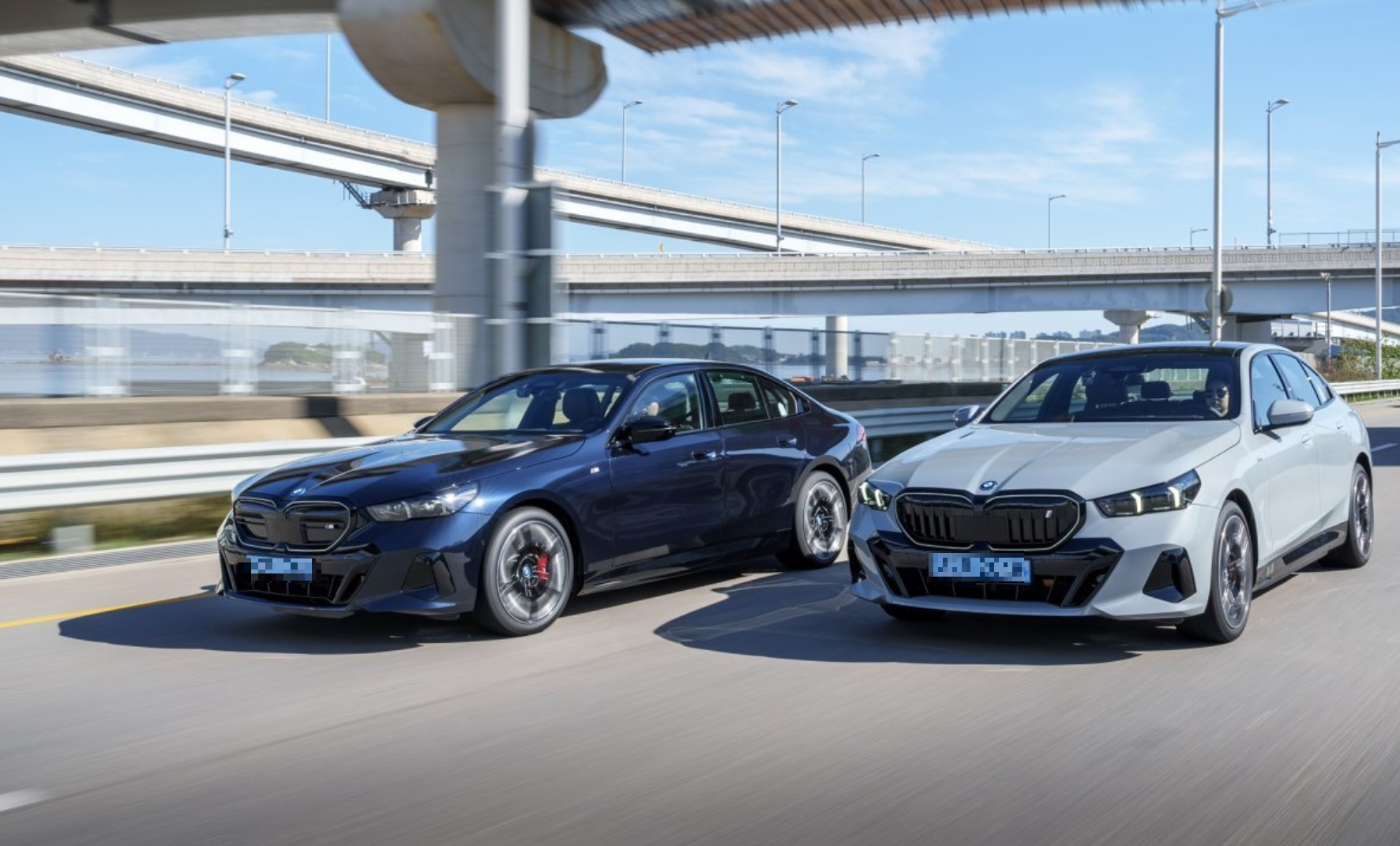
Conversely, Munich’s pride has successfully defended a completely different corporate structure. As highlighted in Part 1, the ultra-wealthy Quandt family, who originally rescued BMW from a hostile Mercedes takeover in 1959, still fiercely commands a massive block of roughly 47% of the company's total shares:
- Stefan Quandt: Holds approx. 25.8% equity.
- Susanne Klatten: Holds approx. 21.0% equity.
This generational, concentrated family ownership acts as an impenetrable corporate firewall against hostile takeovers and aggressive foreign capital infiltration.
💡 The Value of Autonomy: Preserving "Sheer Driving Pleasure"
While China remains a vital commercial market for BMW, the board of directors does not answer to foreign conglomerates. The final say in vehicle engineering and driving dynamics stays strictly in the hands of pure Bavarian engineers. This capital independence is the exact reason why the 8th Gen G60 5 series retains its taut chassis, predictable weight transfer, and surgical steering feel while its competitors drift toward uninspiring, homogenized dynamics.
3. The Blueprint of Tomorrow: AI, Autonomy, and the "Neue Klasse" Platform
By preserving its structural purity, BMW is designing a future that is both authentic and incredibly radical. The company is preparing to transition from the current G60 architecture into its next-generation modular EV platform: the "Neue Klasse" (New Class). This will serve as the core technological DNA for all future 5 Series variants.
① Head-Up Displays Reimagined: BMW Panoramic Vision
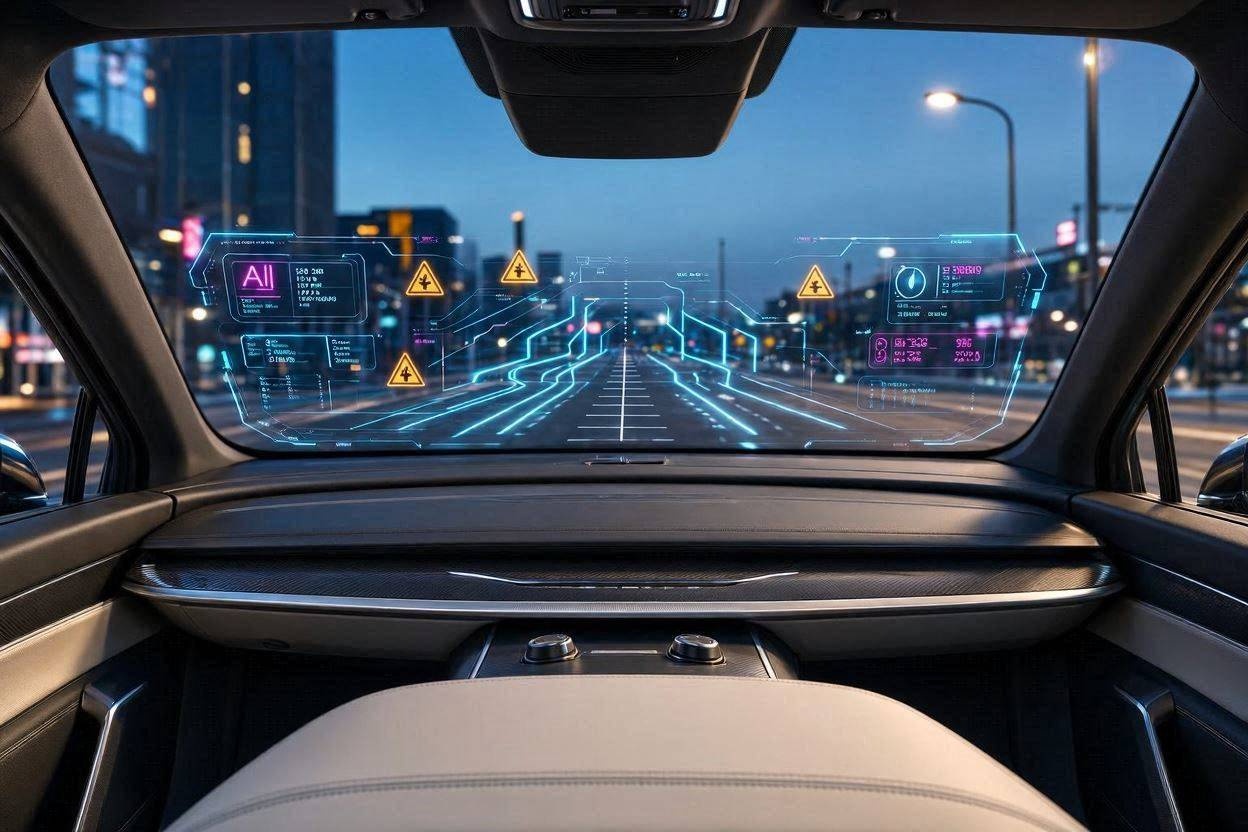
BMW rejects the philosophy of stuffing excessive touchscreens onto the dashboard. Instead, the next-generation 5 Series will introduce BMW Panoramic Vision, a revolutionary HUD that projects driving metrics, generative AI graphics, and navigation mapping across the entire lower length of the windshield. Both driver and passenger can digest data seamlessly without ever taking their eyes off the tarmac.
② NVIDIA Drive Fused with Generative AI
The cognitive center of the future 5 Series will be powered by highly sophisticated vehicle computers running NVIDIA Drive infrastructure alongside large language model (LLM) generative AI assistants. The car transitions from a passive machine into a proactive, "AI robot on wheels," capable of naturally interpreting complex speech patterns to fine-tune chassis dynamics and optimize route scheduling.
③ Level 3 Autonomy and Level 4 Valet Paradigms
BMW is aggressively preparing to roll out true Level 3 conditional automation, legally liberating drivers from constant steering wheel monitoring on highways. Furthermore, in engineering collaboration with Valeo, the next-generation 5 Series aims to democratize Level 4 Automated Valet Parking (AVP). Drivers will be able to simply step out at an airport or mall entrance, letting the vehicle autonomously hunt for an open spot and park itself in a multi-story garage.
🚀 The Ultimate Challenger to Tesla's FSD Monopoly
While Tesla's FSD currently enjoys a dominant market position due to its sheer volume of fleet data, global automotive strategists view BMW as the ultimate threat to Tesla's monopoly.
Tesla famously relies strictly on an affordable, "camera-only" vision approach. BMW, however, pursues a robust, safety-redundant architecture that fuses cameras, high-frequency radars, and ultra-premium LiDAR sensors. This hardware is supercharged by the field-tested software stacks of Qualcomm, Mobileye, and Valeo, trained inside NVIDIA's deep-learning supercomputers.
Most importantly, BMW possesses a weapon Tesla cannot replicate: a century of world-class chassis engineering. Even the most brilliant AI can only make decisions; the vehicle's physical components must still execute the turns, stops, and acceleration seamlessly on asphalt. By marrying an elite digital brain with the legendary mechanical refinement of the 5 Series, BMW has the latent potential to completely outclass Tesla in both ride quality and safety redundancy.
4. Smart Mobility Investor’s Guide: Navigating the Value Chain
For our readers who have followed the technological value chain across this 3-part saga, here is your definitive macro-playbook for the future mobility market:
- Invest in "Monopoly Moats" Rather Than Brand Emblems: Bet on the critical suppliers whose technology is non-negotiable for the EV and AI revolution. Global tech powerhouses like Qualcomm, NVIDIA, and Samsung SDI hold immense pricing power. Capitalizing on the essential supply chain is inherently safer than gambling on volatile market-share wars between legacy automakers.
- Uncover the "Ten-Baggers" in Hidden Game Changers: Explosive stock returns rarely come from mature, heavily priced megacaps. True exponential upside lies in early-stage tech disruptions—like Solid Power (NASDAQ: SLDP), where automotive titans like BMW are directly buying licenses and investing capital to bring solid-state batteries to life before they hit the mass market.
- Track the Macro-Flow of Capital Independence: As seen in the recent identity shifts among legacy premium brands, corporate equity structures dictate future product quality. Companies that fiercely defend their capital independence while safeguarding their engineering heritage possess the strongest pricing power, allowing them to defend their stock value even during global economic downturns.
5. Closing the Narrative Arc
From a bankrupt, war-torn aircraft engine builder to surviving hostile takeovers and defining the global executive sports sedan segment, the BMW 5 Series stands as a magnificent achievement of industrial engineering.
It is not merely an automobile. It is a century of uncompromising engineering tradition beautifully synchronized with the world's most elite tech giants. We hope this 3-part journey has not only deepened your appreciation for the machinery you drive but has also sharpened your eye to capitalize on the massive wealth-building opportunities in the future of mobility.
Thank you for embarking on this deep-dive journey with me. I hope everyone is happy, signing off. Stay sharp, and drive safe!
[Epilogue & Personal Reflection]
This brings our three-part deep dive into the BMW 5 Series to a close. My deep, unwavering affection for the BMW brand stems not only from the six wonderful years I spent driving my old F30, but from the fact that it was the car that first made my heart race ever since I was a child.
What car makes your heart race? I’d love to hear your own stories and thoughts—please share them in the comments below!
[Disclaimer]
This article is not intended as investment advice or a recommendation to buy or sell any specific asset. It reflects the author's personal perspective and analysis. As the outlooks and interpretations discussed here carry inherent uncertainty, please conduct your own research and make investment decisions based on your own judgment and risk tolerance.
🏁 [The BMW 5 Series Masterclass] Missed an earlier chapter? Catch up here:
🔍 [Deep Dive 1] Part 1: Why Mercedes Feared It: The 50-Year Legacy and Hidden Giants (Read More)
🔍 [Deep Dive 2] Part 2: Generational Breakthroughs, the Chris Bangle Shockwave, and Rivals (Read More)
💡 [Exclusive Tech Briefing] Click here to read more on Mobility, AI Logistics, and Tech Investing
The Ultimate Evolution of the BMW 3 Series: From the Classic E21 to the 8th Gen "Neue Klasse"
The Ultimate Evolution of the BMW 3 Series: From the Classic E21 to the 8th Gen "Neue Klasse"
For decades, the BMW 3 Series has stood as the undisputed benchmark of the D-segment sports sedan. As the automotive world stands on the brink of an electric revolution, we take a nostalgic journey through the generations of this iconic model—exploring h
cryptoteslaglobal.com
The Tesla Dry Electrode Dilemma: Should Model Y Juniper Buyers Wait or Take Delivery Now?
The Tesla Dry Electrode Dilemma: Should Model Y Juniper Buyers Wait or Take Delivery Now?
Recent news of Tesla advancing its "Dry Electrode Coating" process has sent shockwaves through the EV community. With rumors of massive range boosts and dramatic price cuts, many Tesla Model Y Juniper reservation holders are caught in a dilemma: Should I c
cryptoteslaglobal.com