[Introduction / Hook]
The quiet transition of Wall Street onto distributed ledgers is no longer a theoretical exercise—it is actively redrawing the flow of global liquidity.
While retail sentiment remains fixated on speculative market cycles, tier-1 financial institutions like the DTCC (Depository Trust & Clearing Corporation) are quietly deploying real-world asset (RWA) tokenization infrastructure at a scale measured in trillions of dollars. At the epicenter of this institutional pivot lies Canton Network and its native utility token, Canton Coin ($CC).
Designed specifically to solve Wall Street’s fundamental dilemma—balancing absolute data privacy with seamless cross-chain settlement—Canton Network introduces a unique Burn-and-Mint Equilibrium (BME) model. But as institutional settlement volumes prepare to flow on-chain, how does this architecture actually function, and what are the structural mechanics driving its long-term value capture?
In this deep dive, we examine the founding origins of Canton Network, analyze the mechanics of its DTCC integration, and evaluate potential supply crunch scenarios through a rigorous, risk-balanced lens.
[Author's Perspective]
Having navigated multiple crypto market cycles and institutional infrastructure developments, I maintain a healthy skepticism toward "game-changing" blockchain narratives. Most enterprise blockchain initiatives of the past decade failed because they misjudged either institutional privacy requirements or cross-chain interoperability. However, the architecture behind Canton Network represents a pragmatic pivot: instead of forcing TradFi onto fully transparent public ledgers, it builds a privacy-first infrastructure designed explicitly for regulated balance sheets. The integration with DTCC is a significant milestone, but long-term value capture depends entirely on sustained transaction volume and execution velocity.
1. Canton Network Overview and Founding Background

Born from Wall Street veterans: Canton Network, the institutional privacy-focused blockchain architecture.
① Canton Coin ($CC) Supply and Tokenomics (As of H2 2026)
Canton Network’s native governance and utility asset, Canton Coin ($CC), utilizes a dynamic tokenomics architecture optimized for regulated financial environments.
- Fair Launch & Distribution Model: The protocol implemented a strict Fair Launch model with zero pre-mines, no initial coin offerings (ICO/IDO), and no venture capital vesting cliffs. Tokens are minted exclusively as rewards for participants contributing tangible network utility—such as Super Validators, application providers, and transaction verifiers.
- Circulating and Total Supply: As of the second half of 2026, the circulating supply and total minted supply hover between 38.5 billion and 40 billion $CC.
- Max Supply Mechanics: The maximum supply is set to unlimited ($\infty$). Instead of a fixed hard cap, the network operates on a dynamic Burn-and-Mint Equilibrium (BME) framework where real-time issuance is offset by network usage burning.
- Annual Issuance and Burning Mechanics: Out of an initial 10-year mining pool allocation of 100 billion $CC, approximately 2.5 billion $CC are minted annually following network stabilization. Concurrently, transaction fees paid by financial institutions are permanently burned, creating structural deflationary pressure as network throughput scales.
② Founding Origin and the Wall Street Narrative
Canton Network was not conceived within the native crypto developer community; rather, it emerged from Wall Street insiders who directly experienced the structural friction of legacy clearing and settlement systems.
- Assembly of Wall Street Veterans: In 2014, former J.P. Morgan executive Blythe Masters (a key architect in popularizing Credit Default Swaps), alongside Yuval Rooz (ex-DRW Trading/Citadel) and Eric Saraniecki (co-founder of Cumberland Mining), established Digital Asset (DA).
- The Institutional Dilemma – "Transparency vs. Privacy": While Bitcoin and Ethereum demonstrated public ledger capabilities, Tier-1 institutions like Goldman Sachs and J.P. Morgan could not deploy capital onto public chains. Transparent ledgers expose real-time trading positions, leaving large-scale bond and equity orders vulnerable to front-running and market manipulation. Conversely, private permissioned chains created isolated, siloed databases unable to interoperate.
- The Breakthrough – Daml and Canton Infrastructure: To bridge this divide, Digital Asset engineered Daml (Digital Asset Modeling Language), a privacy-focused smart contract language. Built on Daml, Canton Network debuted as a Layer-1 network offering sub-transaction privacy between trading counterparties alongside sub-second atomic settlement and cross-chain interoperability.
③ Early Investors and Institutional Partners
Canton Network leverages backing from leading traditional finance (TradFi) institutions, market infrastructure providers, and digital asset firms.
2. DTCC Integration and On-Chain Asset Tokenization
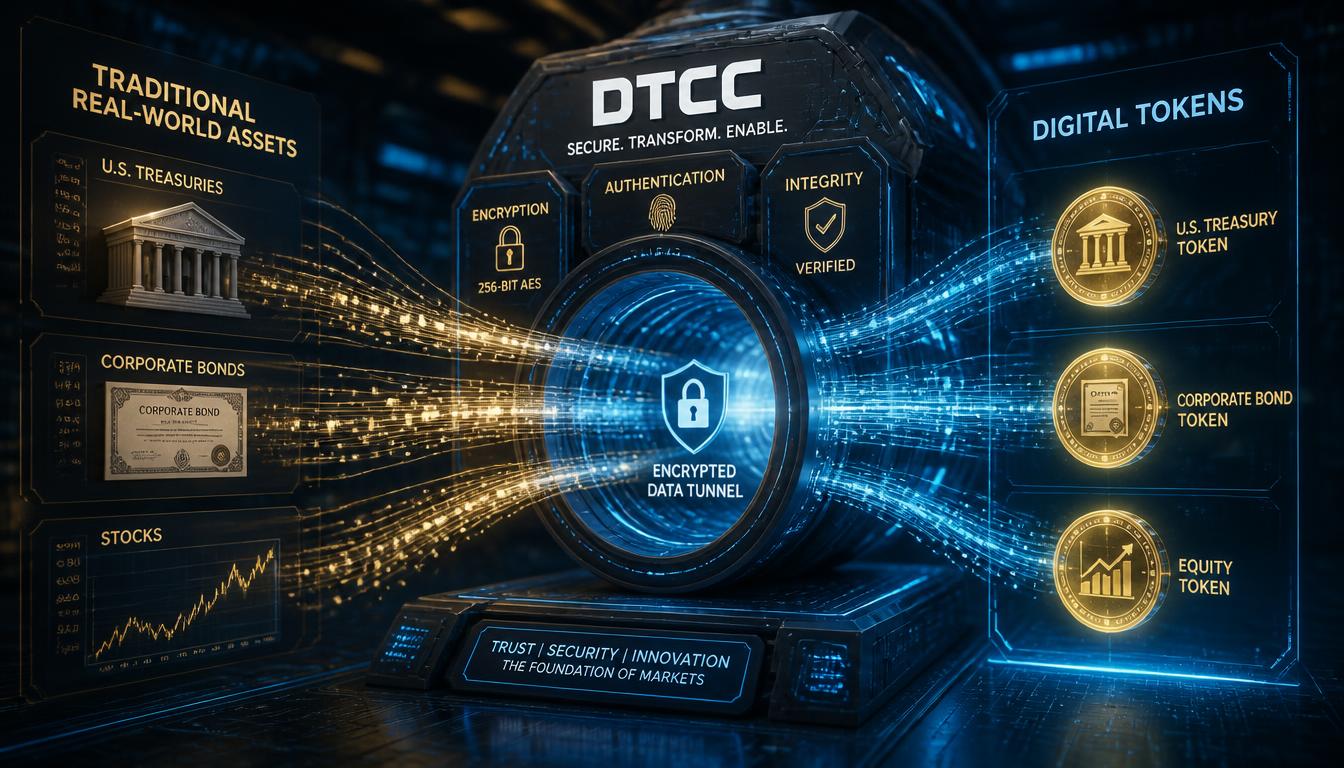
DTCC asset tokenization pipeline integrated with Canton Network's real-time settlement layer.
① Tokenization Scope and Key Integration Sectors
The Depository Trust & Clearing Corporation (DTCC)—the world's largest securities clearinghouse—has selected Canton Network as a core execution environment for its DTCC Tokenization Service.
- DTC-Issued Security Tokens (RWA Tokenization): Tokenization of real-world assets held in DTC custody, including US Treasuries, corporate bonds, equities, and Money Market Funds (MMFs). These digital assets retain their original CUSIP identifiers on-chain, preserving legal weight for voting rights and dividend distributions.
- Collateral Management and Repo Clearing: Streamlining the multi-trillion-dollar daily cross-institutional repo and short-term liquidity markets. Leveraging Canton's Atomic Settlement (T+0), delivery-versus-payment (DvP) occurs simultaneously, effectively mitigating counterparty settlement risk.
- Corporate Actions Automation: Automating complex corporate workflows such as dividend disbursements, interest payments, and stock splits via Daml smart contracts, keeping traditional databases and distributed ledgers synchronized in real time.
② Simplified Explanation for Lay Readers
💡 "Understanding DTCC and Canton Without Complex Financial Jargon"
- What is the DTCC? The DTCC acts as the central bookkeeper for global finance. When institutions trade billions of dollars in stock or bonds, physical certificates do not move. Instead, DTCC updates its central database. It processes trillions of dollars in transactions daily.
- The Legacy Friction: Traditionally, every bank maintains its own private database. Matching these records takes one to two days (T+1 or T+2). During this delay, capital is locked up in collateral, and systemic settlement risk remains present.
- The Canton Network Solution: By tokenizing assets onto Canton Network:
- Instant Atomic Settlement: Assets and cash swap simultaneously in real time, reducing settlement delays from days to seconds.
- Strict Data Privacy: Unlike public blockchains where balances are visible to all, Canton ensures only the two trading counterparties see transaction specifics, while validators mathematically confirm transaction legitimacy.
- 24/7 Collateral Mobility: Billions of dollars in dormant weekend collateral can be deployed instantly on-chain to earn yield or secure credit.
3. $CC Token Supply and Burning Mechanism (Burn-and-Mint Equilibrium)
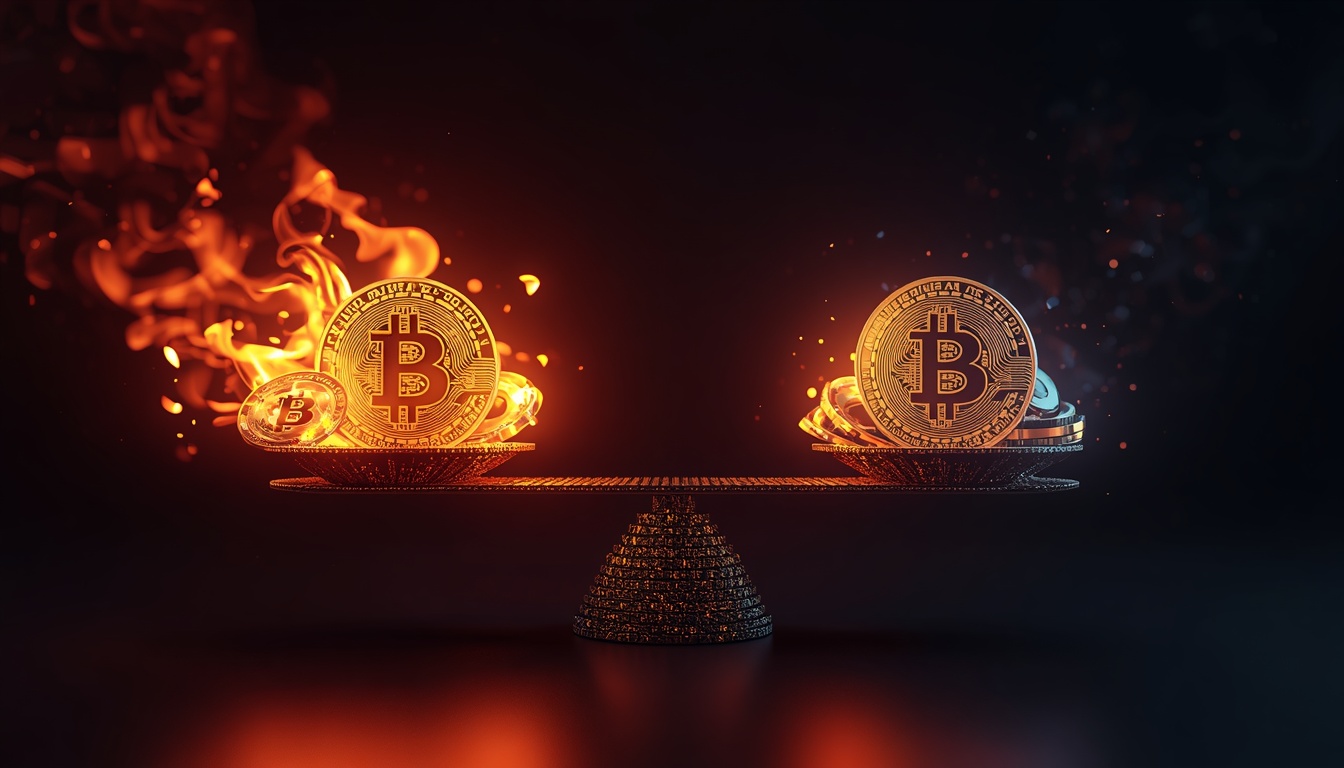
Understanding the Burn-and-Mint Equilibrium (BME) model of $CC tokenomics driven by network utility.
① [Expert Analysis] Tokenomics and the BME Framework
Canton Network's native token, Canton Coin ($CC), implements a Burn-and-Mint Equilibrium (BME) model—a proven tokenomics framework within decentralized service infrastructures.
- Dynamic Fee Burning: When cross-chain data synchronization (Global Synchronizer) or smart contract executions occur across sub-chains on the Canton Network, transaction fees (Gas Fees) are settled in USD equivalent values, and the corresponding amount of $CC tokens is permanently burned on-chain. Burned tokens are removed entirely from the total supply rather than recirculating back to the foundation or validator nodes.
- Reward Minting Schedule: Super Validators and network infrastructure contributors responsible for security and operations receive newly minted $CC as protocol rewards according to a predetermined inflation schedule.
- BME Equilibrium and Deflationary Transition:
- $$\text{Net Token Supply Delta} = \text{Minted Amount} - \text{Burned Amount}$$When the volume of$CC burned through institutional transaction fees ($\text{Burn}$) exceeds daily validator inflation rewards ($\text{Mint}$), the token supply enters a net deflationary phase, structurally reducing circulating supply.
② [Layperson's Guide] "The Faucet and the Drain Principle"
💡 Easily Understanding the $CC Token Burn Mechanics
- The Faucet (Minting): To keep the network running in a decentralized manner, new coins are distributed daily as rewards to server operators. Think of this as a faucet dripping water into a bucket.
- The Drain (Burning): Every time Wall Street institutions use the Canton Network highway, they pay a toll (transaction fee). The coins paid as tolls are burned in a fire and completely destroyed.
- Why Prices Could Rise: If a massive number of large institutions begin using the highway, the volume of coins destroyed through tolls (the drain) becomes significantly larger than the volume of new coins being created (the faucet). As the total supply of coins remaining in the market shrinks, token scarcity increases, naturally exerting upward pressure on unit value.
4. DTCC Volume Inflow, Burn Spikes, and Price Trajectory Scenarios

Projected $CC token burn surge and supply crunch scenario driven by massive DTCC settlement volume.
① [Expert Analysis] On-Chaining Priority Assets and Inflow Phases
The tokenization of assets by the DTCC (Depository Trust & Clearing Corporation) is projected to unfold in phased stages based on regulatory readiness and market impact:
[Phase 1: US Treasuries & MMFs] ──► [Phase 2: Short-Term Repo Collateral] ──► [Phase 3: Equities & Corporate Bonds]
   (Rapid Initial On-Chaining)               (Trillions in Daily Volume)                 (Automated Corporate Actions)
- On-Chaining Priority Sequence:
- Phase 1 (Short-Term): US Treasuries & Money Market Funds (MMFs) – Assets requiring same-day settlement with minimal regulatory ambiguity and urgent liquidity management needs.
- Phase 2 (Medium-Term): Repurchase Agreements (Repo) & Interbank Collateral – High-velocity assets supporting multi-trillion-dollar daily short-term funding markets.
- Phase 3 (Long-Term): US Listed Equities & Corporate Bonds – Regulated securities requiring native CUSIP integration and automated corporate actions (dividends, voting rights).
- Burn Rates and Valuation Scenarios Driven by DTCC Capacity Inflow:
- Scenario A (Conservative – 0.05% of Daily DTCC Volume On-Chained): Only US Treasuries and selective short-term collateral movements transition to Canton Network. This volume partially offsets daily minted inflation ($Mint$), establishing a solid price floor for $CC.
- Scenario B (Base Case – 0.5% to 1.0% of Daily DTCC Volume On-Chained): A substantial portion of the repo market and interbank short-term settlements transition to Canton. Burn volume ($Burn$) surpasses new minting ($Mint$), breaking the BME equilibrium point and accelerating a fundamental valuation re-rating driven by supply contraction.
- Scenario C (Bullish Case – Standardized Core Settlement Pipeline): Canton becomes a primary pipeline for equity, bond, and derivative clearing. Daily token burn spikes significantly, creating a supply crunch alongside sustained institutional buy pressure.
② [Risk Assessment & Investment Disclaimer]
⚠️ Essential Risk Factors & Legal Disclaimer
- Regulatory & Policy Risks: Shifts in regulatory stance from authorities such as the SEC, or tightened compliance frameworks for crypto assets among tier-1 institutions, could delay implementation roadmaps.
- Smart Contract & Technical Risks: Synchronization latency, network consensus bugs, or latent vulnerabilities within Daml smart contracts could impede institutional capital adoption.
- Adoption Velocity Risk: Due to the inherently conservative IT replacement cycles of legacy financial institutions, actual transaction volume migration may proceed at a slower pace than market expectations anticipate.
This content is prepared strictly for informational purposes and does not constitute financial, investment, legal, or tax advice. All investment decisions are executed solely at the reader's discretion and responsibility. Historical performance and projection scenarios do not guarantee future returns.
③ [Layperson's Guide] "What Happens When Just 1% of the World's Largest Financial Book Moves On-Chain"
💡 Easily Understanding DTCC Volume Inflow and Price Scenarios
- DTCC's Immense Scale: The DTCC is the world's largest financial clearinghouse, processing hundreds of trillions of dollars in stock and bond settlements daily.
- The 1% Catalyst: Even if a tiny fraction (around 1%) of DTCC's total volume moves onto the Canton Network highway, the number of $CC coins burned and destroyed every day increases dramatically.
- Declining Supply vs. Rising Demand: Institutions must continuously purchase $CC coins from the open market to pay for network gas fees, while the overall coin supply constantly shrinks through burning. This setup creates strong price appreciation expectations based on the basic market law of "Decreasing Supply + Increasing Demand."
5. Value Capture Mechanism Comparison Across High-Utility Blockchains
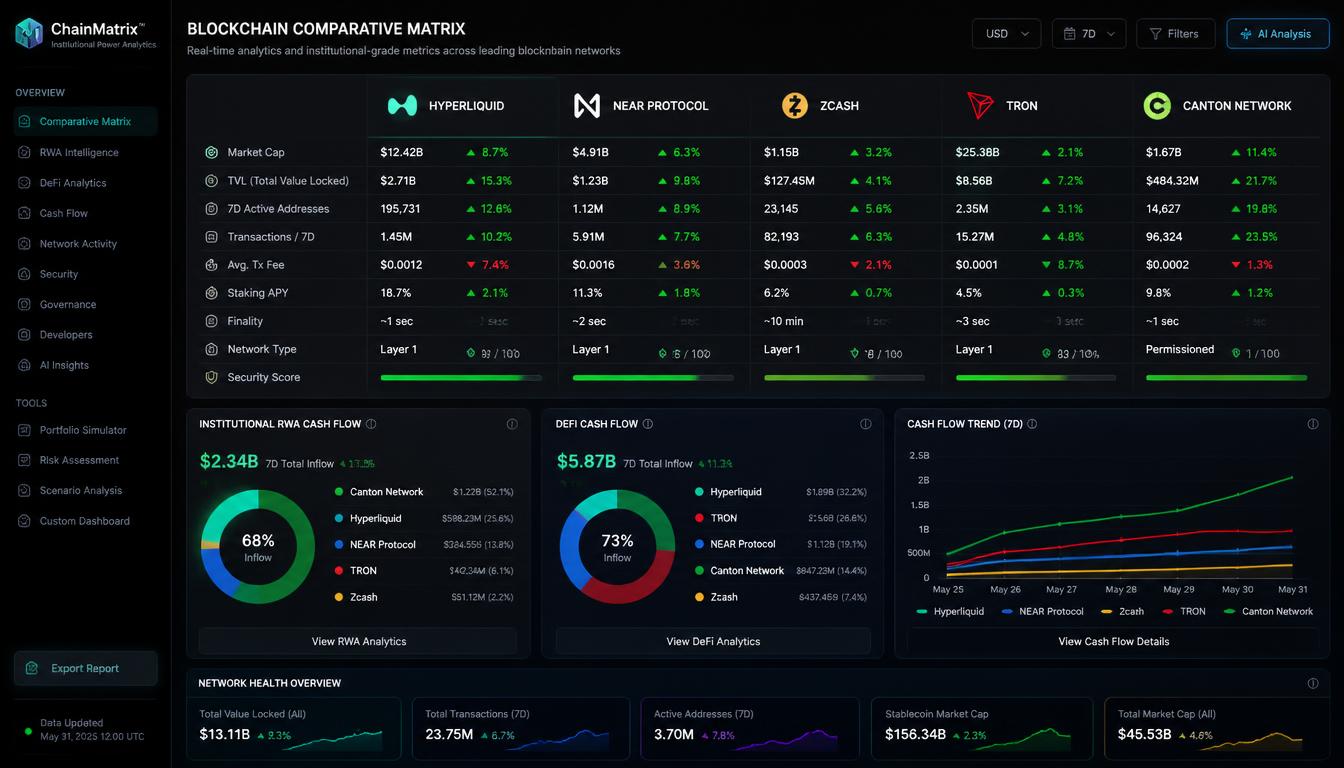
Comparative financial data dashboard contrasting real-world token utility and fee-burning mechanics across Canton Network and other major blockchains.
A comparative analysis of leading blockchain networks where real user adoption, transaction fees, and cash flows directly translate into token value accrual:
① [Expert Analysis] Core Principles of Real-World Value Capture
- On-Chain Cash-Flow Backing: Unlike earlier market cycles driven by speculative narratives, projects with verifiable network fee revenues that systematically burn supply or return value to token holders (such as Hyperliquid or TRON) are outperforming broader markets.
- Combining Institutional Privacy with Structural Deflation: Canton Network merges the strict privacy capabilities of Zcash with the aggressive fee-burn mechanisms of TRON and NEAR. Because its target client base consists of global TradFi behemoths rather than retail crypto users, the sheer scale of real-world value capture operates on a fundamentally different order of magnitude compared to traditional public L1s.
② [Layperson's Guide] "Hype-Driven Coins vs. Revenue-Generating Blockchains"
💡 Easily Understanding Real-Utility Value Accrual
- A Bustling Restaurant (High-Utility Chains): When a restaurant is packed with customers (institutional volume), business revenue (transaction fees) surges.
- How Value Returns to Owners:
- Hyperliquid: Uses earned revenue to buy back its own coins from the market and destroy them.
- TRON & NEAR: Instantly burns transaction fees paid by users, making remaining coins rarer.
- Canton Network's Unique Positioning: Canton Network isn't serving small local customers—it is designed for global financial giants (Goldman Sachs, DTCC, etc.). Because the scale of these institutional "diners" is unprecedented, the volume of coins burned once adoption accelerates could far exceed existing public blockchains.
Conclusion & Final Thoughts
[Author's Perspective]
Having actively participated in the cryptocurrency market as an investor for a decade, I have observed a structural regime shift: the market is moving away from purely speculative narrative cycles toward an era where institutional capital flows dictate liquidity and price discovery. Established assets such as BTC, ETH, XRP, SOL, DOGE, and HBAR have paved the way for institutional integration, which led me to add a small allocation of Canton Coin ($CC) to my own portfolio based on its clear utility thesis.
However, prudent asset allocation requires strict risk management. Entering any position demands a transparent rationale, verifiable fundamentals, and concrete execution scenarios for both upside expansion and downside volatility.
⚠️ Final Disclaimer
This post is strictly for educational and informational purposes and does not constitute a recommendation to buy, sell, or hold any digital asset. Every market participant must conduct independent research and establish personal risk management boundaries. Digital assets involve significant volatility and potential risk of capital loss.
[Deep Dive]
To gain a deeper understanding of the institutional shifts within tCryptocurrency Market and Traditional Financial Market, I highly recommend exploring my previous analyses.
The Ripple Effect of DTCC’s Tokenization Roadmap: The Technical Roles and Macro Valuation of XRP & Hedera (HBAR)
Explore how DTCC's multi-chain tokenization roadmap sets the stage for XRP and Hedera (HBAR) to become the ultimate institutional infrastructure. 1. The Great Shift in Traditional Financial Infrastructure : What DTCC’s Tokenization Truly Means The Deposi
cryptoteslaglobal.com
[Deep Insight] Why Global Financial Giants are Rewiring the Infrastructure : The RWA and Crypto Revolution
"Why are global financial giants like DTCC obsessively rebuilding financial infrastructure with RWA and Crypto? Explore the institutional roadmap and the strategic role of XRP in the future of settlement." The "invisible hand" of the global financial marke
cryptoteslaglobal.com
Ethereum : The Operating System for the New Digital Finance
Ethereum : The Operating System for the New Digital Finance
Why Wall Street is Obsessed with the "World Computer" (2026 Updated)"This is not just another cryptocurrency. It is the operating system (OS) for the new digital economy."While Bitcoin acts as 'digital gold'—a store of value—Ethereum is the 'World Comp
cryptoteslaglobal.com
Bitcoin : The 'Digital Nuclear Weapon' - From the 1971 Nixon Shock to the Global Mining Arms Race
Bitcoin : The 'Digital Nuclear Weapon' - From the 1971 Nixon Shock to the Global Mining Arms Race
Do you still view Bitcoin merely as a "speculative asset"? If so, you are missing half the story. Since the 1971 Nixon Shock, when the Gold Standard was abandoned, fiat currency has rested on the fragile foundation of "government credit." As governments pr
cryptoteslaglobal.com
[PART 1] "Is Your AI Just a Chatbot? Why 'AI Agents' are the New Digital Workforce Powering the Next Crypto Bull Run"
Is your AI assistant just a glorified search engine?Most people think AI stops at "Chatting." You ask a question, it gives an answer, and you move on. But that’s the old era of AI. We have officially entered the age of AI Agents—the digital workforce t
cryptoteslaglobal.com
Ripple (XRP) and Institutional Adoption : The Hidden Financial Engine Powering Global Finance
Ripple (XRP) and Institutional Adoption : The Infrastructure of Modern Finance
While retail market participants frequently focus on short-term price movements, institutional capital allocators, central banks, and global payment architects examine structural mechanics—specifically, how multi-trillion-dollar financial networks will m
cryptoteslaglobal.com