Are we witnessing a genuine economic cooldown, or a meticulously engineered geopolitical illusion? From the so-called "crash" of gold to a temporary 60-day truce in the Middle East, discover how the Federal Reserve is setting the stage for a September rate cut that could ignite the greatest crypto bull run in history—before springing a devastating trap.
1. The 26% Gold "Crash": Why It's a Macro Bluff
Mainstream media is currently buzzing with headlines about gold prices plummeting 26% from their all-time highs of $5,400 to the low $4,000s. Many are comparing this to the devastating 20-year bear market of 1980, where gold lost 70% of its value. However, a deeper macro-economic analysis reveals that this is a mathematical impossibility today.
- The Debt-to-GDP Nightmare: In 1980, Fed Chair Paul Volcker could hike interest rates to 20% to crush inflation because the U.S. debt-to-GDP ratio was only 31%. Today, it stands at a staggering 124%. If the Fed significantly raises rates, the annual interest expense on U.S. debt would explode to $1.5 Trillion, bankrupting the government.
- The Supply Constraint: Unlike the 1980s, where globalization unlocked massive new gold mines, there has not been a single major gold mine discovered since 2020.
Therefore, the current hawkish stance (Quantitative Tightening) by the Fed is largely a bluff. This 26% drop is not a secular bear market; it is a healthy correction, much like the 1974 drop that preceded a massive 700% parabolic rally.
2. The 60-Day Oil Truce: Engineering Fake Deflation
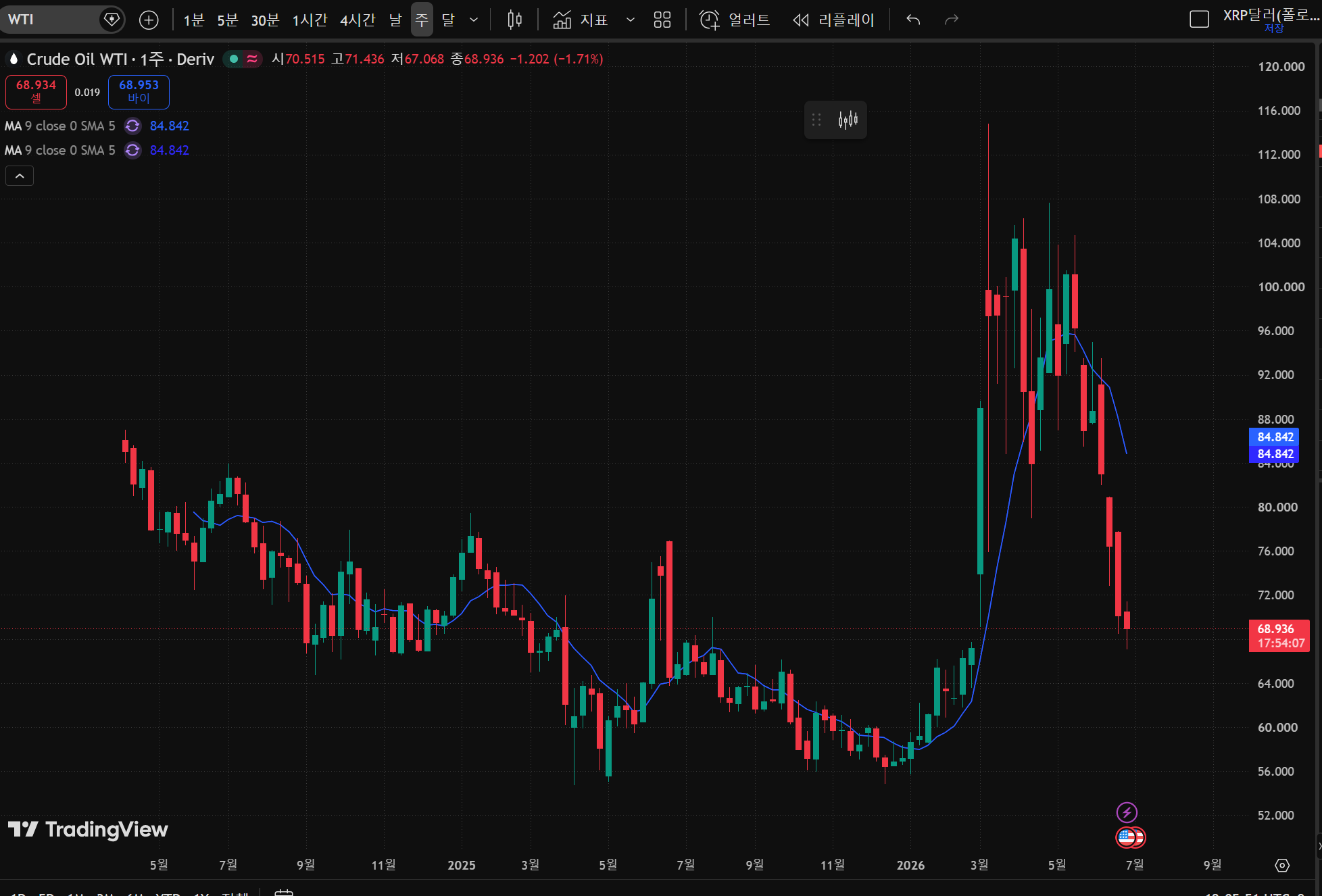
Recently, Fed officials have shifted their tone, claiming that "inflation risks have eased." The reality behind this cooling inflation is purely tied to a massive 43% drop in WTI Crude Oil prices (from $120 to around $67).
This is not organic market dynamics. Geopolitical analysts point to a tacit "60-day free passage" agreement in the Strait of Hormuz between the U.S. and Iran. The U.S. desperately needed lower oil prices ahead of the elections, and Iran needed immediate revenue from oil exports. This created a highly temporary window of suppressed energy costs.
3. The September Setup : Igniting the Q4 Crypto Rally
The Federal Reserve is currently performing a magic trick: ignoring strong, consistently expanding employment and manufacturing data, and focusing solely on this temporarily suppressed inflation.
When the 60-day Strait of Hormuz window closes around mid-August, the Fed will have accumulated enough "cooling CPI/PPI data" to justify a highly anticipated September Rate Cut.
- The Q4 Santa Rally: The moment the rate cut is signaled, risk-on assets will explode. We can expect a massive Q4 rally where Bitcoin, alongside high-utility altcoins like Solana (SOL) and XRP, break out of their multi-month consolidation and chase new all-time highs.
4. The Trap : Preparing for the Post-Election Hangover

However, retail investors must not be blinded by the euphoria. Once the 60-day truce expires and the elections pass, Iran will inevitably resume demanding premiums for safe passage, and global oil prices will violently rebound.
When inflation returns with a vengeance in late 2026 or early 2027, the Fed will be cornered, leading to a potential "Black Swan" market crash. To survive, everyday investors must learn from institutions like MicroStrategy—who generate over $100M annually just by selling options (Covered Calls and Put selling) regardless of market direction.
Enjoy the impending Q4 rate-cut rally, but ensure you have an exit strategy ready before the geopolitical bill comes due.
However, the market rarely moves the exact way we predict or expect. Having spent a long time in this market, I’ve learned firsthand that when everyone is looking in the same direction and the masses are leaning heavily one way, that is precisely when things are most dangerous. I firmly believe that the golden rule of investing is simple: when the room is filled with euphoria, you should be standing near the exit; when panic takes over, that is the time to accumulate assets—specifically, top-tier, blue-chip assets.
[Deep Dive]
To gain a deeper understanding of macroeconomics, crypto, and institutional changes within the asset market, I highly recommend reviewing the analysis materials I have previously written.
SK Hynix on Nasdaq: The New Pillar of the Global AI Infrastructure
[Analysis] SK Hynix on Nasdaq : The New Pillar of the Global AI Infrastructure
1. Introduction: Understanding ADRs in the Age of AITo understand SK Hynix's listing on Nasdaq via American Depositary Receipts (ADRs), it is best to look at the mechanism that brought Bitcoin to the mainstream: the Spot ETF.Just as asset managers like Bla
cryptoteslaglobal.com
The Institutional Counterattack: Why Big Money is Bringing Crypto Into the System
The Institutional Counterattack: Why Big Money is Bringing Crypto Into the System
The current perspective on the crypto market is sharply divided. Some are paralyzed by fear, hanging on every headline about the 'Clarity Act' (Market Structure Bill) and wondering if the party is coming to an end. Others see the current, tedious sideways
cryptoteslaglobal.com
Ethereum : The Operating System for the New Digital Finance
Ethereum : The Operating System for the New Digital Finance
Why Wall Street is Obsessed with the "World Computer" (2026 Updated)"This is not just another cryptocurrency. It is the operating system (OS) for the new digital economy."While Bitcoin acts as 'digital gold'—a store of value—Ethereum is the 'World Comp
cryptoteslaglobal.com