1. Introduction: Understanding ADRs in the Age of AI
To understand SK Hynix's listing on Nasdaq via American Depositary Receipts (ADRs), it is best to look at the mechanism that brought Bitcoin to the mainstream: the Spot ETF.
Just as asset managers like BlackRock hold actual Bitcoin to back their ETFs, an ADR allows a US-listed security to represent ownership of the underlying foreign shares. When global investors buy SK Hynix ADRs, they are not just buying a proxy; they are gaining direct exposure to the world’s most advanced High Bandwidth Memory (HBM) technology—the very "fuel" that powers AI accelerators like NVIDIA’s GPUs. Think of this ADR as a global pipeline, connecting the epicenter of AI hardware innovation directly to the world's deepest pool of capital.
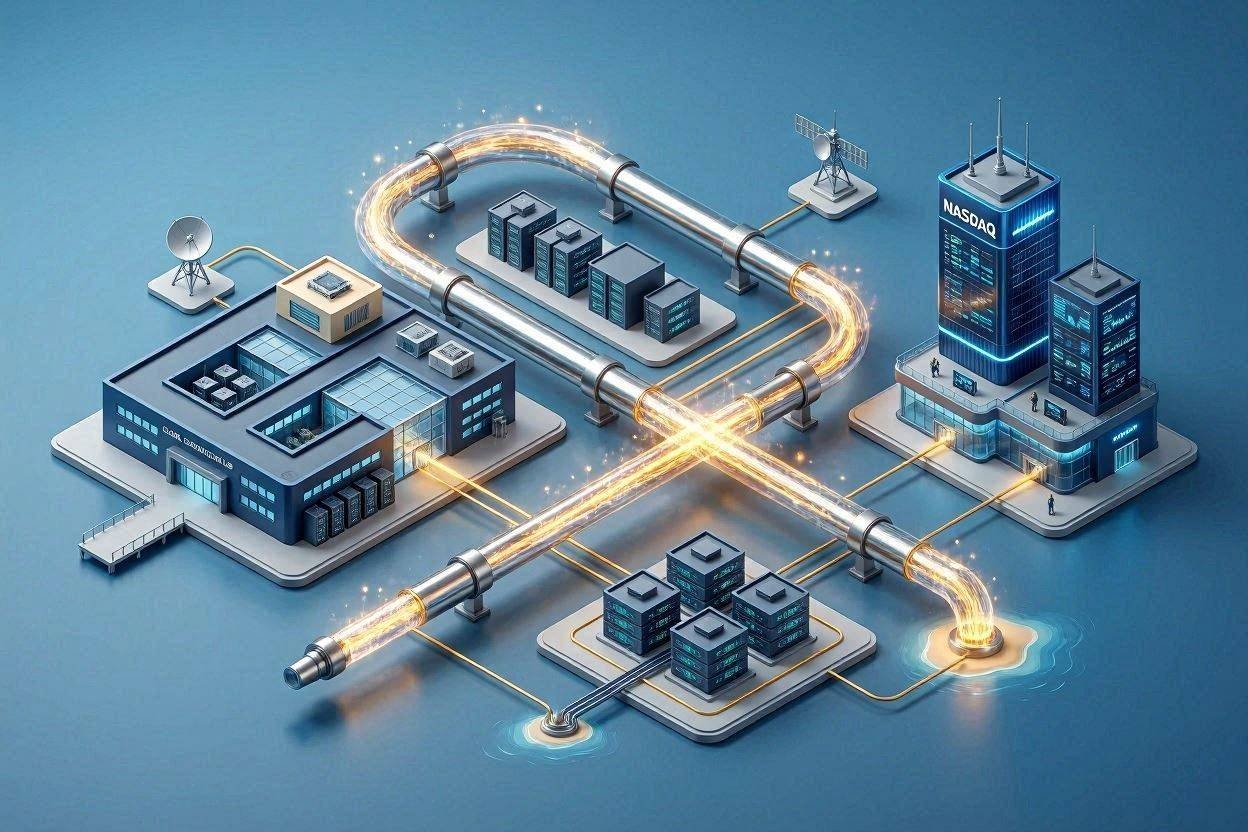
2. Redefining SK Hynix : From a Regional Player to a Global AI Backbone
For decades, investors viewed memory chip manufacturers as cyclical commodity producers. However, the AI revolution has fundamentally changed this narrative. Memory is no longer a commodity; it is the bottleneck of the AI era. With SK Hynix’s dominance in the HBM market, the company has transitioned into a critical component of the global AI infrastructure. This Nasdaq listing confirms that SK Hynix is no longer just a regional name, but a core global asset alongside other tech giants.
3. The Technical Moat : HBM4 and the New Valuation Paradigm
UBS and other market analysts suggest that SK Hynix could command a dominant share (potentially exceeding 70%) in the upcoming HBM4 market. This is not merely "market share"; it is a technological moat.
In the AI era, performance is defined by memory bandwidth. SK Hynix has proven it can scale faster and more reliably than any competitor. This justifies a move away from traditional cyclic PER (Price-to-Earnings Ratio) valuations. Investors should instead look at SK Hynix through the lens of a "growth-oriented infrastructure provider," where premium multiples are applied based on its essential role in AI data center CAPEX.
4. The Capital Expenditure (CAPEX) Synergy
The fundamental thesis for long-term growth is simple: The AI Data Center CAPEX cycle is far from over. As major cloud providers continue to pour hundreds of billions of dollars into AI training and inference, the demand for high-performance HBM will continue to outstrip supply.
- The Thesis : As long as AI CAPEX continues to grow, SK Hynix remains the primary beneficiary.
- The Valuation Model : When the growth rate of AI infrastructure investment exceeds the growth of HBM production capacity, the company’s pricing power expands. This creates a sustainable, multi-year runway for revenue growth that is decoupled from legacy hardware cycles.
5. Strategic Portfolio Allocation : Core vs. Satellite
For investors, the listing of SK Hynix on Nasdaq provides a unique opportunity to rebalance.
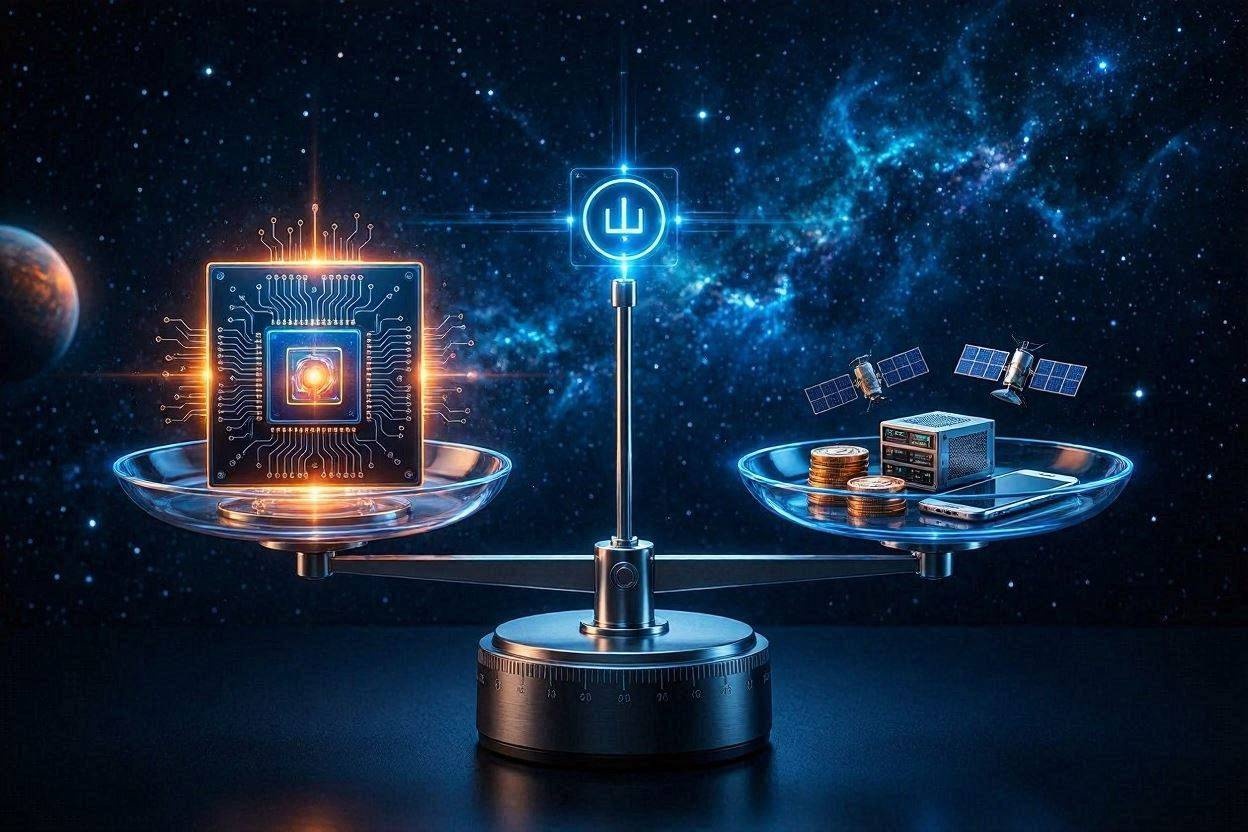
- The Core : SK Hynix can now be held as a "Core" AI infrastructure asset. Its role is to provide stable exposure to the growth of AI compute power.
- The Satellite : Use "Satellite" allocations to explore high-beta assets—such as semiconductors’ supply-chain sub-sectors or hedge-assets like Bitcoin—that provide diversification and mitigate idiosyncratic risks.
6. Conclusion : A New Standard for Global Investors
The listing of SK Hynix ADR on Nasdaq is a landmark event. It signals that the global AI supply chain is becoming more integrated and transparent. For investors, this means the opportunity to own a piece of the AI backbone is now easier, more direct, and better aligned with global standards. As we move forward, the focus should not be on short-term price volatility, but on the long-term compounding of the company’s technological leadership in the AI era.
However, as a personal note, I strongly believe that we shouldn't rely solely on the fundamental factors of the assets (stocks, crypto, derivatives, etc.) we research and study. Alongside that, we need to continuously monitor and identify the actual drivers of liquidity that impact the prices of those specific assets, validating our strategies as we navigate our investment journeys.
[Deep Dive]
To gain a deeper understanding of the institutional shifts within the crypto market, I highly recommend exploring my previous analyses.
The Rise of BlackRock-Led OUSD: Why Circle (CRCL) Crashed and the Secret Delay of the Clarity Act
The Rise of BlackRock-Led OUSD: Why Circle (CRCL) Crashed and the Secret Delay of the Clarity Act
A tectonic shift is rattling the stablecoin market. With the launch of the Open Standard USD (OUSD)—backed by a colossal 140-corporation consortium including BlackRock, Visa, and Google—incumbents are facing an existential crisis. Discover how this yie
cryptoteslaglobal.com
The Great Capital Reallocation: Solana’s Surge, Ondo Integrating XRPL, and the Science of Buying the Crypto Bottom
While retail sentiment is paralyzed by prolonged market boredom, the smart money is finalizing the foundational infrastructure for the next liquidity cycle. From Securitize’s major RWA milestone on Solana to Ondo Finance leveraging the XRP Ledger for U.S
cryptoteslaglobal.com
The Grand Segmentation : Why Ripple (XRP) Ceded Western Union and MoneyGram to Solana for High-Moat Institutional RWA
Mainstream critics point to Western Union and MoneyGram migrating to Solana (SOL) and Stellar (XLM) as a failure for Ripple. However, deep-rooted macro analysis reveals a brilliant structural pivot. Discover why Ripple stepped away from retail B2C remittan
cryptoteslaglobal.com
Clearstream’s Crypto Expansion: Why Institutions are Labeling Major Altcoins as 'Financial Infrastructure'
With Spot Bitcoin ETFs solidified, Wall Street’s focus has shifted to the next critical bottleneck: Digital Asset Custody. Deutsche Börse’s Clearstream has recently expanded its custody service to include XRP, SOL, ADA, and three others. This is a wat
cryptoteslaglobal.com
Why Institutional Investors Are Looking Beyond Bitcoin: The Technological Backbone of Ripple (XRP)
Why Institutional Investors Are Looking Beyond Bitcoin: The Technological Backbone of Ripple (XRP)
The current global payment system is fundamentally broken. Trillions of dollars are trapped in the archaic "Nostro/Vostro" account structure, serving as a massive drag on global capital efficiency. Financial plumbing is being overhauled, and institutional
cryptoteslaglobal.com