Record earnings, explosive AI demand, and then... a total market wipeout. What really happened behind the scenes of the 'Leopold Incident'? We dissect the mechanisms of margin calls, forced liquidations, and how a massive hedge fund’s collapse triggered a sell-off in blue-chip stocks. Plus, actionable risk management strategies for individual investors.
In July 2026, the bedrock of the South Korean stock market—Samsung Electronics and SK Hynix—suffered a crash that defied all market logic. Despite reporting record-breaking earnings and riding the explosive demand for AI technology, their stock prices plummeted so violently that circuit breakers were triggered for two consecutive days. Market analysts scrambled to find a reason, but none of the standard explanations—valuation concerns, US interest rates, or competitor growth—could justify such a freefall.
Looking back, the culprit wasn't corporate performance. It was a massive, hidden "forced liquidation" from a giant hedge fund. Today, we peel back the curtain on the "Leopold Incident" to reveal the cold, hard reality of asset markets and explore how you can survive such systemic shocks.
1. Who is Leopold, and How Did He Become Wall Street’s Newest Predator?
“Leopold foresaw a massive tectonic shift in the AI industry and attempted to reshape market dynamics with a high-speed leverage strategy.”

Leopold Aschenbrenner is not your typical fund manager. A former core researcher at OpenAI who spent his career studying the potential and ripple effects of AI models, he didn’t just see a tech trend—he saw a fundamental shift in industrial structure.
In mid-2025, Aschenbrenner left the lab to launch his own hedge fund, 'Situational Awareness.' True to its name, the fund’s goal was clear: to capture the explosive growth curve of AI before the rest of the market could fully comprehend its value. He believed that AI would replace human intellectual labor far faster than the market anticipated, and he was determined to be at the forefront of this massive transfer of wealth.
The 2026 Myth : A 439% Return and the "AI Infrastructure" Strategy
Aschenbrenner’s 439% return in the first half of 2026 wasn't just luck; it was the result of a high-stakes, aggressive strategy.
- Targeting the Core: He focused on the "veins and heart" of AI. His portfolio was heavily weighted toward High Bandwidth Memory (HBM) leaders like SK Hynix, specialized data center operators like CoreWeave and Nebius, and the power infrastructure critical to AI, such as Bloom Energy.
- The Strategy (Pair Trading): He maximized a 'Long-Short' strategy:
- Long Positions: Heavy buying of semiconductor and data center infrastructure companies set to benefit from the AI boom.
- Short Positions: Massive short-selling of legacy software companies expected to lose their competitive edge in an AI-driven world.
- The Power of Leverage: He didn't stop there. Convinced his analysis was flawless, he borrowed massive amounts of capital from prime brokers to inflate his position size by nearly four times.
This "Leopold Strategy"—betting on the speed of AI growth with 4x leverage—turned his returns into a surreal 439%. But this victory was a poisoned chalice. As his returns skyrocketed, his "book" (trading positions) became visible to the many predators on Wall Street. The very position that made him a genius became his greatest weakness. While he succeeded in reading the future of AI, he failed to defend himself against the ruthless ecosystem of the financial jungle.
Note: This article is an analytical report reconstructed based on the "Leopold Incident" to explore real-world market dynamics.
💡 Financial Glossary : Key Terms
- Hedge Fund: A private investment fund that uses various sophisticated strategies—such as long/short positions and leverage—to generate high returns, regardless of market direction.
- Leverage: The use of borrowed capital to increase the potential return of an investment. While it can amplify gains, it also multiplies losses exponentially if the market moves against you.
2. The Tragedy of the Champagne-Popping Fund: The Paradox of ‘Situational Awareness’
“The moment his positions were exposed, the very leverage that had symbolized his skyrocketing returns transformed into shackles, dragging his entire fund to ruin.”

The invisible terror of the market: The fatal mechanism of a financial bank run.
The 439% return in the first half of 2026 brought Leopold a sense of fatal arrogance. The name of his fund, 'Situational Awareness,' became deeply ironic, as it was the very thing he lost first. The market began to care less about his grand vision for the future of AI, and far more about the precarious tightrope he was walking to finance that vision.
① The Prelude to a Bank Run: Fragile Brilliance
Leopold’s portfolio was as brilliant as a glass castle, but structurally, it was incredibly fragile. His assets were heavily concentrated in specific sectors, and his 4x leverage acted like a noose, tightening around the fund’s throat.
The real problem was transparency. As his fund grew, his trading history became visible to the massive institutional players and algorithmic systems on Wall Street. News like "Leopold is buying SK Hynix" or "Leopold is heavily shorting X software company" was no longer a secret.
Then, one day, AI-related stocks began to tremble ever so slightly. Leopold decided to reduce some of his positions to manage his risk. However, the moment he made that decision, he effectively walked right onto the "hunting map" of the market’s predators.
② The Financial Bank Run: When Vulnerability Feeds on Vulnerability
As soon as Leopold started selling off small portions of his holdings, the market’s "hyenas" noticed instantly. "Leopold is deleveraging because his collateral value is dropping!"
The attack was precise and merciless:
- Attacking Long Positions: Giants like Citadel aggressively shorted Leopold’s core long holdings, such as SK Hynix, forcing the price down.
- Squeezing Short Positions: Conversely, the software stocks Leopold had shorted saw a surge of buying, sending their prices soaring.
- Double-Sided Losses: Leopold was caught in a pincer movement, suffering massive losses on both his long and short positions.
Leverage poured gasoline on the fire. Every 1% move in the stock price wiped out 4% of his fund's Net Asset Value (NAV). This was the beginning of the most terrifying scenario in the financial markets: a 'bank run'.
While a traditional bank run involves depositors rushing to withdraw their money, a stock market bank run arrives under the name "Margin Call". As the value of his collateral plummeted, prime brokers were on the phones, delivering a ruthless ultimatum: "Leopold, your collateral has collapsed. Either post cash immediately or liquidate your holdings at market price to cover your debt!"
He was nowhere near ready to surrender, but the market refused to give him time to think. The genius young fund manager, who had been so confident in the future of AI, found himself paradoxically walking the path to destruction, dictated by the cold, hard pricing of the market.
③ 3. Predator in the Shadows : Citadel, Hunting the Crisis
“Equipped with advanced data analytics and the status of a ‘Market Maker,’ Citadel capitalizes on crises by acquiring undervalued blue-chip assets—the ultimate winner-take-all strategy.”

The predator of Wall Street, lurking in the shadows, waiting for the perfect moment to strike.
As Leopold’s fund thrashed in the quagmire of a ‘bank run,’ beginning its countdown to self-destruction, one entity watched the process with the coldest, most calculating eyes on Wall Street: Citadel, the king of the financial world.
① Ken Griffin’s ‘Data Hunt’
Ken Griffin, the head of Citadel, is both a legendary investor and a wizard of data analysis. For him, Leopold’s crisis wasn't just another event—it was a ‘well-set table’. Citadel mobilized thousands of quants (math and statistics experts) and high-frequency algorithms to calculate, by the minute, exactly when Leopold’s positions would fully collapse and when his prime brokers would be forced to liquidate his collateral.
Citadel is terrifying not just because they forecast outcomes, but because they possess the formidable power of a ‘Market Maker.’ Their role is to mediate between buyers and sellers to ensure liquidity, but they leverage this position to detect market supply-demand imbalances faster than anyone else. When Leopold began dumping stocks into the market, Citadel was the only player capable of absorbing that volume while simultaneously orchestrating the market in a way that maximized panic to suit their strategy.
② Citadel’s History : Growing on the Graves of Others
This wasn't the first time Citadel had swallowed a distressed fund; their history reads like a genealogy of ‘corporate raiders.’
- Amaranth Advisors Collapse: In 2006, after Amaranth lost $6 billion in natural gas futures and went bankrupt, Citadel stepped in to acquire their assets.
- Melvin Capital: In 2021, when Melvin Capital fell into trouble during the GameStop short-squeeze saga, Citadel injected capital to expand its influence.
When a crisis strikes, Citadel often offers a handshake, saying, "We’ll save you." But there is always a blade hidden behind that grip. The Leopold incident was no different. On the morning of July 29th, Citadel’s top executives approached Leopold with Leopold’s own trading book, which they had analyzed overnight. The terms they offered were Leopold’s only hope for ‘survival,’ but for Citadel, it was the ‘jackpot’.
③ The Victor’s Method : The Aesthetics of a 10% Discount
In the end, Citadel acquired the majority of Leopold’s core portfolio, valued at $16 billion. The deal was struck at a ‘10% discount to market price’. Think about it rationally: if Leopold had dumped those stocks into the open market himself, the sheer volume of selling pressure would have caused the stock prices to plummet by far more than 10%.
For Leopold, it was a strategic choice: watch his stock prices crater and sell at a pittance, or take the 10% discount from Citadel to avoid total bankruptcy. But for Citadel, by simply holding the assets they acquired, they had already locked in a guaranteed 10% profit from the start.
Citadel remains silent to this day on whether they directly engineered Leopold’s collapse. However, no one can deny that they were the entity that profited most from the center of the crisis. This is the cold reality of Wall Street’s ecosystem: a crisis is a catastrophe for some, but for a prepared predator, it is the perfect feeding time.
4. The Merciless Hunting Ground of Wall Street: Terra-Luna and the 'Chronicle of Violence'
“Wall Street’s short-selling attacks, which precisely target fragile collateral structures, are a violent form of hunting that drives markets into systemic collapse.”

The brutal, unforgiving hunting ground of the crypto market.
While Wall Street’s giant asset management firms often claim to "rescue markets," their actions are underpinned by cold, calculated strategy. History is littered with examples where they have "hunted" assets the moment a competitor begins to falter. In the Leopold incident, Citadel analyzed positions from the center of the crisis, ultimately acquiring a $16 billion portfolio at a 10% discount. During this process, market fear reached its peak, and countless individual investors were forced into panic selling.
The Leopold incident is not merely a financial accident; it is a textbook case showing how massive capital identifies weak links and "harvests" assets in a way that is profoundly "market-destructive". The crypto market, in particular, is faster, harsher, and more brutal than traditional finance. The reality of these predatory hunting methods has already been laid bare by the colossal storms of the Terra-Luna collapse and the bankruptcy of FTX.
💡 Financial Glossary : Margin Calls and Prime Brokers
- Prime Broker (PB): Large investment banks (e.g., Goldman Sachs, JPMorgan) that lend stocks or capital to hedge funds. They secure their loans by holding the hedge fund’s assets as collateral.
- Margin Call: A notification from a broker to a fund when collateral value drops below a certain level, demanding, "Deposit more cash (additional margin) or we will force the sale of your assets." The fund has no choice but to dump its stocks.
① Terra-Luna : The Precision Engineering of Acceleration
When the Terra ecosystem, led by Do Kwon, collapsed in May 2022, many viewed it as a simple algorithmic failure. However, industry insiders widely regarded it as a "classic Wall Street-style short attack".
- Identifying Weakness: The Terra ecosystem used an algorithm to adjust the massive supply of LUNA to maintain the peg of its stablecoin, UST (TerraUSD). Predators identified the inherent "lack of liquidity" and "asymmetry of collateral value" in this structure.
- The Prelude to the Attack: Attackers dumped massive amounts of UST into the market, intentionally breaking the peg. This was not mere panic selling, but a strategy to "systemically induce panic".
- The Chain of Violence: Once the peg broke, investors fled UST. As the algorithm began minting LUNA uncontrollably, a "Death Spiral" commenced, driving LUNA’s price toward zero. Predators had already built short positions in anticipation of this result, harvesting massive profits during the collapse. This mechanism is disturbingly identical to the "Collateral Value Drop – Margin Call – Forced Liquidation" cycle seen in the Leopold incident.
② FTX : The Raid on the Exchange’s Vault
The FTX collapse followed a similar narrative. The FTX exchange, operated by Sam Bankman-Fried, had been siphoning customer deposits to fund the investments of its affiliate, Alameda Research.
- Exposing the Internal Structure: Predators analyzed FTX’s balance sheet and realized the FTT tokens they held were essentially "empty shells" backed by debt.
- The Decisive Blow: When Binance publicly declared its intent to sell FTT, a fear of insolvency spread across the entire market. Just as Leopold faced attacks when he began to trim his positions, FTX received a "financial death sentence" the moment the first cracks appeared in their armor.
③ Why Are These Tactics Called 'Violent'?
These methods are deemed "violent" because they effectively block any chance for a "normal market recovery".
- Systematizing Fear: While price declines are natural, these players use bots and high-frequency algorithms to artificially accelerate the speed of the crash.
- Removing Escape Routes: When a target attempts to save themselves, predators short-sell the assets the target needs to sell, destroying their asset value in the process. This is identical to how attackers shorted SK Hynix while Leopold was attempting to liquidate it.
- Predation by the Ultimate Winner: After everything collapses, they acquire the victim’s assets at bargain prices to expand their own empire. This is the exact strategy Citadel repeats time and again.
Crypto insiders, do you see it now? The downward curve on the charts you are watching may not be simple selling pressure, but a "chain reaction of forced liquidations" meticulously designed by someone else. From Terra-Luna to the Leopold incident, to these predators, the asset market is not a place to debate fundamentals—it is merely a giant hunting ground where the goal is to see who can strip the other’s collateral the fastest.
5. Do You Remember October 10, 2025?
“Sequential liquidation triggered by macroeconomic shocks served as a ruthless testing ground, forcibly exiting investors caught in the illusion of leverage.”
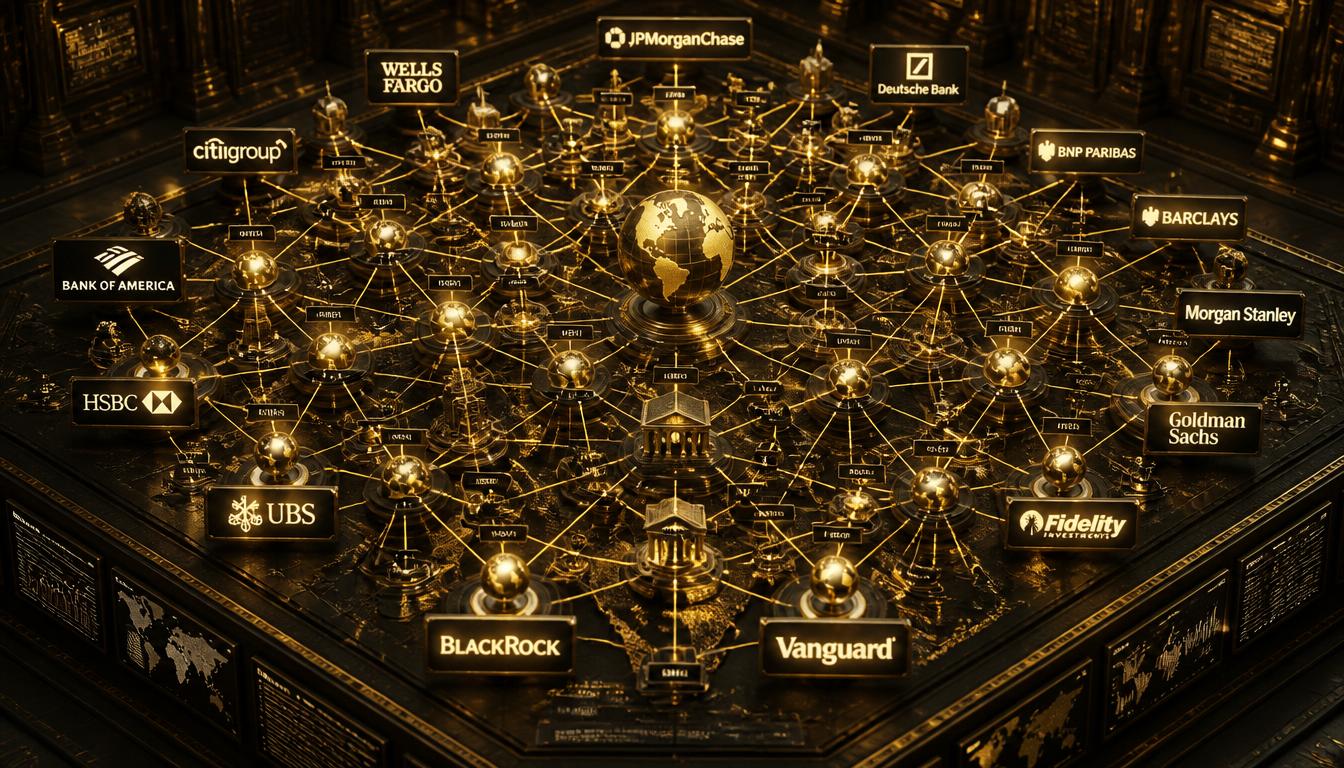
The invisible threads of power driving the global market: Prime Brokers.
The "10/10 Liquidation Event" that shook the crypto market in October 2025 is fundamentally identical to the Leopold Incident. On that day, a staggering $19 billion in leveraged positions evaporated in just 24 hours, marking one of the largest liquidation tragedies in cryptocurrency history. Let’s unravel why this event is yet another example of the same 'predatory hunting' pattern.
① The Trigger : 'Macroeconomic Fear'
While Citadel’s interest rate report served as the trigger for the Leopold Incident, the catalyst for October 2025 was President Donald Trump’s announcement of a "100% tariff on goods from China."
- Acceleration of Fear : The market interpreted this announcement as the opening salvo of an economic war, triggering immediate panic selling.
- Fragile Structure : At the time, Bitcoin had surpassed $120,000, and the market was gripped by extreme optimism. Open Interest had already ballooned to an unsustainable level.
② 'Liquidation Cascade' : The Death Spiral
The "vicious cycle of forced liquidation" observed in the Leopold Incident was reenacted even more brutally in October 2025.
- The Domino Effect of Liquidations: As Bitcoin fell below a critical price level, the positions of countless individual investors—who were using high leverage of 20x or more—were automatically liquidated.
- The Violence of Automatic Selling: These liquidated positions were dumped into the market by exchange algorithms at market prices. This selling pressure further drove down prices, triggering the next wave of liquidations, creating a "Death Spiral" that wiped out $7 billion in just 40 minutes.
- Liquidity Black Hole: As prices plummeted, Market Makers withdrew from the market to avoid risk. With the order book left empty, prices fell vertically through a liquidity black hole.
③ Why Are These Events Called 'Similar Hunts'?
The Terra/Luna collapse, the Leopold Incident, and the October 2025 crash all share a common denominator: they precisely targeted "excessive leverage" and "vulnerabilities in collateral structures."
| Category | Leopold Incident | 10/10 Crypto Crash |
| Trigger | Interest Rate Report (External Pressure) | China Tariff Announcement (Geopolitical Shock) |
| Vulnerability | 4x Leverage & Position Concentration | High-leverage futures positions & Excessive Open Interest |
| Mechanism | Forced selling due to Margin Calls | Selling due to Liquidation Cascades |
| Predator's Role | Acquiring distressed assets at a discount | Bargain hunting after the crash |
④ Hard-Learned Lessons for Crypto Investors
The catastrophe of October 2025 made it clear that the crypto market is no longer a "fringe outlier."
- Coupling with Macroeconomics: The market is now so closely intertwined with traditional finance that a single political statement can wipe out tens of billions of dollars in assets.
- The Illusion of Leverage: High-leverage positions built on the belief that "the bull market will last forever" will forcibly exit you from the market the moment it dips by just 10–20%.
- Liquidity Vigilance: Never forget that Market Makers can withdraw liquidity at any time to protect their own interests. That void is precisely when individual investors are most easily "hunted."
Reviewing these events leads to one conclusion: the only way to survive in this market is to maintain enough liquidity to stay out of the "hunting ground" when predators target your positions, combined with conservative leverage management.
6. The Mechanism Behind Hedge Funds Crashing Blue-Chip Stocks : The ‘Liquidation Cascade’
“Regardless of fundamentals, forced selling due to margin calls travels through algorithms and drains market liquidity in an instant.”

The massive collapse triggered by a single small trigger: The domino effect of forced liquidation.
Many investors still ask, "Why do blue-chip stocks like Samsung Electronics or SK Hynix crash by 20% when their corporate earnings are so strong?" However, in the hunting strategy of hedge funds, 'corporate value' is secondary. They only care about 'price' and 'compulsion.' Let's dissect the brutal mechanism by which massive capital brings down blue-chip stocks, step by step.
① Stage 1 : Identifying Weakness and Selecting the ‘Prey’
Hedge funds meticulously analyze public filings, investor letters, and market data to determine how much leverage a target fund is using and which stocks must be liquidated if that fund collapses. In this context, stocks like SK Hynix—which boast large market caps but high liquidity and are held as collateral by many funds—become the primary targets.
② Stage 2 : The Attack (Short Selling and Psychological Warfare)
The attackers pre-emptively build massive Short Positions on the core stocks held by their "prey" (the hedge fund).
- It is not just about driving down the price; they spread fear into the market, suggesting "there is something wrong with this stock," to induce panic selling among individual investors.
- As the order book thins out in this process, the collateral value of the hedge fund begins to plummet in earnest.
③ Stage 3 : The Core of the Bank Run, the ‘Margin Call’ Domino
When the hedge fund’s collateral value falls below the set Margin Requirement, prime brokers (PB) ruthlessly issue a Margin Call.
- If the hedge fund lacks the cash to post additional collateral, it must raise funds by dumping its blue-chip holdings (like SK Hynix) at market price—a Fire Sale.
- This is where the core of the mechanism lies: when a fund dumps stocks at market price, the price drops further. This, in turn, collapses the collateral value of other funds, forcing them to liquidate as well. This is the 'Liquidation Cascade.'
④ Stage 4 : Algorithmic Rampage
Once this stage is reached, the attacker no longer needs to spend money.
- Trend Following Algorithms : Algorithms programmed to "Sell unconditionally when the price drops" are triggered.
- VaR (Value at Risk) Limits : The risk management systems of large institutional managers issue commands to "cut exposure because risk limits have been exceeded," automatically flooding the market with sell orders.
- Now, the market stops rational assessment of corporate value and is governed solely by a system where you "must sell to survive."
💡 [Glossary : The Predator’s Hunting Tools]
- Short Selling : The act of borrowing and selling a stock in anticipation of a price decline. Later, if the price drops, the short seller buys it back at a lower price to repay the loan, pocketing the profit. It is the primary tool hunters use to drive prices down.
- Prime Broker (PB) : Wall Street's large investment banks that lend stocks and capital to hedge funds. While they act as a funding source for hedge funds, they are the 'cold-blooded creditors' who are the first to turn their backs during a crisis.
- Margin Call : A demand to deposit more cash or sell stocks immediately because collateral is insufficient. The moment this notification is received, the hedge fund is dragged into a 'swamp of bankruptcy' with no other options.
- Fire Sale : The act of disposing of assets at bargain prices, regardless of their actual value, "as if tossing items from a burning building." It is the primary culprit in maximizing market fear.
- VaR (Value at Risk) : A metric calculating the maximum potential loss for a financial institution’s assets over a specific period given market conditions. If this figure exceeds a threshold, the system automatically triggers a reduction in exposure (selling).
The attack by a massive hedge fund is not born out of hatred for a company, but is the result of mathematical calculation: "How can we force the maximum amount of mandatory selling?" Now that we understand this mechanism, in the next section, we will delve into concrete survival strategies for individual investors to manage risk and survive this massive wave.
💡 Major Wall Street Prime Brokers (PB)
Below is the status of the major investment banks that lead Prime Brokerage services on Wall Street.
| Rank | Institution | Founded | Key Features & AUM, etc. |
| 1 | Goldman Sachs | 1869 | The undisputed #1 PB in the industry; highest hedge fund trading volume |
| 2 | Morgan Stanley | 1935 | A powerhouse in the PB market; has built an entire prime service ecosystem |
| 3 | JPMorgan Chase | 1799 | One of the world's largest AUMs; massive capital strength |
| 4 | Citigroup | 1812 | Settlement and clearing services based on a global network |
| 5 | Bank of America | 1904 | Rapid growth in PB market share after acquiring Merrill Lynch |
| 6 | Barclays | 1690 | A strong global position as a European PB |
| 7 | UBS | 1862 | Enhanced competitiveness in the PB sector after acquiring Credit Suisse |
| 8 | Deutsche Bank | 1870 | Provider of global derivatives and prime services |
| 9 | BNP Paribas | 1848 | Europe’s largest financial institution; expanding prime services |
| 10 | Nomura Holdings | 1925 | The only Asian powerhouse in global PB |
(Note: Market cap and AUM fluctuate in real-time depending on market conditions; the table above is organized based on industry market share and influence.)
💡 Is 'Hidden Road,' acquired by Ripple, a Prime Broker?
For crypto investors—especially those interested in Ripple (XRP)—let's look at Hidden Road, which has been an institutional prime brokerage firm.
- Nature: Hidden Road is indeed an 'Institutional Prime Brokerage' firm that operates primarily within the cryptocurrency market.
- Core Role: Much like traditional prime brokers, it supplies liquidity to institutional investors in the crypto market, provides credit services, and intermediates settlements.
- Rank: While Hidden Road is a promising company growing rapidly in the specialized crypto PB sector, it is not included in the top 10 global rankings by market cap or AUM, which are dominated by traditional Wall Street financial institutions.
While traditional Wall Street PBs boast centuries of history and manage assets in the quadrillions of won, you should understand crypto-specialized PBs like Hidden Road as a specialized model that acts as the 'new blood vessels' of the digital asset market.
7. A Survival Guide for Individual Investors: How to Thrive in the Giant's Hunting Ground
“Strictly limiting leverage and securing ‘battle-ready cash’ that can be deployed instantly during a crisis is the only way to survive the hunting grounds of massive predators.”

Wisdom in the midst of chaos: How to survive in the giant's hunting ground.
We have explored the brutal mechanisms by which Wall Street’s predators crush blue-chip stocks and force individual investors into involuntary asset harvesting. The critical question isn't just "Why does this happen?" but "How can we survive it?" Here are the best defensive strategies against algorithmic trading and margin call cascades.
1) Confront the Blade Hidden Behind the Sweetness of 'Leverage'
The first illusion to discard is that of "optimal leverage."
- High Leverage is a Path to Ruin: Leverage amplifies gains during bull markets, but during liquidation phases, it becomes a tool that effectively cuts your own lifeline.
- Recognize Structural Risks: Retail leverage products and futures trading move in lockstep with institutional 'forced selling' during market crashes.
- The Alternative: Strictly limit your leverage to within 10-20% of your total assets, and ensure you hold 'defensive cash' that can be deployed instantly in a crisis.
2) Break Free from 'Fundamentalist Dogma'
The belief that "the company is fundamentally sound, so it will bounce back" is toxic in the swamp of forced liquidation.
- Decoupling: Stock prices often move not because of the company's value, but because of someone else’s debt that has been collateralized by that company.
- Action: If a company reports strong earnings but the stock crashes without a clear reason, treat it as a 'forced liquidation' event first. Do not fall in love with the company; prioritize escaping systemic risk.
3) Use 'Supply/Demand Indicators' to Read the Predators
The pros don’t just look at charts; they track the footprints of "who is buying and who is selling."
- Institutional/Foreign Program Selling: Selling that pours out mechanically after 2 PM, especially during the market close, is likely institutional algorithmic rebalancing.
- ADR-Domestic Price Discrepancy: If a stock with a US-listed ADR (like SK Hynix) trades at a significantly lower price abroad, it is a strong warning that the global market has classified the stock as a 'Distressed Asset'.
4) Practical Monitoring: Catching the 'Precursors of Forced Liquidation' (CRITICAL)
If a stock crashes regardless of fundamentals, monitor these three indicators in real-time:
- Track Program Selling (Non-arbitrage):
- The Metric: During price drops, check if 'Foreign' or 'Institutional' program selling intensifies after 2 PM or during the closing auction.
- The Solution: Use your trading platform’s "Investor Trading Trends" to chart daily program selling. If you see mechanical, repetitive selling, it is the smoking gun of algorithms unwinding leverage positions.
- Monitor ADR & Foreign Price Gaps:
- The Metric: If the domestic stock crashes while the US ADR trades even lower or fails to rise, the global market is pricing it as a 'Distressed Asset'.
- The Solution: Compare the ADR price (adjusted for exchange rates) with the domestic share price before the market opens or during overnight sessions. If the gap remains wide, the forced selling pressure is still active.
- Monitor Open Interest:
- The Metric: If Open Interest surges while the price is pushed down, it indicates a high concentration of leveraged positions.
- The Solution: Check your trading platform’s "Futures/Options Open Interest" data. If prices crash while Open Interest drops sharply, it is clear evidence of forced unwinding.
5) The Ultimate Solution: The 'Paradox of Cash'
When the market is paralyzed by fear and everyone is dumping their assets, the ones who build real wealth are not those who used leverage, but those who waited with "enough cash on hand."
- Asymmetric Opportunity: When others are margin-called and forced to sell, you gain the exclusive opportunity to pick up blue-chips at fire-sale prices.
- Principle: Keep at least 20-30% of your portfolio in 'Battle-Ready Cash' reserved specifically for crises. This is the only way to avoid being eaten by Wall Street’s predators and instead thrive in the market they’ve destroyed.
6) Understand the Power of Prime Brokers (PBs)
The PBs we discussed—Goldman Sachs, Morgan Stanley, JPMorgan—are the ones who grant loans and trigger margin calls. When the market becomes dangerous, they are the first to liquidate collateral.
- Practical Advice: If major investment banks suddenly issue negative outlooks (e.g., sudden interest rate warnings) during a market crash, you must question if they are maximizing fear to prepare for the margin calls of the funds they manage.
Final Thoughts
The Leopold incident and the crypto market’s great crashes have taught us the cold truth: "The market is not rational." Believing in your stock's fundamentals is important, but if you cannot read the "market liquidity" and the "leverage positions of others" that underpin those fundamentals, you can become prey at any time.
Market healing has begun. August is not a time for recovery, but a time to stress-test your portfolio and find real value left behind by departing predators. Remember, a wise investor buys the 'fear' created by the market and sells into the 'greed' of the crowd.
I personally do not chase stocks that are rocketing up. I strive to invest in asset classes with strong fundamentals, high future value, and those that offer a clear "answer key" to the market—naturally, targeting stocks currently priced below their potential.
This article is an analytical report reconstructed based on the "Leopold Incident" to explore real-world market dynamics. Please remember that all investment decisions are the sole responsibility of the individual.
[Deep Dive]
To gain a deeper understanding of macroeconomics, crypto, and institutional changes within the asset market, I highly recommend reviewing the analysis materials I have previously written.
Follow the Money : Why the Fed’s Reverse Repo Facility Is the Ultimate Signal for the Next Liquidity Wave
In the complex plumbing of global finance, professional investors don't just watch headlines—they track the underlying mechanics of liquidity. While retail traders focus on price action, seasoned institutional managers watch one critical number: the Fede
cryptoteslaglobal.com
Bitcoin : The 'Digital Nuclear Weapon' - From the 1971 Nixon Shock to the Global Mining Arms Race
Bitcoin : The 'Digital Nuclear Weapon' - From the 1971 Nixon Shock to the Global Mining Arms Race
Do you still view Bitcoin merely as a "speculative asset"? If so, you are missing half the story. Since the 1971 Nixon Shock, when the Gold Standard was abandoned, fiat currency has rested on the fragile foundation of "government credit." As governments pr
cryptoteslaglobal.com
[Deep Insight] Why Global Financial Giants are Rewiring the Infrastructure: The RWA and Crypto Revolution
"Why are global financial giants like DTCC obsessively rebuilding financial infrastructure with RWA and Crypto? Explore the institutional roadmap and the strategic role of XRP in the future of settlement." The "invisible hand" of the global financial marke
cryptoteslaglobal.com