"We live in a financial system built for humans. But AI Agents are not human."
In Part 1, we defined AI Agents as "Digital Workers" capable of executing complex tasks autonomously. Now, we face the most critical question in the machine economy: When these Agents need to pay for services, data, or computing power, what currency will they use?
If you think they’ll use traditional banking, think again. The current financial system isn't just inefficient for them—it’s an insurmountable wall.
1. The Comparison : The Legacy Wall vs. The Crypto Highway

The global financial system we use today is a fortress built on "Human Trust." But AI Agents are knocking at the gates, and the fortress is denying them entry. Why? Because the key—a "Bank Account"—requires a human identity (KYC) and a human pulse.
| Feature | Legacy Banking (The Human Way) | AI Economy (The Smart Contract Way) |
| Identity | Human (ID, OTP, In-person) | Code (Cryptographic Keys) |
| Operating Hours | 9-to-5 (Weekdays) | 24/7/365 |
| Speed | T+1 to T+3 (Days) | Milliseconds (Real-time Finality) |
| Trust Model | Institutional Credit | Mathematical Code & Algorithms |
| Accessibility | Closed & Permissioned | Open & Permissionless |
① The Bottleneck : Human-Centric vs. AI-Centric
Current banking relies on legal liability and biometric verification.
- The Constraint: AI Agents are not "Legal Persons"; they are collections of code. Demanding a national ID from an algorithm is a logic loop that breaks the system.
- The Velocity: Agents don't sleep, don't take holidays, and operate across continents in milliseconds. Forcing them to wait for "bank hours" or manual approval is like forcing a jet to travel at the speed of a horse-drawn carriage.
② The Mechanics : How Agents Transact in an Atomic World
Without human intervention, Agents don't use "Account Numbers"—they use Wallet Addresses. This is how they conduct business in a "Trustless" environment:
- The Trigger (Purpose-Driven): An Agent identifies a need (e.g., purchasing live stock data). It executes its "Objective Function," automatically triggering a smart contract request.
- Authentication (Instant Verification): Instead of a 3-second server lag, an Agent generates a Digital Signature in microseconds. It cryptographically proves it has the funds and that the request is valid using its Public Key.
- Atomic Settlement (DVP): In traditional finance, "Settlement" takes days. For AI, it’s Atomic. Using the Delivery vs. Payment (DVP) model, the payment is executed simultaneously with the data transfer. If the data is valid, the funds move instantly. If not, the transaction doesn't happen. No risk, no intermediaries.
- Real-Time Clearing: There is no need for back-office reconciliation. The transaction is the ledger. The moment the blockchain block is generated, ownership is legally and mathematically transferred.
The Middle-Manager Summary:
- Legacy Finance = "Slow systems where humans verify ledgers."
- AI Finance = "Systems where code automatically and instantly finalizes the truth."
2. The Velocity of Money – Why Milliseconds Define the AI Economy

"If an AI processes data in milliseconds but waits minutes for a payment to clear, it’s wasting 99% of its potential."
Traditional finance was designed for the human pace of life—where humans verify documents, bank clerks record ledgers, and central servers batch-process transactions at the end of the day. For humans, this "wait time" is acceptable. For an AI Agent, it’s a terminal performance bottleneck.
① The Speed Gap: Human Latency vs. Machine Latency
When an AI Agent requests data from a cloud server, the server delivers it in 0.01 seconds. If that same Agent has to wait 60 seconds for a credit card authorization or a bank wire transfer, it is literally wasting 99.9% of its operational time just waiting for a payment signal. In the AI economy, latency is the ultimate killer of intelligence.
② The Power of 'Micropayments'
Traditional banking is burdened by fixed transaction fees and overhead. Sending $100 is feasible, but sending $0.001 is economically impossible due to bank processing fees.
The AI economy, however, thrives on Micropayments:
- Translating one sentence: $0.00005
- Recognizing an object in a photo: $0.00002
- Fetching one line of real-time trend data: $0.00001
AI Agents perform these tiny, granular tasks thousands of times a day. Existing financial rails would collapse under the weight of these transaction fees. Crypto infrastructure, especially Layer 2 scaling solutions, allows for thousands of these sub-penny transactions to be settled in a single batch with negligible costs.
③ Why Milliseconds = Performance
For an AI Agent, a payment is not just a settlement—it is an "Authentication Key" to access the next layer of data.
- The Agent initiates a task.
- It triggers a real-time settlement for the current step.
- Once the payment clears, the next data stream is unlocked (API success).
If the payment takes one second to verify, the entire workflow stalls. The speed of settlement is directly proportional to the "IQ" of the AI. The faster the payment rail, the more tasks the Agent can complete, and the more "intelligent" its workflow becomes.
[The author's insight]
We are witnessing a shift in the "Velocity of Money" that parallels the invention of the Internet. Just as the internet changed the speed at which information flows, we are now changing the speed at which value flows.
When the "Agent Economy" matures, blockchain and crypto will cease to be "alternative assets"—they will become the primary infrastructure upon which all machine commerce is built. If you understand that settlement speed equals operational performance, you are already ahead of 99% of the market.
3. The Crypto Advantage – Why AI Infrastructure Demands Three Pillars

"If the internet built the sea of information, blockchain is building the sea of value."
We’ve established that AI Agents cannot function on the legacy "paved roads" of traditional banking. But why is Crypto the only viable alternative? Because Crypto is more than digital money; it is a perfectly engineered economic infrastructure designed for machines to communicate and transact without human intermediaries.
① Permissionless: Freedom Without Gatekeepers
In traditional finance, "opening an account" is a gatekept process involving corporate approvals, internal compliance, and waiting periods. AI Agents have no patience for this.
- Instant Wallet Creation: On a blockchain, an agent can generate a wallet address in milliseconds using a few lines of code.
- True Autonomy: If a company launches 10,000 AI Agents, it is physically impossible to open 10,000 bank accounts. With Crypto, it’s just a data-generation process that completes in a heartbeat, allowing Agents to start economic activity immediately.
② Programmability: Money with Logic
Traditional money is a passive store of value. Crypto, driven by Smart Contracts, allows us to "embed logic into money."
- Escrow & Conditional Transfers: You can program funds to move only if specific conditions are met (e.g., "Pay only if the data hash matches the request").
- Automated Settlement: The code acts as the escrow officer. When the condition is met, the money moves. This "Code-is-Law" approach is the only way AI Agents can execute business reliably without human oversight.
③ Global Finality: A Borderless Economy
AI Agents traverse servers across the globe in milliseconds. If their payment systems are fragmented by national borders, FX fees, and settlement delays, productivity drops to zero.
- A Unified Economic Zone: Crypto knows no borders. Value moves across the globe 24/7 using a single, unified protocol.
- Trustless Settlement: Banks require days to reconcile records. Blockchain reaches "Finality" the moment a block is confirmed. There are no intermediary banks taking a cut and no reconciliation reports needed. The transaction is the record.
4. The M2M Reality – x402 Protocol and the Future of Automation
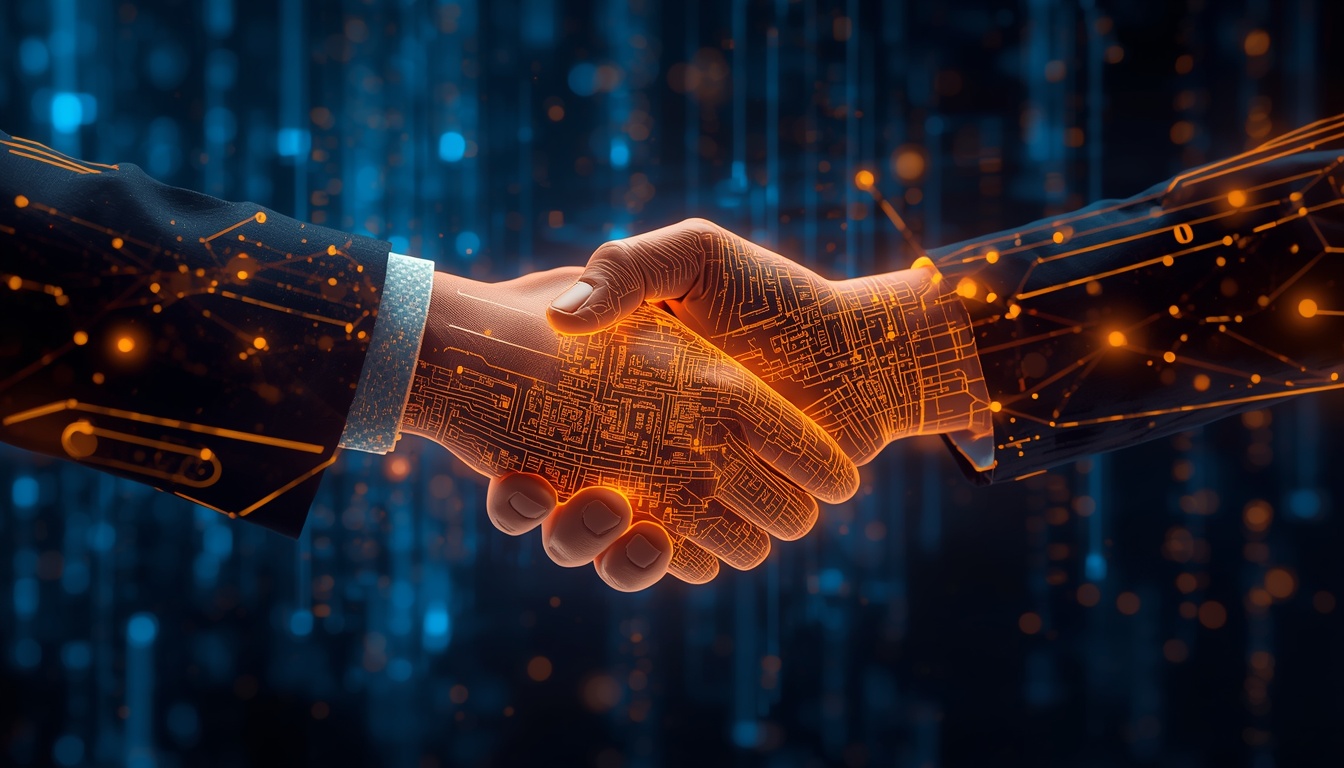
"When machines start paying machines, the 'Payment Required' error becomes the engine of a new economy."
For decades, developers saw the HTTP 402 Payment Required status code as an unused relic of the early internet. Today, thanks to AI Agents and Blockchain, this "sleeping" protocol has become the switch that turns the internet into a self-sustaining machine economy.
① What is the x402 Protocol?
The x402 protocol turns a standard web error into a gateway for commerce. When an Agent requests premium data, the server doesn't just block it; it responds with a 402 Payment Required code and an attached crypto-wallet address.
② The Agentic Payment Loop (Sub-0.1s Execution)
- The Request: An AI Agent requests real-time data from a proprietary API.
- The Demand: The server issues an x402 status code with a payment address.
- Autonomous Transfer: The Agent, using its embedded crypto wallet, instantly sends the required stablecoins to the server.
- Instant Data Access: The server verifies the transaction on the blockchain in real-time and instantly "unlocks" the data.
③ Why This is a Paradigm Shift
- The Micro-API Market: Even tiny snippets of information become monetizable products.
- Zero Trust Costs: Server operators have zero risk. If an Agent doesn't pay, it doesn't get the data. It’s an airtight system.
- Self-Sustaining Digital Workers: Agents use their earnings to buy more data, rent better computing power, and expand their own capacity, creating an autonomous, self-optimizing business cycle.
[Series Roadmap for Deep Learning]
- [Part 1] AI Agents and Digital Workers: From the Age of Knowledge to the Age of Action
- [Part 2] Why do AI Agents Need Crypto? Machine-to-Machine (M2M) Payments and the x402 Protocol
- [Part 3] The Investment Thesis: The 3 Core Pillars Sustaining the AI Agent Economy
[Personal Reflection]
The initial spark for planning this three-part series came to me on my commute to work one day. As I conveniently utilized AI to write my blog posts, search for information, and navigate daily tasks, a thought suddenly crossed my mind: AI's assistance will soon expand into vastly wider, deeper domains. What if we have personalized personal assistants—like fully autonomous AI agents—working for us?
When it comes to transactions, billing, and the movement of money for these services, what medium will they actually use?
That simple question led me straight to the inevitable connection with crypto, prompting me to dive deep and write this series. This is going to be a critically important piece of our near future, so I sincerely hope you'll read through it carefully, gain deep insights, and subscribe to drop by often!
[Deep Dive]
To gain a deeper understanding of macroeconomics, crypto, and institutional changes within the asset market, I highly recommend reviewing the analysis materials I have previously written.
Ethereum : The Operating System for the New Digital Finance
Ethereum : The Operating System for the New Digital Finance
Why Wall Street is Obsessed with the "World Computer" (2026 Updated)"This is not just another cryptocurrency. It is the operating system (OS) for the new digital economy."While Bitcoin acts as 'digital gold'—a store of value—Ethereum is the 'World Comp
cryptoteslaglobal.com
The Grand Segmentation : Why Ripple (XRP) Ceded Western Union and MoneyGram to Solana for High-Moat Institutional RWA
Mainstream critics point to Western Union and MoneyGram migrating to Solana (SOL) and Stellar (XLM) as a failure for Ripple. However, deep-rooted macro analysis reveals a brilliant structural pivot. Discover why Ripple stepped away from retail B2C remittan
cryptoteslaglobal.com
The Ripple Effect of DTCC’s Tokenization Roadmap: The Technical Roles and Macro Valuation of XRP & Hedera (HBAR)
Explore how DTCC's multi-chain tokenization roadmap sets the stage for XRP and Hedera (HBAR) to become the ultimate institutional infrastructure. 1. The Great Shift in Traditional Financial Infrastructure : What DTCC’s Tokenization Truly Means The Deposi
cryptoteslaglobal.com