"Can XRP resting in your wallet finally generate interest?"
Ripple (XRP), historically known for fast transfers without native yield generation, is preparing a strategic upgrade through XLS-65 and XLS-66. This analysis breaks down the native DeFi architecture designed to generate potential XRP yields without traditional intermediaries, along with the outlook for institutional capital inflow.
Despite clear advantages in rapid cross-border payment settlement and ultra-low transaction fees, Ripple (XRP) has historically faced structural limitations—most notably, the absence of a native yield-generating DeFi ecosystem similar to those on Ethereum or Solana.
However, with the proposal of native vault and lending specifications—XLS-65 (Vault) and XLS-66 (Single Asset Lending Protocol)—on the XRP Ledger (XRPL) mainnet, structural enhancements are underway to attract institutional-grade financial liquidity.
[Author's Perspective]
From the vantage point of navigating multiple crypto market cycles, the long-term sustainability of digital assets ultimately hinges on Real Yield and authentic capital velocity.
Despite XRP's long-standing position among top-tier digital assets by market capitalization, it has lacked native, on-chain financial infrastructure for capital efficiency beyond simple holding. The proposed XLS-65/66 specifications represent a pivotal testing ground to evaluate whether XRP can transition from a pure bridge settlement token into a yield-generating digital financial asset.
Nonetheless, market participants should maintain a disciplined approach: a time lag exists between protocol implementation and actual institutional capital onboarding, and the efficacy of off-chain credit risk management frameworks remains to be thoroughly validated in live environments.
1. XLS-65 & XLS-66: Core Architecture of XRPL Native Lending Protocols
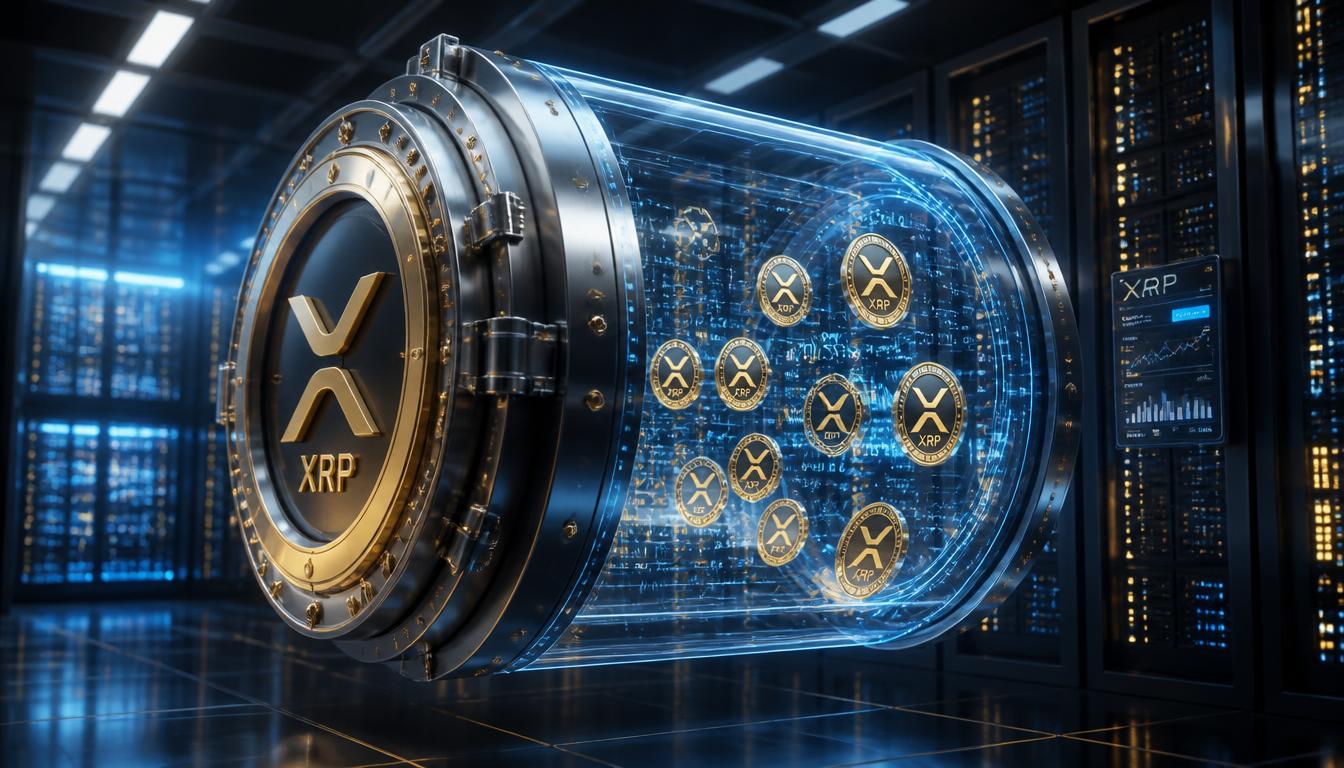
Conceptual diagram of XRPL native vault (XLS-65) and lending protocol (XLS-66)
Unlike traditional DeFi architectures that deploy heavy, complex smart contracts on top of the base layer, the XRPL's new lending mechanism embeds vault and loan specifications directly into the Layer-1 ledger protocol (Native).
- Key Technical Advantage (Maintaining Chain Performance):
- Because the network avoids executing heavy external contract calls for each operation, it preserves XRPL's core identity—achieving 3 to 5-second settlement finality alongside ultra-low transaction fees (approximately 0.00001 XRP).
💡 Core Concept Breakdown: XLS-65 vs. XLS-66
To simplify these technical specifications, it is helpful to draw a comparison with traditional banking infrastructure:
- XLS-65 (Deposit Vault):
- Practical Analogy: Similar to moving idle funds into a structured, interest-bearing term deposit account.
- Think of this as a dedicated XRP digital vault. When investors deposit XRP into this vault, it aggregates liquidity that can subsequently be utilized for institutional lending.
- XLS-66 (Lending Protocol):
- Practical Analogy: Acting as a digital loan officer, it enforces predetermined borrowing terms and tracks interest repayments without needing third-party intermediaries.
- This serves as an automated loan ledger that facilitates capital borrowing, tracking borrow terms, interest rates, and maturity schedules.
2. Key Differences from Ethereum DeFi & Off-Chain Credit Assessment

Comparison between collateral-based traditional DeFi and institution-focused XRPL DeFi
The primary point of divergence between general smart contract ecosystems (such as Ethereum or Solana) and the XRPL lending model lies in target demographics and collateral requirements.
💡 Conceptual Comparison
- Ethereum DeFi Model = "Digital Pawnshop" Mechanics
- Irrespective of creditworthiness, borrowers must deposit excess collateral (e.g., depositing $1,000 worth of crypto to borrow $700). While fully automated via smart contracts, any sharp decline in collateral value triggers immediate on-chain liquidation.
- XRPL DeFi Model = "Corporate Line of Credit & Liquidity Bridge"Instead of purchasing spot XRP to cover short-term liquidity voids, the firm can utilize the XLS-66 lending facility to borrow XRP for 48 hours, settle transactions, and repay the principal plus interest upon receiving incoming clearing funds.
- Consider a cross-border payment provider needing immediate operational liquidity while awaiting overseas settlement clearances over a 48-hour window.
📌 Key Takeaway:
During the initial adoption phase, assessing corporate creditworthiness relies on off-chain underwriting (human/institutional evaluation) before parameters are recorded on-chain, representing a hybrid operational framework.
3. Synergy with RLUSD Stablecoin and Key Risk Factors
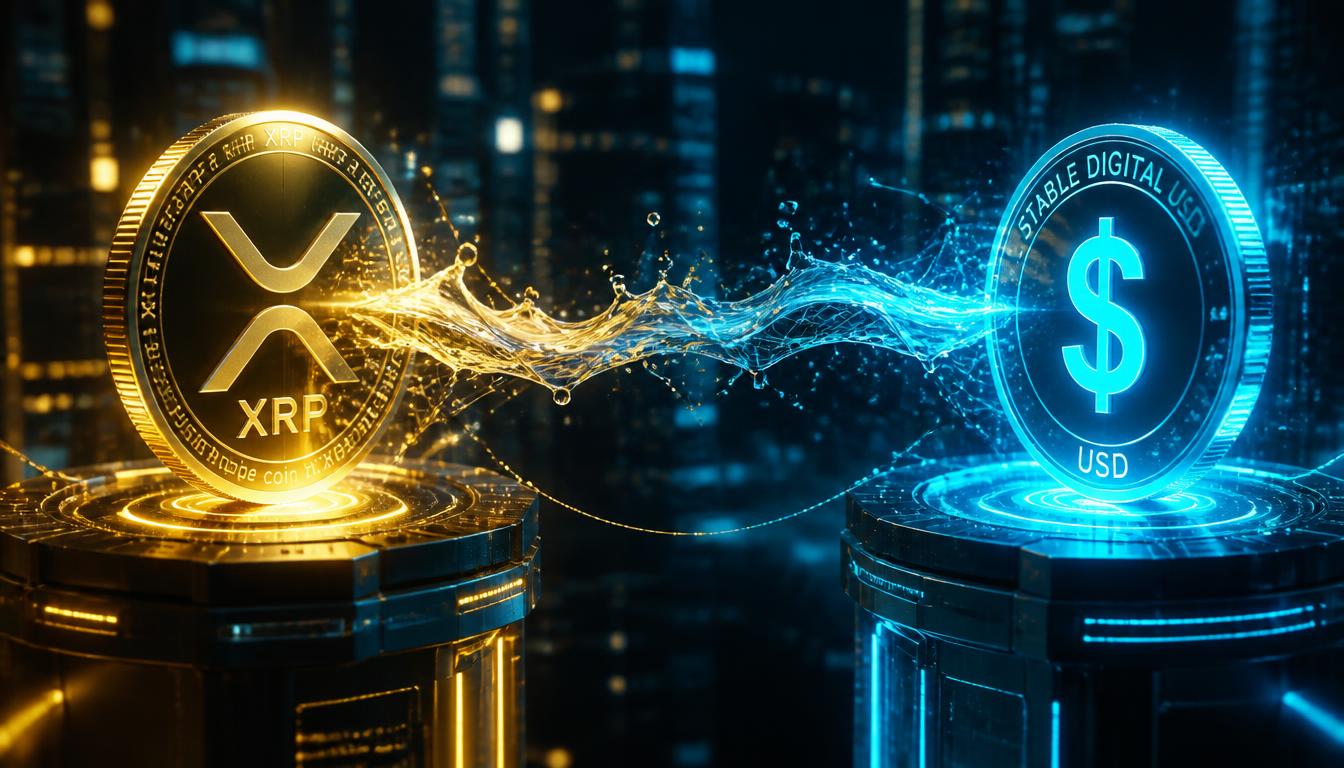
The synergy between XRP yield generation and RLUSD stablecoin cash-out mechanism
The Strategic Role of RLUSD Stablecoin
RLUSD is a U.S. dollar-pegged stablecoin issued by Ripple Labs, designed to maintain a 1:1 value parity with the U.S. dollar. Within the XRPL DeFi ecosystem, RLUSD functions as a secure liquidity exchange bridge.
[XRP Vault Deposit] ──► [Yield Generation (XRP)] ──► [RLUSD Conversion] ──► [USD Liquidity / Cash-out]
Why RLUSD Integration is Essential
XRP experiences market price volatility. If yields accumulated in XRP suffer a sharp devaluation due to market pullbacks, the real realized yield could be substantially diminished.
- Realized Yield Cash-Out:
- By immediately converting variable XRP lending yields into non-volatile RLUSD, both retail participants and institutional treasuries can lock in realized returns in U.S. dollar terms.
- Corporate Treasury Efficiency:
- From a corporate balance sheet perspective, borrowing or deploying capital via a 1:1 USD-pegged stablecoin reduces market risk compared to holding volatile crypto assets.
- Practical Analogy:
- Operating like guaranteed dollar-denominated gift certificates at an amusement park—allowing participants to convert points earned on attraction rides (XRP ecosystem) into stable currency at any time.
⚠️ Key Risk Factors for Investors

While market enthusiasm is high, prudent investors should objectively evaluate three critical risk factors:
1) U.S. SEC Regulatory Scrutiny
- Protocols operating purely via autonomous smart contract code are generally categorized as software tools.
- However, because the XRPL lending model relies on human/institutional intermediaries for off-chain credit evaluations and interest rate determination, regulatory bodies like the SEC may evaluate these vault operations as regulated investment funds or managed investment schemes.
2) Credit Default and Uncollateralized Risk
- Traditional Ethereum DeFi mitigates risk through automated on-chain liquidations when collateral thresholds are breached.
- Conversely, XRPL's support for under-collateralized corporate credit lines introduces credit risk. If a corporate borrower defaults or faces insolvency, automated on-chain clawback mechanisms may be limited, leaving debt recovery to off-chain legal processes.
3) On-Chain Adoption Data Verification (TVL & Loan Volume)
- Infrastructure availability does not automatically guarantee liquidity adoption.
- Following protocol activation via validator consensus, investors should closely monitor Total Value Locked (TVL), active loan originations, and utilization rates by market makers to verify genuine economic adoption.
💡 Summary:
XLS-65 and XLS-66 equip the XRP Ledger with native deposit and credit ledger functionality, marking a structural evolution for XRP from a pure cross-border settlement token into a yield-generating digital asset.
4. Architectural Comparison: Ethereum, Solana, and XRPL
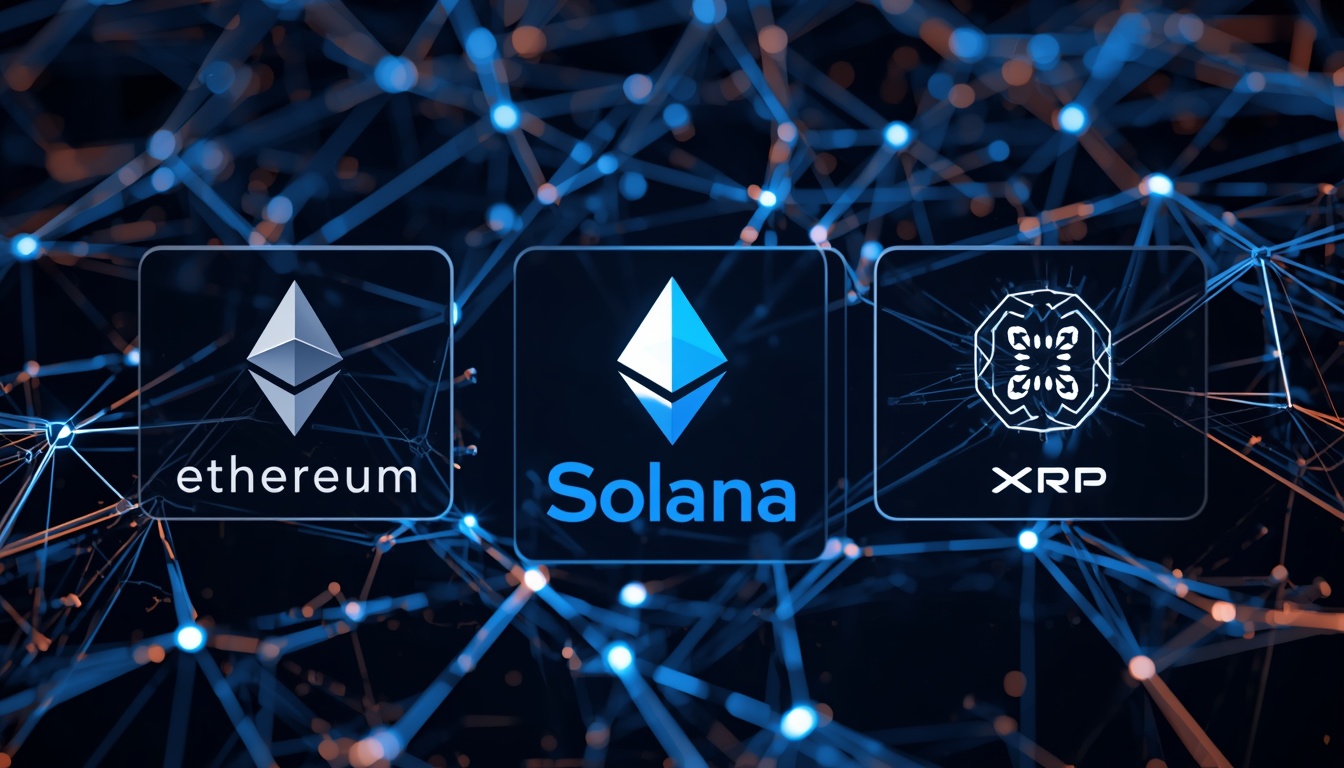
Comparison of DeFi architectures and transaction processing mechanisms among Ethereum, Solana, and XRPL
1) Why General Smart Contract Chains Experience High Fees and Latency
General-purpose smart contract blockchains like Ethereum operate as unrestricted universal computers.
- The Challenge: Executing complex decentralized applications (DeFi protocols, NFT marketplaces, gaming) requires significant network computation. During high network congestion, transaction processing bogs down, causing gas fees to surge as users bid for priority execution.
- Retail Analogy: Similar to a single department store checkout counter attempting to handle payments, loan applications, product returns, and shipping dispatch simultaneously—creating massive queues and inflated costs.
2) The XRPL Solution: Native L1 Engine Integration
Rather than layering heavy, external smart contract bytecode onto the base chain, the XRPL integrates deposit and credit specifications directly into its core L1 protocol consensus engine.
[Ethereum DeFi]
Deploy Heavy Smart Contracts ──► High Computational Overhead ──► Latency & Gas Fee Surges

[XRPL Native DeFi (XLS-65/66)]
Embed Native Protocol Rules ──► Lightweight Execution ──► Preserved Speed & Sub-Cent Fees
- Native Functionality:
- Instead of compiling and executing complex external contracts repeatedly, XRPL introduces standardized native transaction types (e.g., vault deposit commands for XLS-65 and credit recording commands for XLS-66).
- Performance Impact:
- Because computational overhead remains minimal, the network preserves its benchmark 3 to 5-second finality and ~0.00001 XRP transaction cost.
- Smartphone Analogy: Rather than running multiple heavy background applications that drain battery power, it is equivalent to adding a streamlined shortcut button inside the native phone app.
3) Architectural Overview
In summary, the implementation of XLS-65 and XLS-66 does not compromise XRP's core identity of speed and cost-efficiency; rather, it utilizes a lightweight native architecture specifically designed to preserve those advantages while enabling institutional yield capabilities.
5. XRPL Lending Protocol Roadmap & Institutional Capital Inflow Timeline
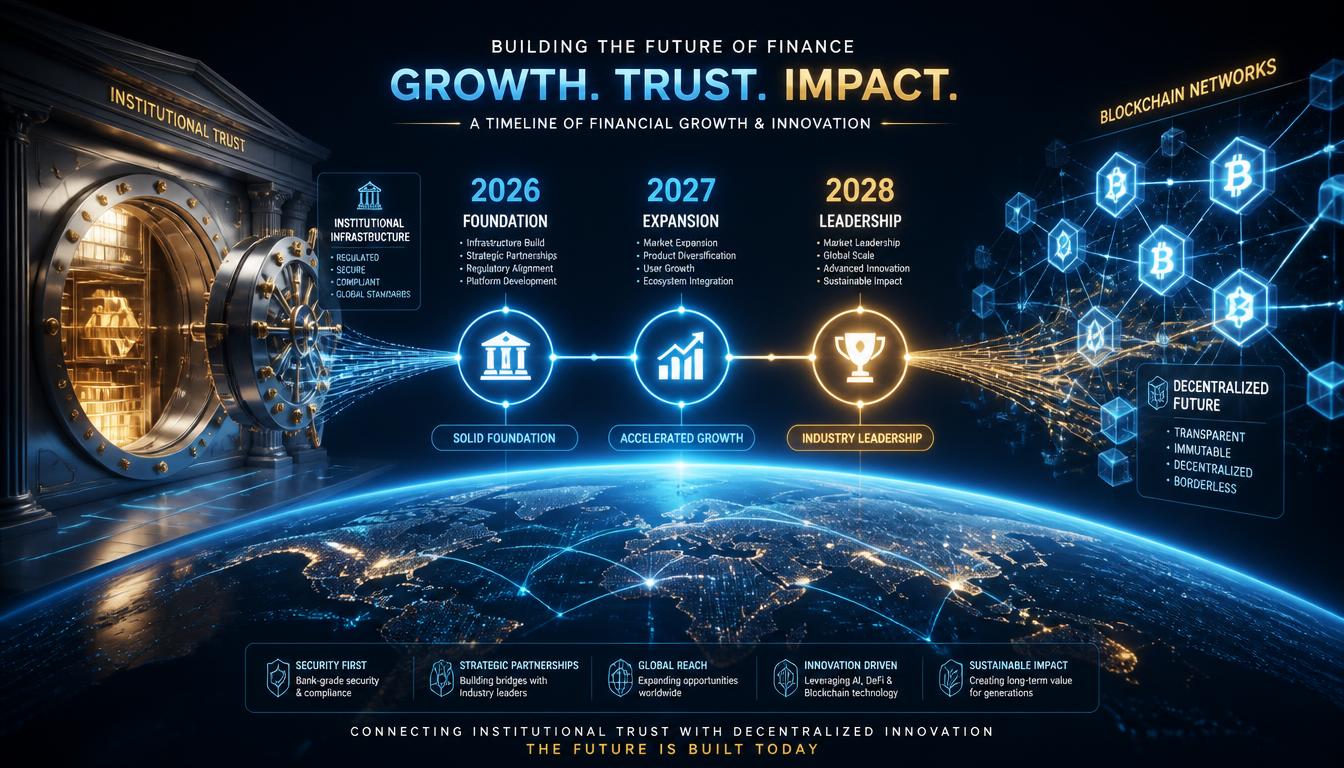
Roadmap and timeline projection for XRPL lending protocol activation, regulatory compliance, and institutional capital inflow
Below is a phased projection covering the activation timeline, regulatory clarity milestones, and institutional onboarding sequence for the XRPL native lending protocols (XLS-65 / XLS-66).
📅 Phase 1: Technical Activation & Validator Consensus (Q4 2026 – Q1 2027)
To activate new core protocol features on the XRP Ledger, an amendment requires over 80% approval from trusted network validators, held continuously for a minimum two-week window.
- Current Status (as of October 2026):
- The amendment proposal (LendingProtocolV1_1) has been formally submitted to the XRPL mainnet voting registry, with validator approval currently hovering around 30% to 40%.
- Reason for Deliberate Pace:
- The current approval percentage reflects ongoing code audits by major security firms (such as Sherlock) and synchronization timelines with off-chain credit evaluation entities (e.g., Clearpool, Cicada).
- Expected Timeline:
- Approval momentum is projected to build between November 2026 and Q1 2027. Once security audits and broker testing environments are completed, major network validators across Asia and Europe are expected to cast favorable votes, triggering the two-week activation window.
⚖️ Phase 2: Regulatory Framework & SEC Scrutiny Mitigation (H1 2027 – H2 2027)
Because the XLS-66 specification incorporates off-chain credit risk management, it may invite regulatory oversight regarding discretionary fund management under securities law.
- Key Regulatory Catalyst (U.S. Legislative Progress):
- Progress on pivotal U.S. digital asset legislation—such as the FIT21 Act (Financial Innovation and Technology for the 21st Century Act) and the CLARITY Act—is expected to provide clearer definitions regarding digital asset classification and DeFi boundaries.
- Service Intermediary Guidelines:
- While prior court rulings established that XRP itself is not inherently a security, regulatory frameworks governing vault managers and loan brokers require formal operational clarity.
- Expected Timeline:
- By mid-2027, alongside the full implementation of Europe's MiCA (Markets in Crypto-Assets) framework and evolving U.S. regulatory guidelines, institutional policy uncertainty is anticipated to decline.
🏦 Phase 3: Institutional Capital Onboarding & Mass Adoption (H2 2027 – 2028)
Institutional capital typically enters in structured phases after on-chain operational metrics and risk track records are established.
[Phase 1: Q4 2026 - Q1 2027] ──► [Phase 2: Q2 2027 - Q3 2027] ──► [Phase 3: Q4 2027 - 2028]
 Validator Approval &           Pilot Pool Deployment            Institutional Inflow &
 Native Mainnet Activation      (Clearpool, Cicada, etc.)        Mass Adoption (SWIFT Alt.)
- Initial Onboarding Pipeline (H1 2027):
- Crypto-native market makers (MMs) and fintech firms—including Web3 liquidity managers that have announced integrations—are slated to operate pilot credit pools linked with the RLUSD stablecoin.
- Institutional Capital Scale-Up (H2 2027 – 2028):
- Once early pilot pools demonstrate transparent default management and reliable RLUSD liquidity conversion, global payment institutions and liquidity providers may begin migrating traditional Nostro/Vostro settlement balances into XRPL native lending pools.
This content is provided for informational purposes only and does not constitute financial, investment, legal, or tax advice. All investment decisions are at the sole discretion of the reader. Please be aware that all investments involve risk, including the potential loss of principal, and historical performance does not guarantee future results.
[Deep Dive]
To gain a deeper understanding of macroeconomics, crypto, and institutional changes within the asset market, I highly recommend reviewing the analysis materials I have previously written.
Treasury Buyback Limits and the Fed's 8-Stage Liquidity Playbook : Macro Mechanics and Market Downside Risks
"I am the house now. Do not bet against the house."This was the bold declaration delivered to market participants by the leadership of the US Treasury. The very next day, on September 9, 2026, the Treasury officially announced a $6 billion long-term Treasu
cryptoteslaglobal.com
The Hidden Debt of Big Tech: Why 600% Spike in CDS Signals an AI Bubble?
The Hidden Debt of Big Tech: Why 600% Spike in CDS Signals an AI Bubble?
[Disclaimer]This content is provided for informational purposes only and does not constitute financial, investment, legal, or tax advice. All investment decisions are at the sole discretion of the reader. Please be aware that all investments involve risk,
cryptoteslaglobal.com
Beyond the Hype : The Hidden Financial Engine Powering Ripple's Global Domination"
Beyond the Hype : The Hidden Financial Engine Powering Ripple's Global Domination"
Think Ripple is just about selling XRP tokens? You’ve been misled by the noise. Forget the headlines—Ripple is silently building the massive financial infrastructure that the world’s banking elite is already adopting. We aren't talking about a startu
cryptoteslaglobal.com