The current global payment system is fundamentally broken. Trillions of dollars are trapped in the archaic "Nostro/Vostro" account structure, serving as a massive drag on global capital efficiency. Financial plumbing is being overhauled, and institutional giants are increasingly bypassing the noise of Bitcoin and Ethereum to focus on the tangible utility of XRP.
This analysis explores the technological imperative behind the shift toward Ripple.
Table of Contents
- Why XRP Now? The Institutional Thesis
- The Birth of Ripple: An All-Star Team for Financial Revolution
- The Technical Fundamental: Rewiring the Financial Plumbing
- Data-Driven Ecosystem Expansion: Aggressive Growth
- The Never-Ending Battle: Ripple vs. SEC
- The Core Network: Partnerships with Global Giants
- The Fintech Powerhouse: Real-World Utility
- Financial Standardization: SWIFT, ISO 20022, and XRPL
- SWIFT vs. XRPL: A Performance Comparison
- Author’s Insight: The Evergreen Potential of XRP
1. Why XRP Now? The Institutional Thesis

Beyond mere price action, the institutional adoption of XRP—exemplified by its inclusion in Clearstream’s asset list—is a signal that XRP is no longer a speculative asset, but an essential tool for efficient global liquidity. Institutional finance has begun to embrace XRP as an efficient settlement medium rather than just a "speculative asset." This analysis explores the clear economic rationale behind why major financial institutions are finding value in XRP that transcends Bitcoin.
[Executive Summary]
- National Trust: Major nations, including Bhutan and Palau, have selected Ripple’s technology for their CBDC infrastructures, securing trust at the state level.
- Institutional Adoption: World-class financial institutions such as Clearstream and SBI have adopted XRP as a verified payment infrastructure.
- The New Standard: From CBDCs to fintech payment rails, XRP is establishing itself as a practical standard within the arteries of the global financial system.
[6 Key Cases of Institutional XRP Adoption]
- CBDC Pioneers (Bhutan, Palau, Hong Kong, UK, etc.): Ripple is collaborating with various central banks on CBDC projects. The Royal Monetary Authority (RMA) of Bhutan has experimented with real-time payment rails using Ripple's private ledger, while the Republic of Palau is leading state-level digital currency experiments, such as issuing its own stablecoin based on Ripple’s technology. Furthermore, the Hong Kong Monetary Authority (HKMA) is conducting e-HKD pilot programs with Ripple, and efforts toward interoperability are ongoing with major financial leaders, including the UK.
- Clearstream (Deutsche Börse Group): Clearstream, Europe’s largest central securities depository (CSD), has adopted XRP as an asset for its cryptocurrency custody services. This signifies that XRP has established itself as an institutional standard for asset custody and settlement.
- SBI Holdings (Japan): SBI, which has maintained a strategic partnership with Ripple since its early stages, utilizes XRP as the core of its domestic payment and remittance solutions. Through SBI Remit, the group has successfully built a real-time remittance network extending into Southeast Asia.
- Expansion of Southeast Asian Payment Networks: By collaborating with banks in major remittance-demand countries like Vietnam, the Philippines, and Indonesia, Ripple has utilized XRP as a bridge, proving significant cost reductions and speed improvements compared to the legacy SWIFT network.
- Adhara and Institutional Solutions: Ripple provides solutions for CBDC issuance and interoperability through its collaboration with Adhara. This indicates that Ripple's technology is deeply penetrating national-level financial infrastructure.
- Fintech and Cross-Border Remittance Partnerships: Leading cross-border remittance firms worldwide, such as Nium and Sentbe, are utilizing XRP through RippleNet. Numerous fintech companies are utilizing Ripple’s On-Demand Liquidity (ODL) to act as the actual "arteries of finance".
2. The Birth of Ripple: An All-Star Team for Financial Revolution

Ripple is far more than just a cryptocurrency project. It is a bold initiative fueled by the ambition to unify the world’s fragmented payment networks, brought to life by an "all-star team" of industry-leading innovators and visionaries.
[Executive Summary]
- The Foundation: Rooted in the payment innovation philosophy of 2004, the project crystallized in 2012 through a powerful technological integration.
- The All-Star Team: A convergence of elite talent from finance, IT, and cybersecurity was assembled to disrupt the closed nature of legacy banking.
- Cryptographic Depth: The expertise of CTO David Schwartz is so profound that his work is often linked to the core principles of Satoshi Nakamoto’s original blockchain thesis.
[The Evolution of Ripple]
- Historical Roots: The journey began with Ryan Fugger’s concept of a decentralized payment system, pre-dating modern platforms like PayPal. The company's framework was solidified when Chris Larsen and Jed McCaleb joined forces.
- A Convergence of Talent: The mission was clear: to solve the inefficiencies of highly centralized finance using the most advanced decentralized technology available.
[The 5 Visionaries Who Architected the Revolution]
- Ryan Fugger: The founder of "RipplePay" in 2004. He was a pioneer who identified the limitations of centralized finance early on and designed the trust-based, decentralized payment network that serves as Ripple’s ancestor.
- Chris Larsen: Ripple’s co-founder and former CEO. A master strategist, Larsen excels in navigating structural contradictions in financial markets and is highly skilled in engaging with regulatory bodies.
- Jed McCaleb: A legendary developer who founded Mt. Gox and later created Stellar. His involvement was pivotal in establishing Ripple’s technical leadership in the blockchain industry.
- Brad Garlinghouse: A veteran of Big Tech (Yahoo, AOL). Since taking the helm as CEO in 2015, he has elevated Ripple from a niche project to a "Global Standard for Remittance." His leadership throughout the protracted SEC litigation has made him the definitive face of Ripple.
- David Schwartz: The "Heart and Technical Anchor" of Ripple. As the current CTO, he is the primary architect of the XRP Ledger (XRPL). His cryptographic research predates the Bitcoin whitepaper, and his deep philosophical and technical expertise has led to the persistent—though speculative—theory that he may even be Satoshi Nakamoto. This underscores the fact that Ripple’s technology was not built to mimic Bitcoin, but rather possesses its own unique, independent lineage.
3. The Technical Fundamental: Rewiring the Financial Plumbing

The traditional SWIFT network is an archaic, slow pipe ill-suited for the modern digital era. The most glaring inefficiency in this system is the astronomical amount of capital trapped in Nostro/Vostro accounts.
[Executive Summary]
- The Problem: Global banks suffer from the inefficiency of locking up approximately $10 trillion in Nostro/Vostro accounts to facilitate cross-border settlements.
- The Innovation: Ripple's On-Demand Liquidity (ODL) technology provides instant capital exactly when needed, freeing up this "dormant capital" for productive uses like lending and investment.
- Financial Standard: With seamless interoperability with legacy SWIFT networks, XRP is evolving beyond a simple cryptocurrency into the next-generation infrastructure standard for global finance.
[Deconstructing the Inefficiency of Nostro/Vostro]
- The Inefficiency: Banks worldwide hold trillions of dollars in pre-funded accounts to manage cross-border payments. XRP effectively "unlocks" this massive pool of idle capital in real-time.
- EDCSA & The XRP Ledger (XRPL): From its origins in private blockchain to the current XRPL, XRP utilizes Elliptic Curve Digital Signature Algorithm (EDCSA) to deliver superior security and transaction speed. It has already proven its enterprise-grade scalability by processing thousands of transactions per second.
[Concept Breakdown: Why is Capital "Sleeping"?]
- For Beginners (The Analogy): Imagine Bank A and Bank B in different countries needing to send money. To do this, they must pre-fund each other’s vaults with cash—this pre-deposited cash is known as a "Nostro" account. Banks do this with thousands of counterparts worldwide, locking up trillions of dollars just to keep the system running.
- For Intermediates (Structural Understanding): Banks maintain local currency deposits (Nostro) in foreign jurisdictions to mitigate liquidity risk. These funds remain stagnant with zero interest, forcing banks to incur massive "opportunity costs."
- For Advanced Learners (Systemic Inefficiency): This closed-loop system forces global banks to hold significant amounts of unproductive working capital. By leveraging ODL technology, XRP eliminates the need for these pre-funded pools, liberating locked capital for real-time settlements and maximizing the capital efficiency of financial institutions.

[Analysis: Global Nostro/Vostro Liquidity Capital]
Experts estimate that global banks hold over $10 trillion in idle liquidity to facilitate cross-border settlements. Below are the estimated liquidity capital holdings for the world’s top 10 major financial institutions:
| Rank | Bank Name | Estimated Liquidity Capital (USD Billions) |
| 1 | JPMorgan Chase | $500 - $600 |
| 2 | HSBC Holdings | $400 - $500 |
| 3 | Citigroup | $350 - $450 |
| 4 | Bank of America | $300 - $400 |
| 5 | BNP Paribas | $250 - $350 |
| 6 | Deutsche Bank | $200 - $300 |
| 7 | Barclays | $180 - $280 |
| 8 | Wells Fargo | $150 - $250 |
| 9 | MUFG | $120 - $220 |
| 10 | Standard Chartered | $100 - $200 |
| (Note: These figures are estimates based on cross-border liquidity management data and are subject to market fluctuations.) |
[Ripple's Liquidity Revolution: The Mechanics of ODL]
While traditional systems rely on pre-funded "locked" cash, Ripple’s On-Demand Liquidity (ODL) sources capital exactly when it is needed. This is how Ripple is truly "rewiring" financial infrastructure.
- Phase 1: Real-time Balancing: Traditional remittances require multiple intermediary banks and take 3–5 days. Ripple simplifies this to a 3-second path: Bank A → XRP (Bridge) → Bank B. Banks no longer need to pre-fund accounts; they buy XRP at the moment of transfer, and the counterparty immediately liquidates it into local currency.
- Phase 2: Zero Capital Immobilization: Banks using ODL no longer need to leave trillions of dollars dormant in foreign vaults. This massive pool of working capital is liberated from "dead storage" to be reinvested in productive areas like lending and high-yield instruments. This is the real reason financial institutions are enthusiastic about Ripple.
- Phase 3: Extended Interoperability: Ripple’s protocol is not platform-dependent. By supporting international messaging standards like ISO 20022, Ripple acts as a high-speed efficiency layer atop the legacy SWIFT network, integrating fragmented financial systems into a unified, modern whole.
4. Data-Driven Ecosystem Expansion: Ripple’s Aggressive Territorial Growth
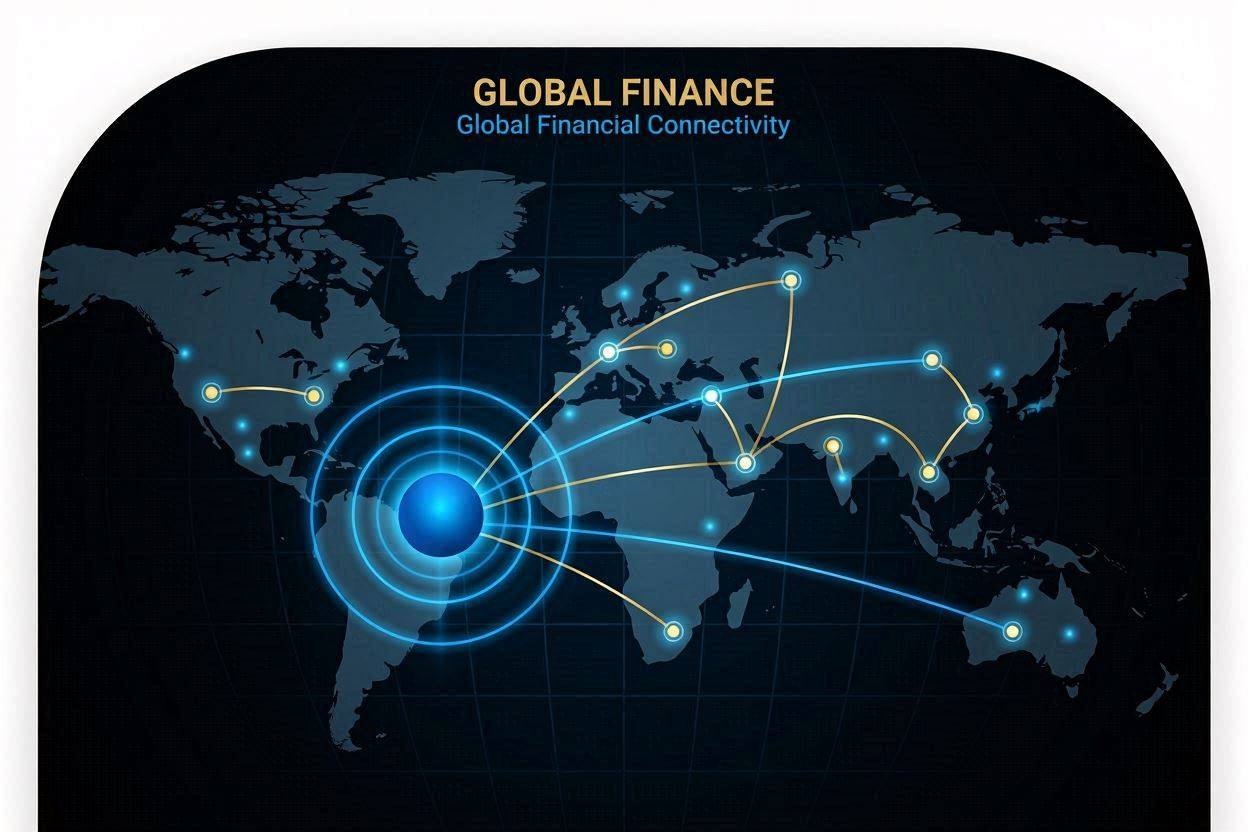
Ripple has transcended the role of a simple remittance network. By executing aggressive M&A activities and strategic partnerships, the company is positioning itself to monopolize the "technological infrastructure" of the financial industry. This is definitive evidence that Ripple’s ecosystem is evolving into a dense, interconnected financial network.
[Executive Summary]
- Vertical Integration: Acquisitions of Standard Custody and Hidden Road reflect a strategic move to complete a vertical integration of institutional-grade financial services.
- Infrastructure Dominance: Collaborations with entities like FNA, R3, and Hyperledger are establishing Ripple as the nerve center of global financial infrastructure, moving beyond simple remittance.
- Economic Moat: This aggressive expansion creates tangible use cases, building a formidable economic "moat" that goes well beyond speculative expectations.
[6 Key Drivers of Ecosystem Expansion]
- Metaco Acquisition ($250 Million): The pinnacle of Ripple’s strategy. In 2023, Ripple acquired Metaco, a Swiss-based provider of institutional-grade digital asset custody and tokenization technology. With Metaco serving global giants like BNP Paribas, Société Générale, and Citibank, this acquisition gave Ripple direct control over the digital asset infrastructure of top-tier financial institutions.
- Standard Custody Acquisition: Following the Metaco acquisition, Ripple integrated Standard Custody to offer a comprehensive, "one-stop solution" for institutional clients—from crypto storage to settlement—achieving powerful vertical integration. While financial details remain undisclosed, this acquisition was strategically focused on securing essential licenses.
- Hidden Road Acquisition (April 2025): In a landmark deal worth $1.25 billion, Ripple acquired the global multi-asset prime broker, Hidden Road. This signals Ripple’s entry into absorbing core traditional finance (TradFi) infrastructure, including trading, lending, and clearing, marking it as one of the largest M&A deals in digital asset history.
- FNA and Fnality International Collaboration: Collaboration with Financial Network Analytics (FNA) maximizes remittance efficiency, while partnerships with decentralized payment infrastructures like Fnality International are transforming existing financial alternatives into reality.
- Hyperledger, R3, and Adhara: Ripple is actively participating in enterprise blockchain alliances like Hyperledger and strengthening technical interoperability with R3 and Adhara to capture and lead the "financial blockchain standard."
- The Clearstream Case: As discussed in our previous analysis regarding Clearstream's crypto custody expansion, the adoption of XRP by Clearstream demonstrates that Ripple’s infrastructure has successfully secured its position at the heart of the European financial system.
5. The Never-Ending Battle: Ripple, the SEC, and the New Financial Era

For years, the "securities" debate was the largest shackle weighing down XRP. However, the lengthy legal battle has been re-evaluated not merely as a lawsuit, but as the "growing pains" of the crypto industry as it integrates into the formal financial system.
[Executive Summary]
- Legal Foundation: The Ripple-SEC conflict was a historical turning point that established a legal framework for digital assets to enter the institutional mainstream.
- A Landmark Precedent: The court ruling that "XRP itself is not a security" provided the strongest legal backing for Ripple to leap into a global financial standard.
- The Regulatory Shift: The shift toward a pro-crypto stance under the current administration, combined with SEC leadership changes, has effectively dissolved regulatory risks, maximizing XRP's institutional potential.
[From Litigation to Regulatory Clarity]
- The Core Conflict: The SEC’s December 2020 lawsuit against Ripple was, in effect, a challenge to the entire crypto industry. Ripple fought not just for victory, but to legally cement the status of digital assets in the U.S., investing tens of millions of dollars in the process.
- The Turning Point: The landmark July 2023 ruling stated that "XRP is not a security," providing a critical legal shield for the entire industry and the mandate Ripple needed to aggressively expand into global markets.
- A Changing Climate: With recent shifts in the U.S. regulatory landscape, Ripple is no longer viewed as an "adversary" but as a "strategic partner" for financial innovation. This transition turns XRP from a high-risk asset into a secure, institutional-grade digital asset.
6. The Core Network: Robust Partnerships with Global Banks and Regulators
Ripple's technology is no longer theoretical; it is a proven tool utilized by over 170 financial institutions worldwide. These partnerships go beyond mere marketing—they are the engines driving real-world cost and speed efficiency in cross-border settlements.
[Executive Summary]
- Unmatched Trust: BNY Mellon’s selection as the primary custodian for Ripple’s stablecoin (RLUSD) reserves signifies the highest possible seal of approval from traditional finance.
- Global Financial Giants: Industry leaders like Amex, Santander, and Bank of America are leveraging Ripple’s technology to modernize their payment rails.
- CBDC Leadership: Over 20 nations, including Bhutan, Hong Kong, and Palau, are building state-level digital financial infrastructure on Ripple’s private ledger.
[The Ripple Partnership Ecosystem]
- BNY Mellon: In a historic development announced in July 2025, BNY Mellon, the world's largest asset custodian, was appointed as the primary custodian for the reserves of Ripple's stablecoin, RLUSD. This confirms that Ripple has achieved the highest level of regulatory and stability compliance.
- TradFi Titans:
- American Express (Amex): Implemented real-time B2B payment systems between the U.S. and the U.K.
- Santander: Provides real-time cross-border remittance services through the "One Pay FX" app based on RippleNet.
- Bank of America (BoA): Maintains an extensive collaboration as a strategic partner to improve payment efficiency.
- Standard Chartered: Utilizes Ripple solutions for real-time settlement infrastructure across Asia.
- Global Fintech & Asian Ecosystem: Through SBI Ripple Asia, Ripple has constructed a massive ODL remittance network connecting Japan to Southeast Asia. South Korean fintech leaders like Sentbe and WireBarley also leverage RippleNet to gain a competitive edge in international remittances.
- CBDC Partnerships: Ripple is currently advancing CBDC projects with over 20 central banks worldwide, including Bhutan (RMA), Palau, Hong Kong (HKMA), Georgia, and Colombia, facilitating the issuance and real-time settlement of state-issued digital currencies.
7. The Partner Ecosystem: Financial Giants & Fintech Powerhouses

Ripple’s technology has transcended the concept phase and solidified its place as core infrastructure for countless remittance firms and fintech innovators. They are leveraging Ripple's network to bypass the latency and exorbitant fees of legacy banking.
[Executive Summary]
- Global Reach: Over 100 remittance providers, including Nium, Sentbe, and Tranglo, have adopted Ripple to drastically reduce transfer costs and settlement times.
- Big Tech Synergy: Ripple continues to integrate its infrastructure with AWS for cloud-native deployment and AI-driven optimization of the XRPL.
- Payment Innovation: Through partnerships with Mastercard, Ripple is leading the integration of compliant stablecoins (RLUSD) into legacy global payment rails.
[The Global Partnership Ecosystem]
- Remittance & Infrastructure Partners:
- Tranglo: Provides integrated payment solutions to over 100 partners globally.
- Nium (Instarem): Reduced remittance times by 50% through Ripple’s payment solutions.
- Sentbe: Leading Korean fintech that utilizes Ripple to secure competitive edges in remittance corridors for migrant workers.
- Novatti & Modulr: Building seamless payment systems with 99.99% uptime across Europe.
- Big Tech Alliances:
- AWS: Ripple is an AWS-verified partner, enabling direct infrastructure deployment on the cloud. Ripple also tests XRPL log analysis and performance scaling using Amazon Bedrock (AI).
- Mastercard: Collaborating with WebBank and Gemini to research real-time fiat settlement systems utilizing XRPL and RLUSD integration.
8. Financial Standardization: The Nexus of SWIFT, ISO 20022, and XRPL
A Note from the Author: Many argue that ISO 20022 adoption will trigger an immediate surge in XRP. While this is an oversimplification, the true value lies elsewhere: ISO 20022 has removed the technical barriers, making it seamless for conservative banks to adopt Ripple.
[Executive Summary]
- Unified Language: ISO 20022 is the common language of global finance; Ripple has been deeply involved in this committee since 2020.
- Interoperability: The future of finance will likely be a hybrid model where SWIFT handles messaging (information) and XRPL handles immediate settlement (value).
- The Rational Choice: Ripple’s system is fully compliant with these standards, making it the most logical alternative for banks bridging legacy networks and digital asset settlements.
[The Strategic Alignment]
- The Hybrid Model: SWIFT serves as the messaging layer, while XRPL acts as the value settlement layer. ISO 20022 bridges these two components.
- RMG Participation: Ripple is not just a follower; it is the only DLT firm to hold a seat in the ISO 20022 Registration Management Group (RMG).
[ISO 20022-Compliant Cryptocurrency Reference]
These assets are aligned with financial standards, positioning them for interoperability with institutional frameworks:
| Category | Cryptocurrency (Ticker) | Key Characteristic |
| Financial Bridge | XRP (Ripple), XLM (Stellar) | Industry standard for cross-border payments |
| Enterprise | HBAR (Hedera), QNT (Quant) | Multi-network connectivity & enterprise DLT |
| Trade/Other | XDC, ADA, ALGO, IOTA | Trade finance & scalable smart contracts |
9. SWIFT vs. XRPL: Speed, Fees, and the Future of Financial Rails
Financial experts view Ripple (XRP) not merely as a "cryptocurrency" but as a revolution in financial infrastructure. If SWIFT represents the aging highways of global finance, XRPL is the hyper-efficient, high-speed maglev train of the digital age.
[Executive Summary]
- Messaging vs. Settlement: SWIFT is limited to "information relay," whereas XRPL executes "immediate value settlement," maximizing financial efficiency.
- Technological Supremacy: A 3–5 second processing time and near-zero fees prove XRPL’s technological superiority over legacy inefficiencies.
- A New Standard: While SWIFT may retain high-value, batch-processed institutional transfers, XRPL is rapidly capturing the market for high-frequency, low-value, real-time settlements.
[Comparative Analysis: SWIFT vs. XRPL]
| Feature | SWIFT (Legacy Rail) | XRPL (Ripple Ledger) |
| Speed | 2–5 business days | 3–5 seconds (Real-time) |
| Cost | High (Intermediary bank fees) | Near-zero (approx. 0.00001 XRP) |
| Operating Hours | Banking hours only | 24/7/365 |
| Settlement | Messaging-based | Instant Value Settlement |
| Structure | Multi-hop Correspondent Banking | P2P Direct Settlement |
[Why XRPL is the Future of Finance]
- Beyond Messaging: SWIFT relays instructions; XRP settles the actual value in seconds.
- Liquidity Liberation: ODL eliminates the need for "locked" Nostro accounts, freeing up massive amounts of idle capital for banks.
- Operational Efficiency: Ripple’s 24/7/365 availability fundamentally transforms how global corporations manage treasury operations.
10. Author’s Insight: The Evergreen Potential of XRP

[The Conviction Through the Darkest Times]
When the legal battle with the SEC cast a long shadow over XRP, many exited the market. However, I remained focused on the fundamental goal: replacing the world’s financial plumbing. My commitment to DCA (Dollar-Cost Averaging) was driven by one simple observation: the inefficiency of a $10+ trillion remittance market could be solved in three seconds. Technology does not lie; eventually, the market will recognize the value.
[Conclusion: XRP as an "Evergreen" Financial Standard]
Ripple (XRP) is not a speculative tool; it is the next-generation infrastructure standard designed to modernize legacy systems and unleash trapped capital.
- Institutional Maturation: The resolution of litigation and regulatory clarity have transformed XRP from a "risk asset" into a secure "institutional asset."
- Sustainable Growth: The adoption of Ripple’s solutions by BNY Mellon, Santander, and SBI is undeniable proof of its real-world utility.
- Future Value: The digitization of financial networks is an irreversible "evergreen" trend. Within this grand flow, XRP stands as the most efficient vehicle for global value movement.
[Final Thoughts]
If you have read this far, your perspective on XRP has likely shifted from "short-term price action" to "structural change." Ripple is changing the very fabric of the financial system we use today. The question remains: how will you position yourself in this historic shift?
This is a piece I poured my absolute heart and effort into since launching this blog series. Because it represents the largest share of my personal portfolio and is an asset I've studied deeply for a long time, I crafted it with genuine care—hoping that fellow investors could resonate with it, share insights, and navigate our investment journeys side by side. I truly hope this sincerity reaches you, and if this post resonated with you, please show your support with a like and a comment!
Tip!!!
Check out the titles below for interesting articles written by the author that offer insights into Ripple XRP and crypto investment.
[Deep Dive]
To gain a deeper understanding of the institutional shifts within the crypto market, I highly recommend exploring my previous analyses.
Ethereum : The Operating System for the New Digital Finance
Ethereum : The Operating System for the New Digital Finance
Why Wall Street is Obsessed with the "World Computer" (2026 Updated)"This is not just another cryptocurrency. It is the operating system (OS) for the new digital economy."While Bitcoin acts as 'digital gold'—a store of value—Ethereum is the 'World Comp
cryptoteslaglobal.com
Clearstream’s Crypto Expansion : Why Institutional Giants Are Turning XRP and SOL into Global Financial Infrastructure
"With Spot Bitcoin ETFs now a market staple, Wall Street’s focus has aggressively shifted toward the next major bottleneck: Secure Digital Asset Custody. Deutsche Börse’s Clearstream has quietly expanded its custody services to include XRP, SOL, ADA,
cryptoteslaglobal.com
The Grand Segmentation : Why Ripple (XRP) Ceded Western Union and MoneyGram to Solana for High-Moat Institutional RWA
Mainstream critics point to Western Union and MoneyGram migrating to Solana (SOL) and Stellar (XLM) as a failure for Ripple. However, deep-rooted macro analysis reveals a brilliant structural pivot. Discover why Ripple stepped away from retail B2C remittan
cryptoteslaglobal.com
The Ultimate Guide to Solana (SOL): From the FTX Crash to Liquid Staking and $3,000 Price Predictions
From being pronounced "dead" during the FTX collapse to hitting new all-time highs in 2025, Solana’s resilience is unmatched. Discover the architectural secrets that make it the ultimate "Ethereum Killer," how global giants like Visa are utilizing its ne
cryptoteslaglobal.com
The Great Capital Reallocation: Solana’s Surge, Ondo Integrating XRPL, and the Science of Buying the Crypto Bottom
While retail sentiment is paralyzed by prolonged market boredom, the smart money is finalizing the foundational infrastructure for the next liquidity cycle. From Securitize’s major RWA milestone on Solana to Ondo Finance leveraging the XRP Ledger for U.S
cryptoteslaglobal.com
The Ultimate Crypto Shakeout : Open USD, Global Regulations, and the XRP Black Swan Scenario
The Ultimate Crypto Shakeout : Open USD, Global Regulations, and the XRP Black Swan Scenario
While retail investors celebrate the launch of the massive Open USD (OUSD) consortium and Taiwan's historic crypto legislation, the smart money might be orchestrating the greatest trap in crypto history. Discover why XRP could soon spike to $4, only to fac
cryptoteslaglobal.com