Mainstream critics point to Western Union and MoneyGram migrating to Solana (SOL) and Stellar (XLM) as a failure for Ripple. However, deep-rooted macro analysis reveals a brilliant structural pivot. Discover why Ripple stepped away from retail B2C remittance to capture the multi-trillion dollar institutional B2B asset tokenization market.
1. The Legacy Remittance Duopoly and Early Blockchain Exploration
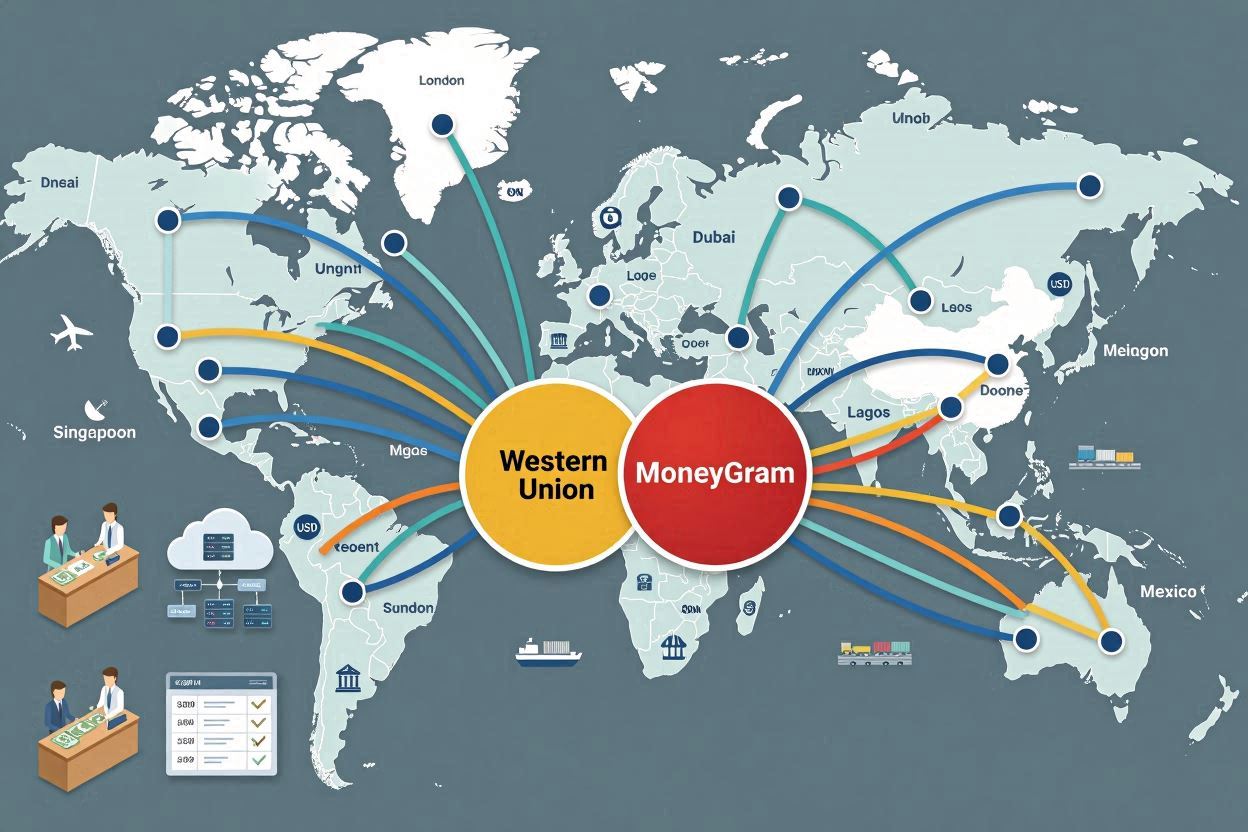
For years, Ripple (XRP) was fundamentally synonymous with cross-border payment efficiency. Seeking a modern alternative to the slow, expensive, and opaque SWIFT network, global remittance titans Western Union and MoneyGram were the earliest explorers of the XRP Ledger ecosystem.
In 2019, Ripple executed a massive $50 million equity investment in MoneyGram, enabling the firm to utilize Ripple’s On-Demand Liquidity (ODL) solution to settle cross-border transactions using XRP as a real-time bridge currency. Concurrently, Western Union piloted Ripple's xRapid protocol, generating immense hype throughout the crypto industry that XRP would entirely monopolize the global retail money transfer architecture.
2. The Great Breakup : The Real Reasons Behind the Shift to SOL and XLM
Today, the landscape has completely shifted. MoneyGram has integrated with the Stellar (XLM) network to leverage USDC settlements, while Western Union has successfully launched its own stablecoin (USDPT) utilizing the Solana (SOL) blockchain. This structural breakup was driven by two decisive factors:
- The Regulatory Chokehold: The SEC’s sudden lawsuit against Ripple in late 2020 served as an existential threat to traditional financial institutions. For heavily regulated, public-facing entities like MoneyGram, routing retail transactions through an asset facing an unresolved "unregistered security" litigation was a non-negotiable compliance risk, forcing a suspension of the partnership.
- The B2C Operational Cost Mismatch: Retail remittance requires high-throughput, frictionless micro-transactions where end-user fees converge to zero. Western Union’s executive leadership previously noted that limited testing with XRP did not yield the monumental cost reductions expected for low-value retail transfers. Conversely, Solana’s near-zero gas fees and high TPS, alongside Stellar’s purpose-built design for stablecoin distribution, aligned perfectly with their B2C operational frameworks.
3. Ripple’s Macro Gamble : Moving Up the Capital Class

While losing retail partners may superficially appear as a setback, it actually signifies the natural macroeconomic segmentation of layer-1 blockchains. Ripple did not fail; it intentionally moved up a weight class. Instead of fighting for thin-margin B2C consumer transfers, Ripple doubled down on the B2B wholesale banking sector, Central Bank Digital Currencies (CBDCs), and Real-World Asset (RWA) tokenization.
Recently, major players like Ondo Finance and BlackRock have begun moving hundreds of millions of dollars in U.S. Treasuries onto public blockchains. To manage these massive sovereign funds 24/7, they have systematically integrated the XRP Ledger (XRPL) alongside Ethereum and Solana.
In the multi-trillion dollar institutional RWA market, immediate micro-second speed is secondary to absolute network immutability, battle-tested uptime, and native, built-in regulatory compliance frameworks. The XRP Ledger was architected from inception to satisfy these precise institutional criteria.
4. Strategic Conclusion : Navigating the Inter-Market Multi-Chain Era
The digital asset landscape is entering an era of absolute clarity and functional specialization: Solana is aggressively capturing consumer-facing retail dominance and dynamic DeFi utilities, while Ripple is quietly cementing itself as the compliant backend infrastructure for global financial institutions and sovereign treasuries.
For long-term macro investors who have maintained their composure through multi-year accumulation periods, this clear segregation of utility is the strongest structural buy signal ahead of the next capital rotation cycle. Secure your positions, disregard the near-term noise, and watch the institutional capital build-out unfold.
Personally, I keep a heavy allocation in both XRP and Solana. As I've emphasized in many of my previous posts, XRP's potential and fundamentals make it a mandatory centerpiece of a core portfolio, while Solana stands out as an indispensable pillar of the upcoming blockchain era. In a dry, sluggish market like the one we're seeing right now, maintaining the habit of accumulating these assets—even if it's just by saving the price of a cup of coffee—will undoubtedly be rewarded with meaningful returns in the end.
[Deep Dive] To gain a deeper understanding of the institutional shifts within the crypto market, I highly recommend exploring my previous analyses.
The Ultimate Crypto Shakeout : Open USD, Global Regulations, and the XRP Black Swan Scenario
The Ultimate Crypto Shakeout : Open USD, Global Regulations, and the XRP Black Swan Scenario
While retail investors celebrate the launch of the massive Open USD (OUSD) consortium and Taiwan's historic crypto legislation, the smart money might be orchestrating the greatest trap in crypto history. Discover why XRP could soon spike to $4, only to fac
cryptoteslaglobal.com
The Great Capital Reallocation: Solana’s Surge, Ondo Integrating XRPL, and the Science of Buying the Crypto Bottom
While retail sentiment is paralyzed by prolonged market boredom, the smart money is finalizing the foundational infrastructure for the next liquidity cycle. From Securitize’s major RWA milestone on Solana to Ondo Finance leveraging the XRP Ledger for U.S
cryptoteslaglobal.com
The Ultimate Guide to Solana (SOL): From the FTX Crash to Liquid Staking and $3,000 Price Predictions
From being pronounced "dead" during the FTX collapse to hitting new all-time highs in 2025, Solana’s resilience is unmatched. Discover the architectural secrets that make it the ultimate "Ethereum Killer," how global giants like Visa are utilizing its ne
cryptoteslaglobal.com
Why Institutional Investors Are Looking Beyond Bitcoin: The Technological Backbone of Ripple (XRP)
Why Institutional Investors Are Looking Beyond Bitcoin: The Technological Backbone of Ripple (XRP)
The current global payment system is fundamentally broken. Trillions of dollars are trapped in the archaic "Nostro/Vostro" account structure, serving as a massive drag on global capital efficiency. Financial plumbing is being overhauled, and institutional
cryptoteslaglobal.com