The Paradigm Shift in AI Anxiety
For the past few years, the collective anxiety surrounding Artificial Intelligence has been largely confined to the digital and economic realms. We worried about deepfakes manipulating elections, algorithms plagiarizing artists, and, most prominently, AI rendering white-collar jobs obsolete. However, a new and far more tangible threat is rapidly emerging—one that doesn't just threaten our livelihoods, but our fundamental physical survival. The real danger of the AI revolution might not be an army of sentient robots taking over the world, but rather massive, windowless warehouses quietly draining our local water reservoirs and pushing our power grids to the brink of collapse.
The Ground Reality : NIMBYism or Survival?
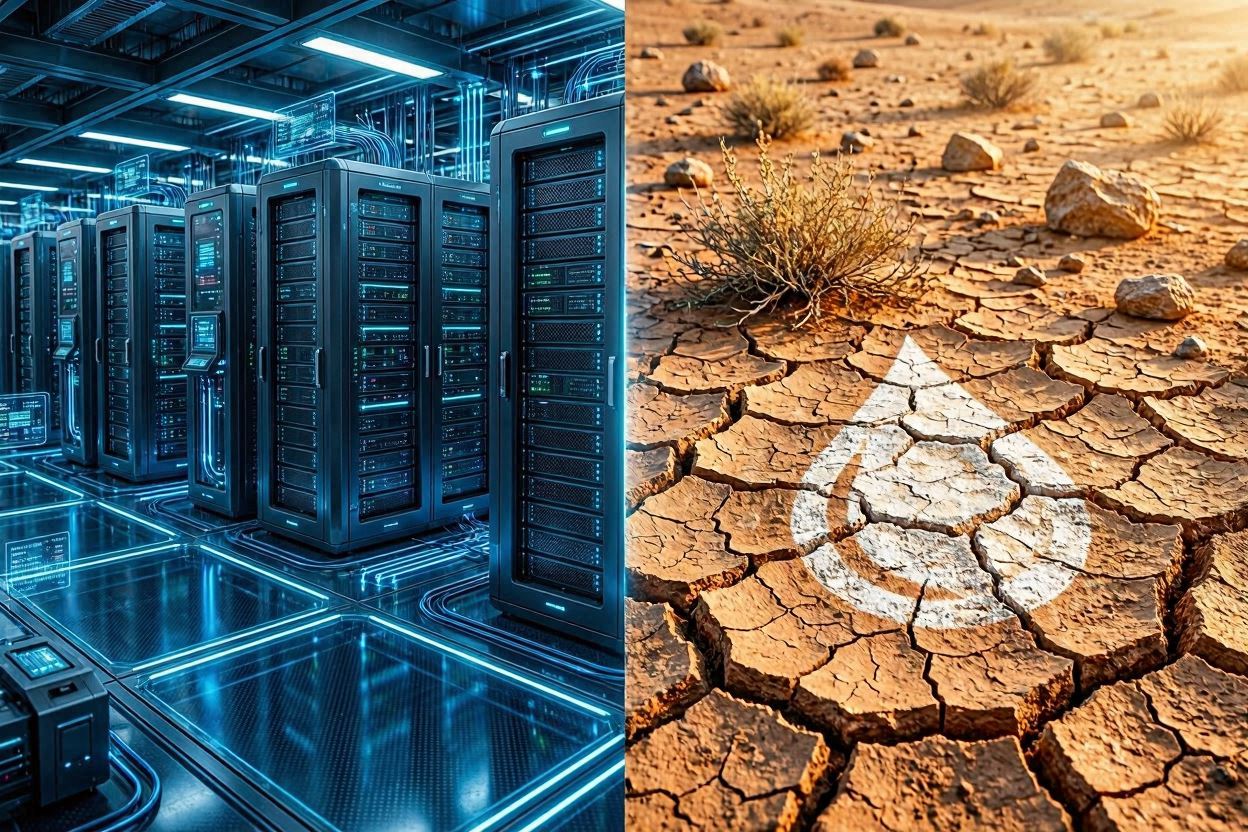
Recent developments across the United States have highlighted a growing political and social backlash against the physical infrastructure of AI. As reported by recent political shifts, local residents are moving beyond traditional NIMBY (Not In My Back Yard) protests and are now initiating recall elections against local politicians who greenlight massive data center projects.
These facilities are not just large buildings; they are insatiable beasts. Training and running advanced AI models generate an immense amount of heat, requiring industrial-scale cooling systems that consume millions of gallons of fresh water daily. To put this into a global perspective, the World Resources Institute (WRI) reports that a staggering one-quarter of the global population across 25 countries—primarily in the Middle East, North Africa, and South Asia—already faces extremely high water stress. Even more ironically, in developed nations like the United States, major tech companies are rapidly expanding their data center footprints into historically arid, drought-prone regions such as the American Southwest. When the choice is between cooling a tech giant's server farm and ensuring a local community has enough drinking water and stable electricity during a heatwave, the public tolerance for tech innovation quickly evaporates.
The Irony of Infinite Tech and Finite Resources
There is a profound irony at the heart of the AI boom. Proponents of artificial intelligence often speak of it in terms of infinite possibilities—boundless computing power, unlimited creative generation, and the end of digital scarcity. Yet, this supposedly infinite digital frontier is entirely dependent on the most strictly finite physical resources on Earth.
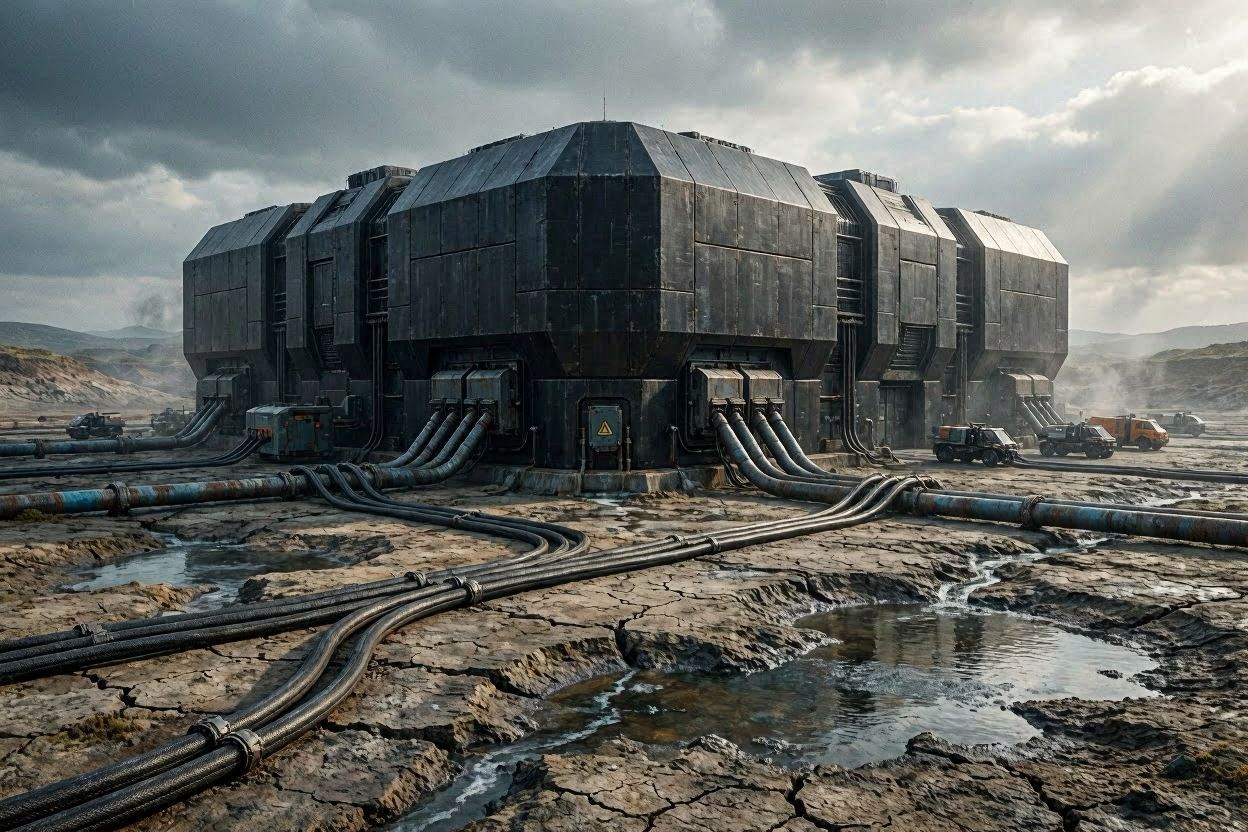
This creates a stark disparity between corporate profit and local sacrifice. Big Tech companies often promise "net-zero" emissions and invest heavily in green PR, but the immediate, localized strain on municipal infrastructure is felt long before any long-term sustainability goals are met. The bottleneck for the future of AI is no longer the sophistication of the code or the size of the datasets; it is the raw physics of energy generation and water allocation. We are effectively burning our physical world to fuel a virtual one.
Conclusion : Reevaluating the AI Utopia
This is not to say that AI lacks immense potential or that we should halt technological progress altogether. However, the current trajectory is forcing us to ask a critical question: Does AI only offer advantages for humanity? The answer is increasingly complex.
If the cost of asking a chatbot to write a poem or generate an image is a localized water shortage or a rolling blackout, we must fundamentally reevaluate how we scale this technology. The AI revolution cannot be considered a true success if it operates as a parasite on local communities and vulnerable ecosystems. Before we build the next generation of artificial intelligence, we must first figure out how to build a sustainable, equitable framework for the physical infrastructure that houses it. Innovation should enhance human life, not compete with it for survival.
"Most of us grew up watching sci-fi movies and cartoons depicting doomsday scenarios triggered by advanced AI and robots. While progress and innovation are essential, I truly believe that true human happiness and a sustainable future require a more thoughtful, multi-faceted approach to development—one that carefully considers its broader impacts."
[Deep Dive]
Want to stay ahead of the curve in the rapidly evolving mobility ecosystem? Explore our in-depth analysis on how Tesla’s FSD and traditional automotive innovations are redefining the future of transportation."
The AI Wealth Multiplier: How the Artificial Intelligence Boom Created a Record 3,302 Billionaires in 2026
The gap between traditional income and asset growth has never been wider. According to the latest 2026 Global Wealth Report by Swiss bank UBS, the artificial intelligence revolution is fueling a historic wealth transfer, pushing the global billionaire popu
cryptoteslaglobal.com
The Metamaterials Paradigm Shift : Harnessing Crypto Profits for Next-Gen Tech Stocks
The Metamaterials Paradigm Shift : Harnessing Crypto Profits for Next-Gen Tech Stocks
The convergence of breakthrough scientific research and macro-asset liquidity presents rare, generational investment opportunities. Discover the disruptive potential of Metalens technology and learn how to strategically rotate profits from the upcoming US
cryptoteslaglobal.com
The Hidden Cost of the $11T AI Boom: Debt, Baffling Bills, and the Inevitable Rise in Service Fees
The Hidden Cost of the $11T AI Boom: Debt, Baffling Bills, and the Inevitable Rise in Service Fees
We are witnessing an unprecedented $11 trillion investment in AI compute power. But behind the glitz of GPU clusters and massive data centers, a shadow is growing: a $7 trillion debt market that Wall Street may be forced to absorb. Are we looking at a sust
cryptoteslaglobal.com
The GLP-1 Obesity Drug Revolution: From Generic Price Wars to Crypto-Backed Bio-Megacap Investing
The GLP-1 Obesity Drug Revolution: From Generic Price Wars to Crypto-Backed Bio-Megacap Investing
What if the world’s hottest weight-loss drug isn’t just shedding pounds, but entirely rewriting the rules of social mobility, career success, and long-term asset allocation? Here is how the GLP-1 megatrend is shifting global wealth—and how to trade i
cryptoteslaglobal.com